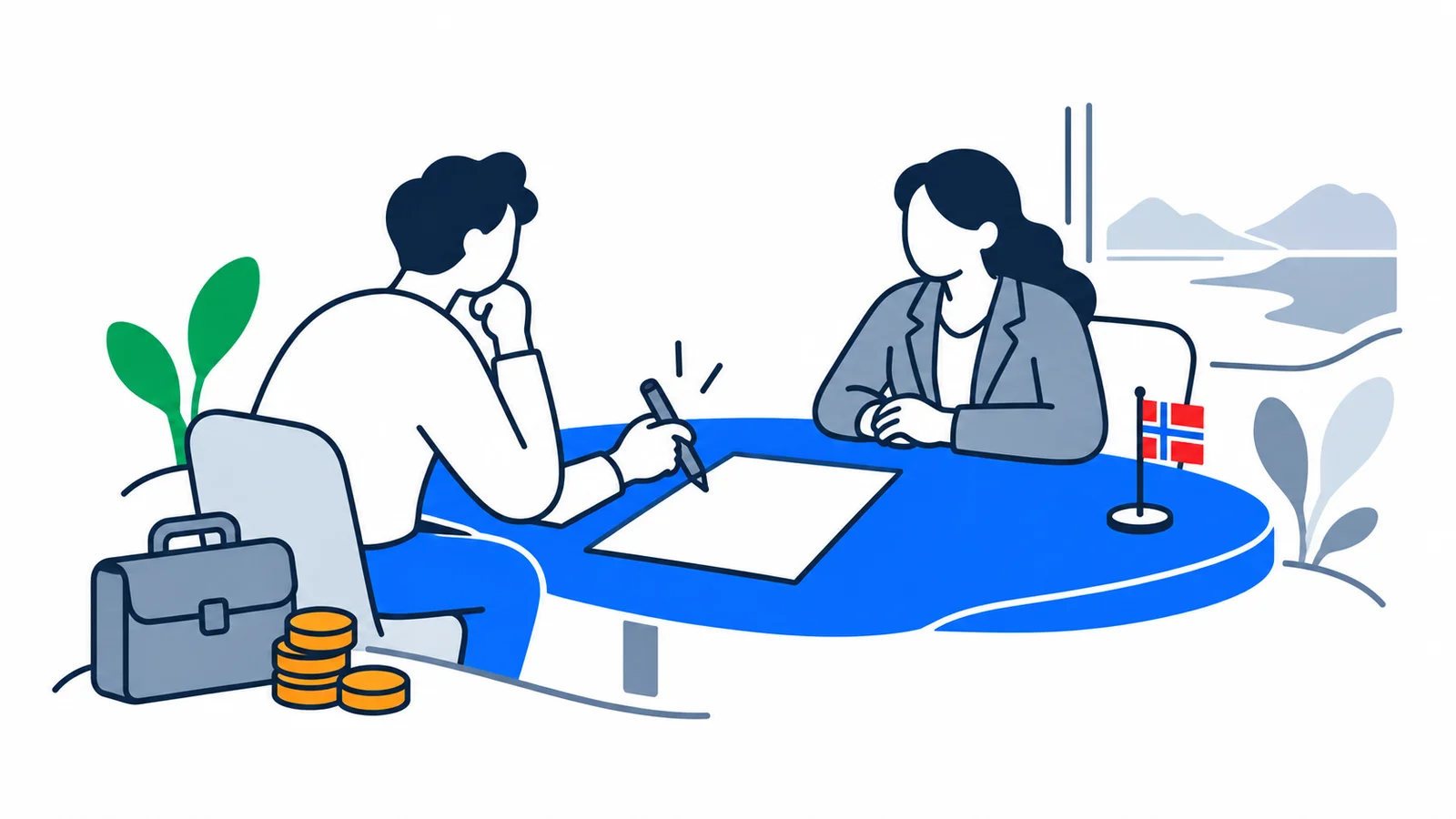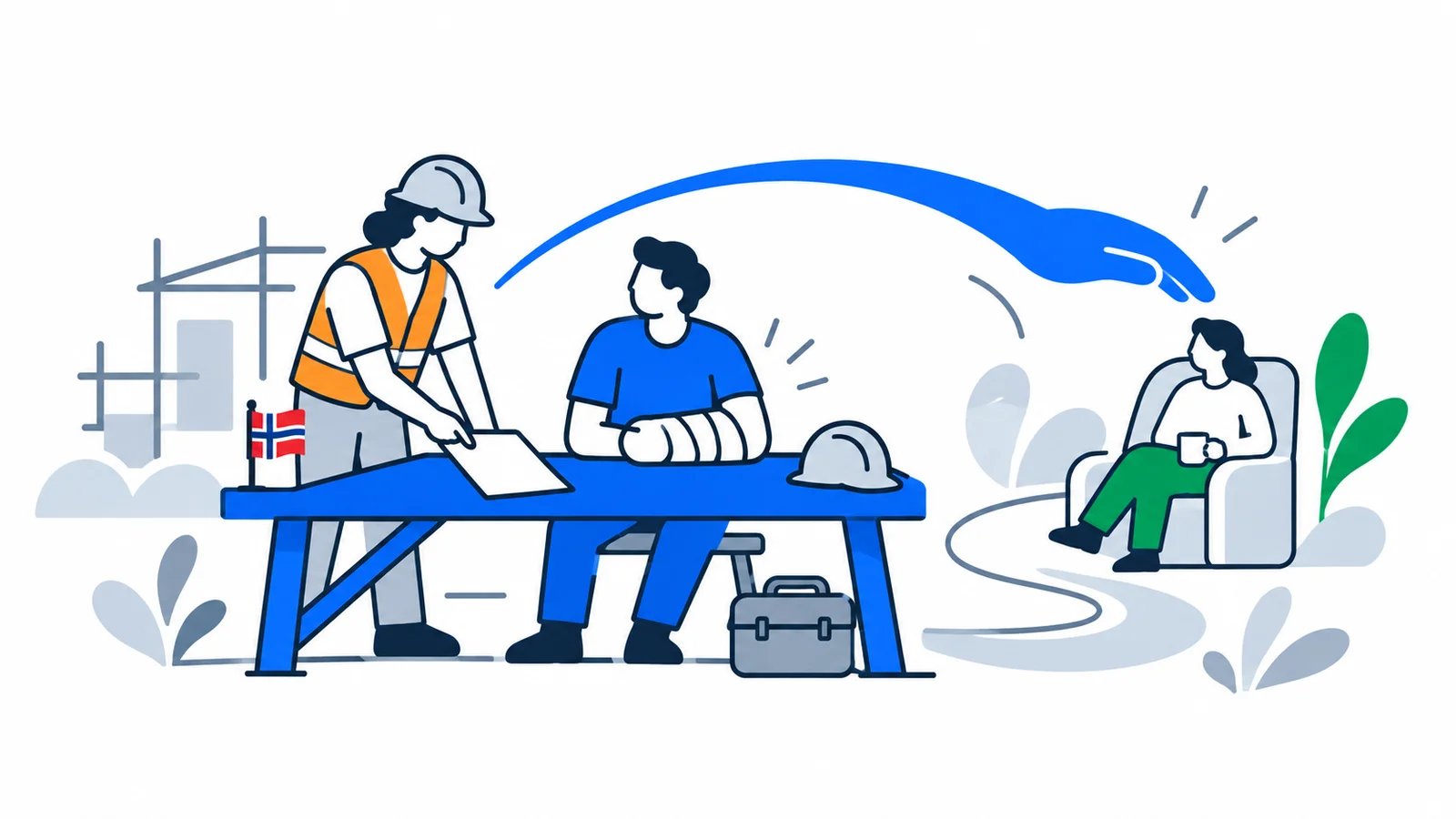


Layoffs in Norway means that you temporarily stop working but keep your job. Your employer pays full salary for the first 15 days. Then you can apply for unemployment benefits from NAV. The notice period is usually 14 days.
What is layoff in Norway?
Layoff is a temporary arrangement. You are relieved from work, and your employer does not have to pay your salary. But the employment relationship continues, so you remain employed. You will return to your job when the layoff ends.
The reason must come from the company, not from you. It is often due to lack of work, not much to do, or need to cut costs. This is called a valid reason. Layoff is therefore not a punishment, and it does not reflect badly on you.
You can be laid off fully or partially. Partially means you work reduced hours, for example 50 percent.
When the layoff ends, you return to the same job. This is what distinguishes layoff from dismissal. To learn more about your position, read about employee rights.
NAV (Norwegian Labour and Welfare Administration) and the Labour Inspection Authority explain the rules. The law is called the Layoff Act and is found on lovdata.no. You can also find a brief explanation on snl.no. At SamfunnPrep, we explain these same rules in simple language.
Layoff notice: 14-day deadline
Your employer must give you a layoff notice in writing. The deadline is usually 14 days before the layoff begins (as of 2026).
In case of unforeseen events, the deadline is shorter, only 2 days. This could be, for example, fire, accident, or other sudden events that stop work.
During the notice period, you work as usual and receive your regular salary. The notice should state why you are being laid off and how long it is expected to last. Keep this letter. NAV will need it when you apply for unemployment benefits.
A verbal notice is not enough. If you receive notice by phone or in a conversation, ask for the notice in writing.
Employer period: 15 days with full pay
After the notice period, the employer period begins. Your employer then pays full salary for 15 working days (as of 2026). This applies when you are 100 percent laid off.
If you are partially laid off, the period is longer. At 50 percent layoff, the employer period is 30 days. The percentages are added together until they total 15 full days.
There is no upper limit on salary during this period. You receive your regular salary, including the portion above 6G. The employer period begins only after the notice period ends.
Do you get unemployment benefits during layoff?
Yes. After the employer period, you can receive unemployment benefits during layoff from NAV. Unemployment benefits are payments intended to replace part of your salary while you are not working.
The rate is 62.4 percent of the benefit base (as of 2026). The base is calculated from your previous income. Income above 6G does not count.
As of 1 May 2026, the basic amount (G) is 136 549 kroner. 6G is then 819 294 kroner. If you earn more than this, you do not receive unemployment benefits for the portion above 6G.
If you are partially laid off, you receive unemployment benefits for the portion you are not working. You must also submit a report form to NAV every 14 days.
Unemployment benefits are less than your regular salary. Plan your finances for a lower income during this period. Read more about unemployment benefits from NAV and how they are calculated.
What must you do? Register as a job seeker
You do not receive unemployment benefits automatically. You must apply yourself. Do this as soon as you receive the notice:
- Register as a job seeker with NAV at nav.no.
- Apply for unemployment benefits online.
- Be an active job seeker while you are laid off.
- Keep your layoff notice and pay stubs.
If you are new to Norway, the system may seem unfamiliar. See our guide on NAV for immigrants for an easier start.
Your rights while laid off
Even though you are not working, you still have several rights. Layoff puts the employment relationship on pause but does not remove it.
- You can take another job while you are laid off.
- You remain employed, and your seniority continues to accrue.
- Your employer should discuss the layoff with union representatives beforehand.
- If you are dismissed while laid off, the standard termination rules apply.
When you know your rights, it is easier to make good decisions. This is also useful knowledge for the Civic Knowledge Test.
What is the difference between layoff and dismissal?
These are two completely different things. With a layoff, you keep your job. With a dismissal, the employment relationship ends completely.
| Topic | Layoff | Dismissal |
|---|---|---|
| Your job | You keep it | Ends |
| Duration | Temporary | Permanent |
| Salary from employer | 15 days | Through notice period |
| Afterwards | Back to work | New job or unemployment benefits |
If it is clear that the job will not return, your employer should use dismissal, not layoff.
If the company goes bankrupt, special rules apply. You can then have unpaid salary covered through a government scheme. Read about bankruptcy and wage guarantee.
How long can you be laid off?
Your employer can lay you off without pay for up to 26 weeks within a period of 18 months (as of 2026). This applies to the same employer.
If it lasts longer, your employer must either bring you back to work or dismiss you. Layoff is meant to be a temporary solution, not a permanent state.
An example: the company has little work to do for two months. You can then be laid off, receive full salary for 15 days, and unemployment benefits for the rest of the time. When work returns, you are back at your job.
In brief
Layoff in Norway is a pause, not an end. You keep your job, receive full salary for 15 days, and can then receive unemployment benefits from NAV. When you know the rules, you stand firmer when dealing with your employer and NAV. If you are unsure, you can contact NAV, a union, or the Labour Inspection Authority for help.
Work life and rights are part of the Civic Knowledge Test curriculum — practice for free on SamfunnPrep.