
Back taxes are taxes you owe after the tax settlement. If you cannot pay, you have rights. You can apply to Skatteetaten to split the amount or defer it. But you must act before the deadline passes.
What happens if you don't pay back taxes by the deadline?
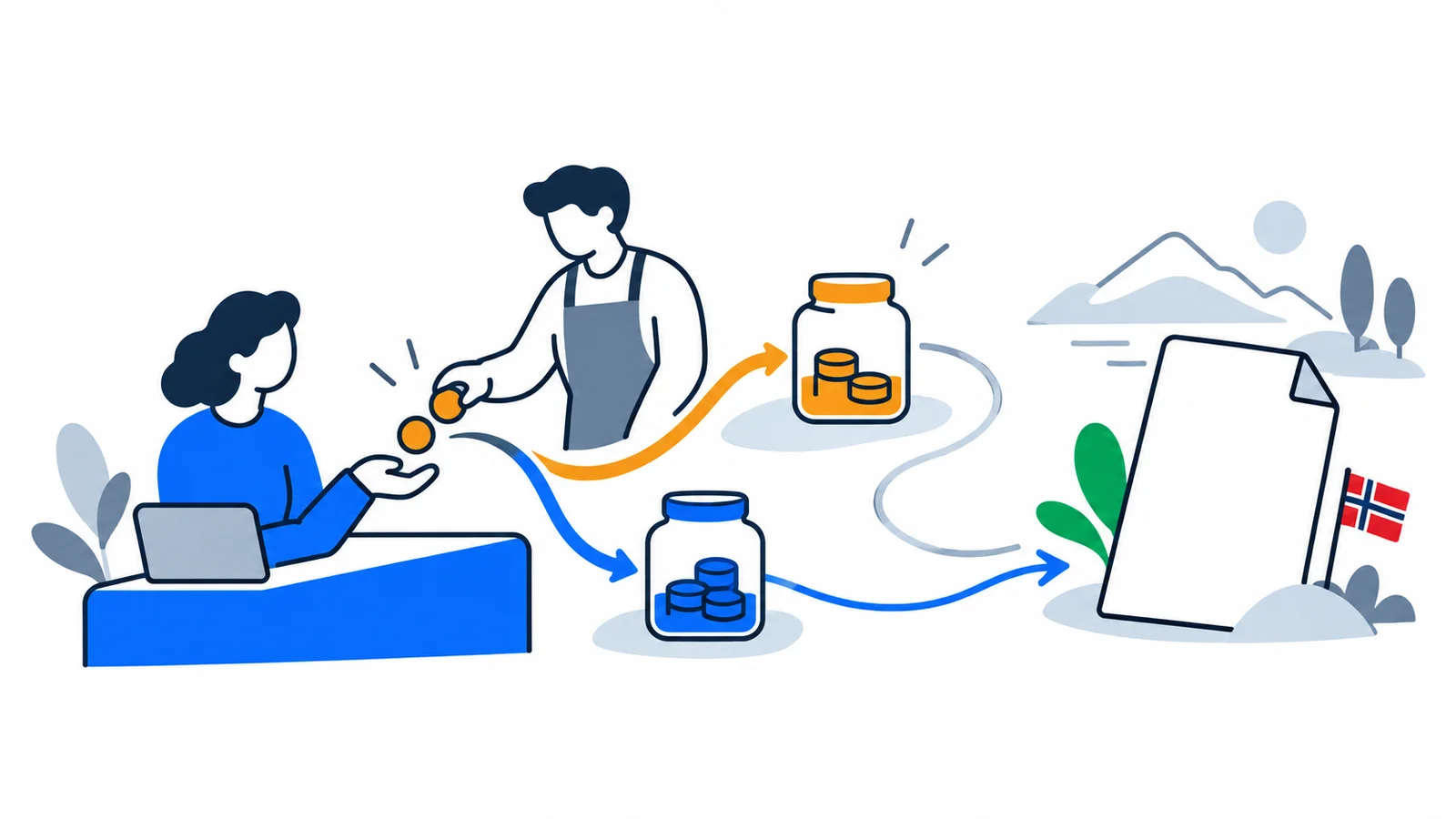
Then the entire back tax becomes due at once. It is not enough to skip the first invoice and wait for the next one.
Skatteetaten (the Norwegian tax authority) describes it this way: "If you do not pay the back tax by the deadline on the first invoice, the entire back tax becomes due for payment immediately. That means the amount you were supposed to pay on the second invoice in September also becomes due on 21 August. Then you can be charged late-payment interest on the entire amount."
In practice, this means the following. If you have a deadline of 20 August 2026 on invoice number one, and you do not pay, the September portion is brought forward. The entire sum becomes due on 21 August 2026.
This is the most important rule in this article. One invoice you skip makes the entire back tax due overnight.
When is back tax due in 2026?
Back tax of 1,000 kroner or more is divided equally between two invoices. If you received the tax settlement in June or earlier, the deadline is 20 August 2026 on the first and 24 September 2026 on the second. The actual dates and reasons why you receive back tax are explained in the article about the 2026 tax settlement and when it arrives.
If the back tax is less than 1,000 kroner, you only get one invoice. If you receive a new tax settlement, the entire amount becomes due after 3 weeks. Then the amount is never divided.
Around 400,000 people must wait until autumn for the settlement (Skatteetaten, press release 25.06.2026). The first tax settlement in autumn is 12 August 2026. If you receive the settlement in autumn, your first deadline is 3 weeks after the date you received it. If the amount is over 1,000 kroner, the second deadline is 8 weeks after. Skatteetaten states: "Everyone receives their tax settlement by 1 December."
Some details are worth knowing. If the payment deadline falls on a Saturday or Sunday, you can pay no later than Monday after. You must create a KID-number (a reference number that links the payment to your claim) before you pay. The invoice comes well in advance of the deadline. And you do not need to pay back tax that is less than 100 kroner, including interest.
Can you get a payment plan with Skatteetaten?
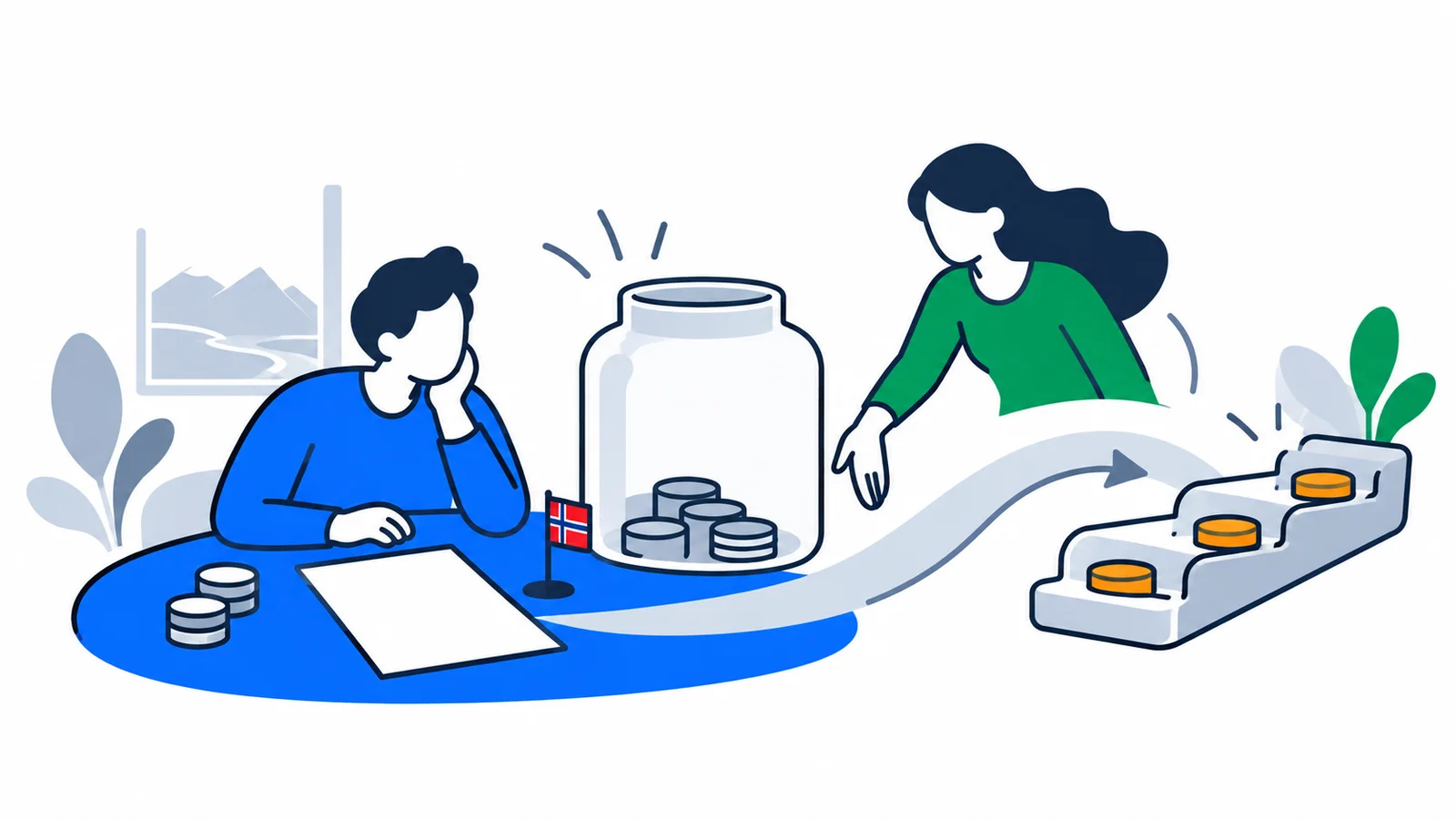
Yes. You can apply to split the claim or to defer it. Skatteetaten calls this a payment plan.
Skatteetaten recommends one over the other: "We recommend that you split the claim rather than defer payment."
To split the claim, you must meet all of these conditions (as of 14 July 2026):
- The claims must together be less than 100,000 kroner.
- The claims must be paid within 12 months.
- The instalment amount must be a minimum of 500 kroner per month.
- The application must cover all your overdue tax and duty claims.
- You cannot have previously received a payment plan for the same claim.
- You cannot have received notice of debt collection for the claims you are applying a plan for.
- Skatteetaten cannot have already decided to deduct from your income.
- You must be 18 years old or older.
Deferring payment has stricter conditions. You can only have one outstanding claim. The claim must be less than 100,000 kroner. You can apply for deferral for a maximum of 4 months from the due date of the claim.
| Option | Conditions | What happens |
|---|---|---|
| Split | Less than 100,000 kroner, all overdue claims, minimum 500 kroner per month, paid within 12 months | You pay a little each month. Skatteetaten recommends this. |
| Defer | Only one claim, less than 100,000 kroner, maximum 4 months | You get more time, but the full amount comes due at the end. |
| Do nothing | No application | The entire back tax becomes due immediately. You risk late-payment interest and debt collection. |
How much interest do you have to pay?
There are two types of interest, and they work in different ways. One is an interest rate of 3.12 per cent. The other is late-payment interest, which is added if you miss a deadline.
The 3.12 per cent interest applies if you pay after 31 May. It is calculated from 1 July in the income year, that is, the year before you file your tax return, until the deadline on the first invoice.
For the income year 2025, that door is already closed. The date of 31 May 2026 has passed. Paying early and avoiding this interest is therefore no longer possible for this settlement.
Late-payment interest is something completely different. It runs in addition, and it only starts when a deadline has passed without payment. Therefore it pays to apply for a payment plan before the deadline, not after.
What is debt collection and garnishment?
If you still do not pay, Skatteetaten can collect the money by force. Skatteetaten decides this itself, and the process goes in stages with notices along the way.
Skatteetaten explains: "When we are to decide on garnishment, also called a debt collection proceeding, we examine what you own and whether we can place a lien on assets, deduct from your income, or do both."
A garnishment also gives you a payment default. Skatteetaten states that a payment default "will make it difficult to obtain new loans, credit and subscriptions". It is worth understanding payment default and the consequences for you before it goes that far.
You still have a way out. You can stop a garnishment decision by paying the entire claim, including interest and costs. The money must be registered with Skatteetaten before the decision is made.
Skatteetaten collects back taxes itself. If you also have other unpaid bills that have gone too far, separate rules apply — see how you handle a debt collection claim.
Why do many people new to Norway receive back tax?
A common reason is that the tax card does not fit your situation. Skatteetaten is clear: "It is not the case that the tax card changes automatically when your personal finances change."
If you are new to the country, Skatteetaten states: "When you are new to Norway and apply for a tax card, you are usually automatically enrolled in a tax scheme called source tax on wages." Then 25 per cent flat tax is deducted from your wages. The ceiling is 725,050 kroner in 2026 (697,150 kroner in 2025). You are outside the scheme if you have capital income over 10,000 kroner.
An exemption certificate is another pitfall. The limit is 100,000 kroner. If you have two employers, both may think you are below the limit, and then too little tax is deducted. Skatteetaten also states: "If you exceed the amount with one employer, they must deduct 50 per cent tax from your wages, even if you have not earned more than 100,000 kroner in total that year."
If you want to avoid the same thing next year, you can change your tax card to avoid a setback next year. If you are completely new to Norway, tax card and other first steps are in the checklist first week in Norway on SamfunnPrep.
What should you do now?
Contact Skatteetaten before the deadline passes. That is what prevents the entire amount from becoming due at once.
Back tax feels heavy, but this is a process with steps, notices and rights. You can apply for a plan, and you can be heard. You are not the first to end up here.
Many of these rules are part of the civic knowledge test curriculum. Practice free on SamfunnPrep.