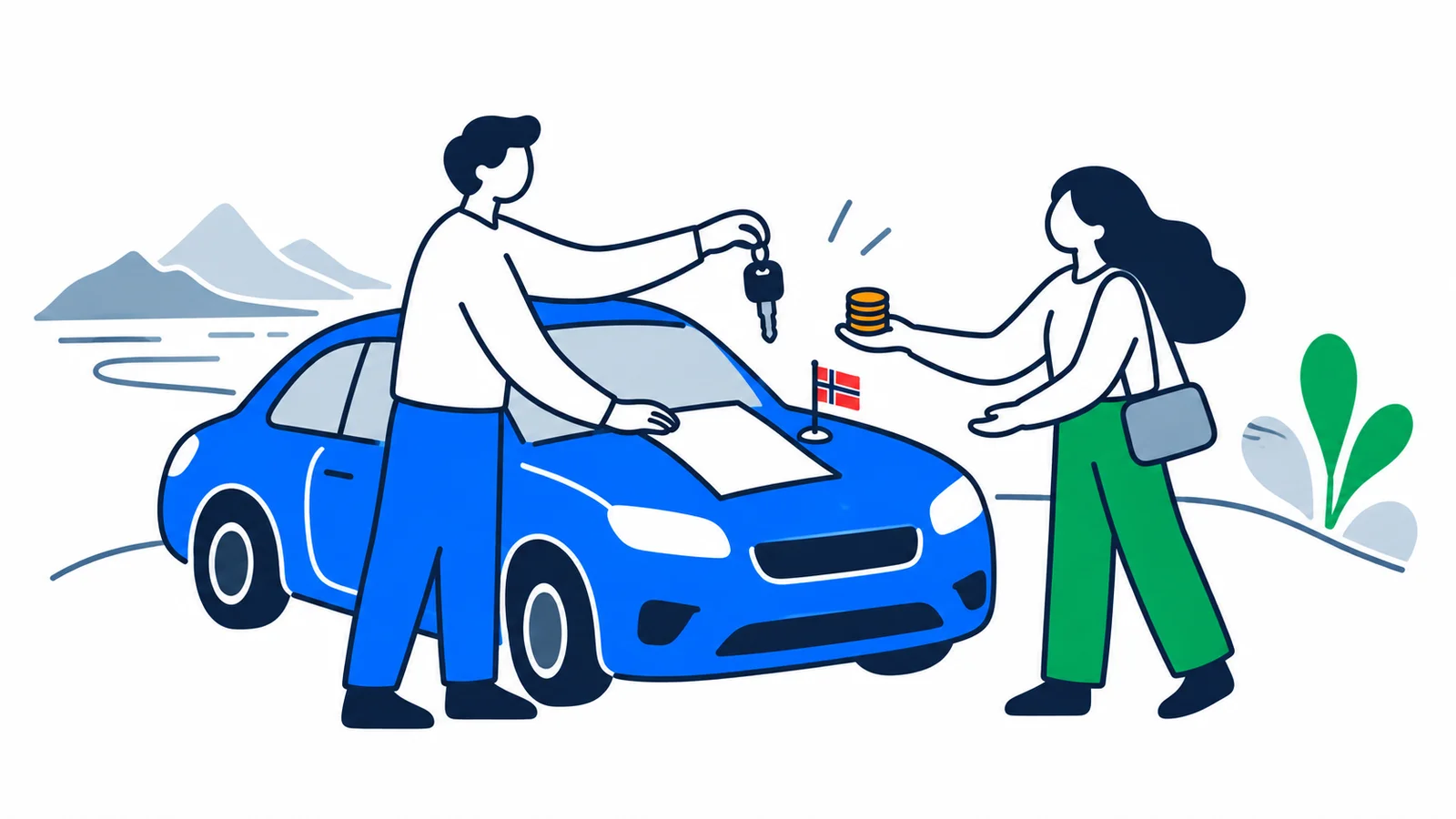

When selling a car in Norway, you should find the right price, write a purchase contract and register the sale digitally with the Norwegian Public Roads Administration using BankID. You cancel the insurance only when the car is registered to the new owner. Profits from the sale of a private car are tax-free.
Find the right price for the car
You find a realistic price by comparing similar cars and looking at the car's age, mileage and equipment. Norway's largest used car marketplace is Finn.no, where both private sellers and dealers post listings. Look at cars with the same brand, model, year and approximately similar mileage.
A car with a valid EU-control, complete service history and two sets of tyres often sells faster and at a better price. If you are unsure about the value, a garage or NAF (Norwegian Automobile Association) can provide an independent assessment. Set the price a bit higher than the minimum you want, so there is room for negotiation.
Prepare the car and write a good advertisement
Wash the car, fix small faults and take good photos in daylight. In the advertisement you should be honest about faults and defects — this makes for safer trading and fewer conflicts later. State the mileage, when the next EU-control is due, whether the car has liens (pledges or loans) and why you are selling.
You can check information about the car for free on vegvesen.no under "Check vehicle information". There you can see, among other things, any liens and the deadline for EU-control. If you want to see how the transaction looks from the other side, you can read our guide on buying a used car in Norway.
Write a purchase contract
Always use a written purchase contract when selling a car privately. A standard template from the Consumer Council or NAF is free and covers the main points. The contract should contain the name and personal ID number of both parties, the car's registration number and vehicle identification number (VIN), mileage, price, date and signatures.
It is a good idea to write that the car is sold "as is". In a private sale, the buyer still has two years of warranty rights under the Sales Act if the car has significant faults you should have disclosed. If you sell through a dealer, a five-year warranty period applies. Write the contract in two copies — one for each party.
Report the sale to the Norwegian Public Roads Administration
The change of ownership is reported digitally: you as the seller send a sales notification on "My Page" at vegvesen.no, and the buyer confirms it with BankID. You need BankID or another electronic ID to log in.
After you have sent the notification, the buyer must confirm it within the deadline and then pay the re-registration fee before the car can be used. Do not hand over the car before the change of ownership is reported and confirmed — otherwise you could end up being responsible if something happens to the car afterwards.
Safe payment — avoid fraud
Accept payment as a bank transfer that you can see in your own account before you hand over the car and keys. Meet the buyer in a safe place, preferably during daytime. Be sceptical of payment by cheque, large cash amounts or a "transfer" you cannot confirm yourself.
A common trick is fake payment confirmations by email or SMS. See how you recognize common fraud in Norway before you arrange a meeting. Never hand over the car against a promise of payment later.
Cancel the insurance and stop the fee
Wait to cancel the car insurance until the change of ownership is registered to the new owner. As long as the car is registered in your name, it must have liability insurance, and you pay motor insurance tax to the state through the insurance.
When the change of ownership is complete, you can contact the insurance company and end the insurance for the car. If you are not selling the car, but want to put it away for a period, you must de-register it (return the number plates) to avoid insurance obligations and fees.
Do you have to pay tax when you sell a car?
No — if you sell your own private car, any profit is tax-free, and a loss does not give you a deduction. A private car is classified as a consumer good, not an investment. Therefore, the sale price is tax-free, whether you sell at a profit or loss.
However, this only applies to genuine private sales. If you buy and sell many cars in a year to make money, the Norwegian Tax Authority may consider it as a business activity — then the profit becomes taxable. If you are unsure about the tax rules as a newcomer to the country, you can read about paying tax in Norway for the first time.
What should come with the car?
When the transaction is complete, some things should come with the car. Make sure the new owner gets everything that belongs to it:
- Registration certificate part 1 and part 2 — part 2 is needed, among other things, for the next change of ownership.
- All keys, preferably both main key and spare key.
- Service booklet and receipts showing that the car has been maintained. A documented service history gives a higher price and a more confident buyer.
- Extra set of wheels, for example winter tyres, if agreed in the price.
Arrange a short test drive in a safe place, and go along yourself. Ask the buyer to show a valid driver's license before the test drive, and make sure your car is insured. This way you avoid being held responsible if something happens during the drive. If you are unsure whether the buyer is allowed to drive in Norway, you can agree that the test drive takes place with you at the wheel.
In short
Selling a car safely is about three things: the right price, a good contract and a correct change of ownership. On SamfunnPrep you will find simple guides to everyday life in Norway — from banking and tax to car maintenance. Traffic rules and consumer rights are also part of the curriculum for the civic knowledge exam, so get started with SamfunnPrep and become more confident about Norwegian society.