
Convoy driving means crossing an exposed road section together with others, led by snow-clearing crews. Check traffic notices before leaving, have enough fuel or battery charge and follow instructions. Never pass a closed barrier.
What does convoy driving mean?
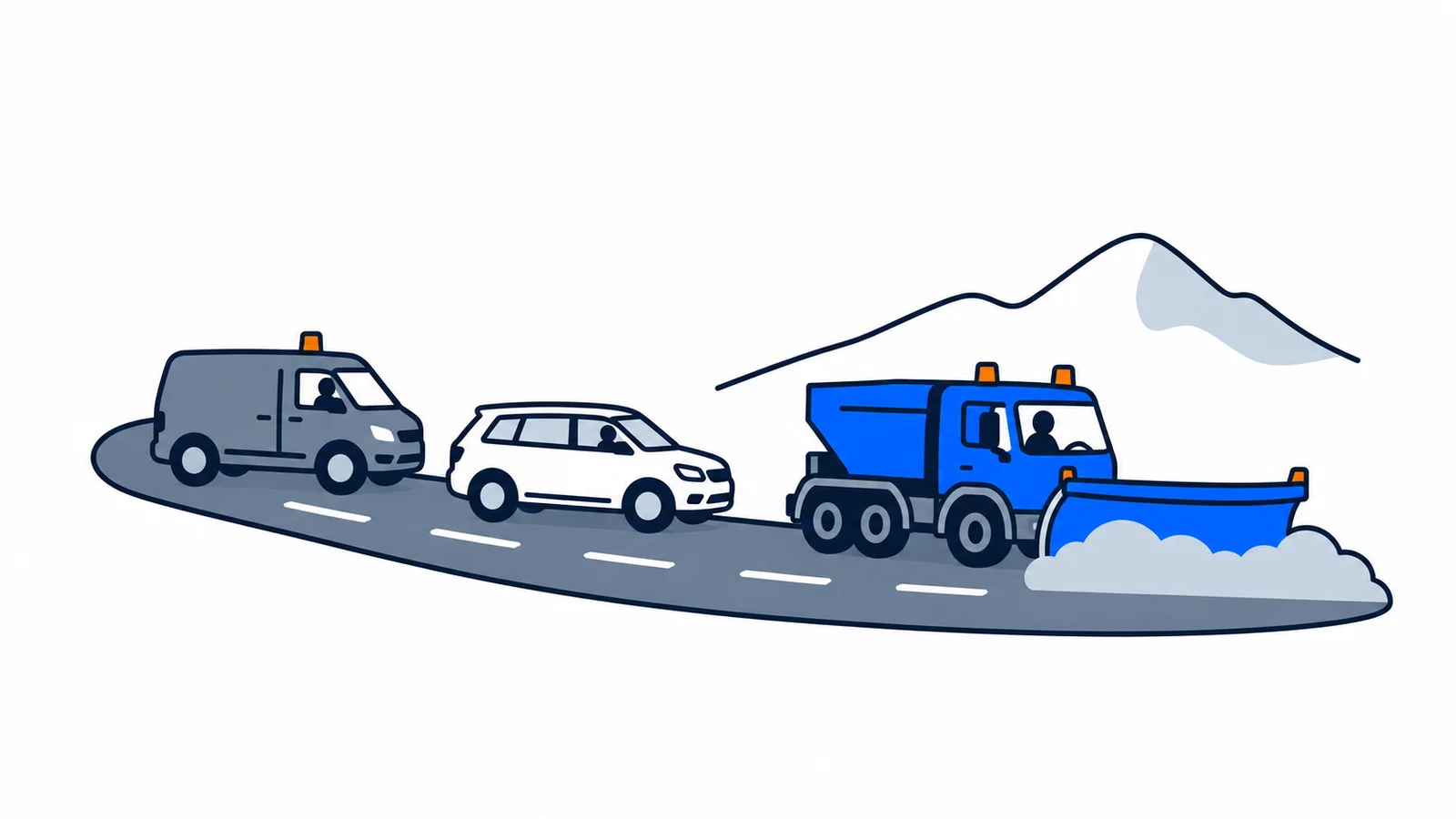
Convoy driving, or kolonnekjøring, is organised driving when the weather makes travelling alone unsafe. A snowplough or lead vehicle travels in front, with another vehicle at the rear.
The snow-clearing crew leads cars across the exposed section. Strong wind and snow can quickly fill the road. A cleared road therefore does not promise that you can safely drive alone behind a snowplough.
Statens vegvesen, the public agency responsible for matters including roads and traffic information, explains the arrangement in its mountain crossing information. This advice was checked on 4 October 2026. Weather, queues and local instructions may change during your trip.
Convoy driving does not guarantee that the road will stay open. If the weather becomes too bad, the section may close completely. Plan for possible waiting or another solution.
Before the trip, also check SamfunnPrep’s winter tyre rules. Tyres suitable for the conditions are essential, including when following a convoy.
How do you check the mountain crossing?
Use Statens vegvesen’s updated traffic notices for the particular section. Check before leaving and during the trip while safely parked.
Find the road number and mountain crossing name. This makes it easier to know whether a notice concerns your route. A trip may cross several exposed areas, and the status in one place does not describe the rest.
Distinguish open, convoy driving and closed. A normal estimated journey time in a map app may be of little use if you must wait for a convoy. Also check whether a suggested detour is suitable and open.
You can use Vegvesen trafikk and the agency’s app. Check notice times and follow any information about a new assessment. “New assessment” does not necessarily mean the road will open at that time.
Do not investigate notices on your phone while driving. Ask a passenger to help or stop somewhere safe. Tell people waiting for you that your arrival time may change.
What must you bring before driving?
Have a full fuel tank or fully charged battery before a planned convoy trip. Bring warm clothes, food and drink that are also accessible while waiting.
Statens vegvesen stresses in its convoy driving guide that there are no fuel or charging stations on the convoy section itself. Do not plan to refuel or charge in the middle of the convoy.
A useful packing list is:
- warm clothes and winter shoes for everyone in the car
- food, water and hot drinks
- an easily accessible torch, shovel and tow rope
- necessary medicine and children’s equipment
- a phone and a practical way to charge it
- enough time for waiting and a plan if the trip must change
Follow the car’s manual for equipment and safe use. Pack so you can find essentials without searching all the luggage. An extra jacket in the boot is of little help under heavy suitcases.
Check lights, visibility and washer fluid before departure. A snow-covered car or poor tyres can make the trip unsafe before you reach the barrier. Missing equipment may also make the crew refuse entry to the convoy.
How do you drive in the convoy?
Follow the snow-clearing crew’s instructions and maintain a steady speed. Keep the car ahead in sight without driving dangerously close.
Vegvesen advises using hazard warning lights during convoy driving. Also follow guidance about other lights and visibility. This is a special situation; hazard lights do not make ordinary solo driving safe in a snowstorm.
Do not overtake, leave the convoy or try to turn around. Follow the organisation decided by the crew. A snowplough may stop to check that everyone is present.
No single distance or speed is right for every convoy. Visibility, road conditions and instructions matter. You should be able to follow the car ahead while maintaining a safe distance.
If you do not understand a message at the barrier, ask for an explanation before starting. You can say: “I have never driven in a convoy. Can you explain what I should do?” Clarifying beforehand is better than guessing on the mountain.
What if the convoy stops?
Stay by the car and follow crew instructions. Do not walk away in blowing snow to look for help.
Poor visibility may make finding your way back difficult. You may also get in the way of snowploughs and lead vehicles. Statens vegvesen clearly warns against moving away from the car during a stop.
Keep track of every passenger. Have warm clothes accessible and follow the car’s instructions for heating and ventilation. Do not plan to drive on alone because the convoy has stopped.
For safety, the crew limits the number of people admitted. They may refuse cars or people who are not sufficiently prepared. Waiting a long time does not give you a right to join if conditions or equipment do not allow it.
What should you do when the road is closed?
Stop at the barrier and choose a safe plan for waiting, a detour or postponing travel. Do not pass a closed barrier, even if the weather seems calm where you are.
Weather higher on the mountain may be much worse. Road crews may also work on the section while it is closed to other traffic. Seeing a snowplough beyond the barrier does not mean you can follow it.
| Status | Practical next step |
|---|---|
| Open | Check conditions and continue only if both car and driver are prepared. |
| Convoy driving | Follow meeting arrangements and instructions, and plan waiting time. |
| Closed | Respect the barrier and consider a confirmed safe alternative plan. |
For a detour, check the entire new route. A shorter road on the map may be narrower or more exposed. If you lack winter driving experience, postponing departure or using public transport may be a better practical choice.
An example of a winter trip
A plan with several options makes a calm decision easier. Make it before facing a queue or a closed road.
In an illustrative example, a family plans to cross the mountain. Before departure, they see that convoy driving is in place. They charge the car, pack food and warm clothes, and look for somewhere to wait before the mountain section.
During the trip, the road closes. The family parks safely, checks new notices and informs those waiting. They check whether a detour is actually open and consider postponing the trip. The example promises no specific waiting time.
Use SamfunnPrep’s tools for practical tasks as a starting point for a travel checklist. Note the route, traffic information and backup plan. This lets you focus on driving when the trip begins.