
Have you hit an animal? Stop and secure the scene without putting people at risk. Call the police on 02800 and explain what happened. For injuries to people or a serious road accident, call 113. Do not follow an injured animal.
Stop and look after people first
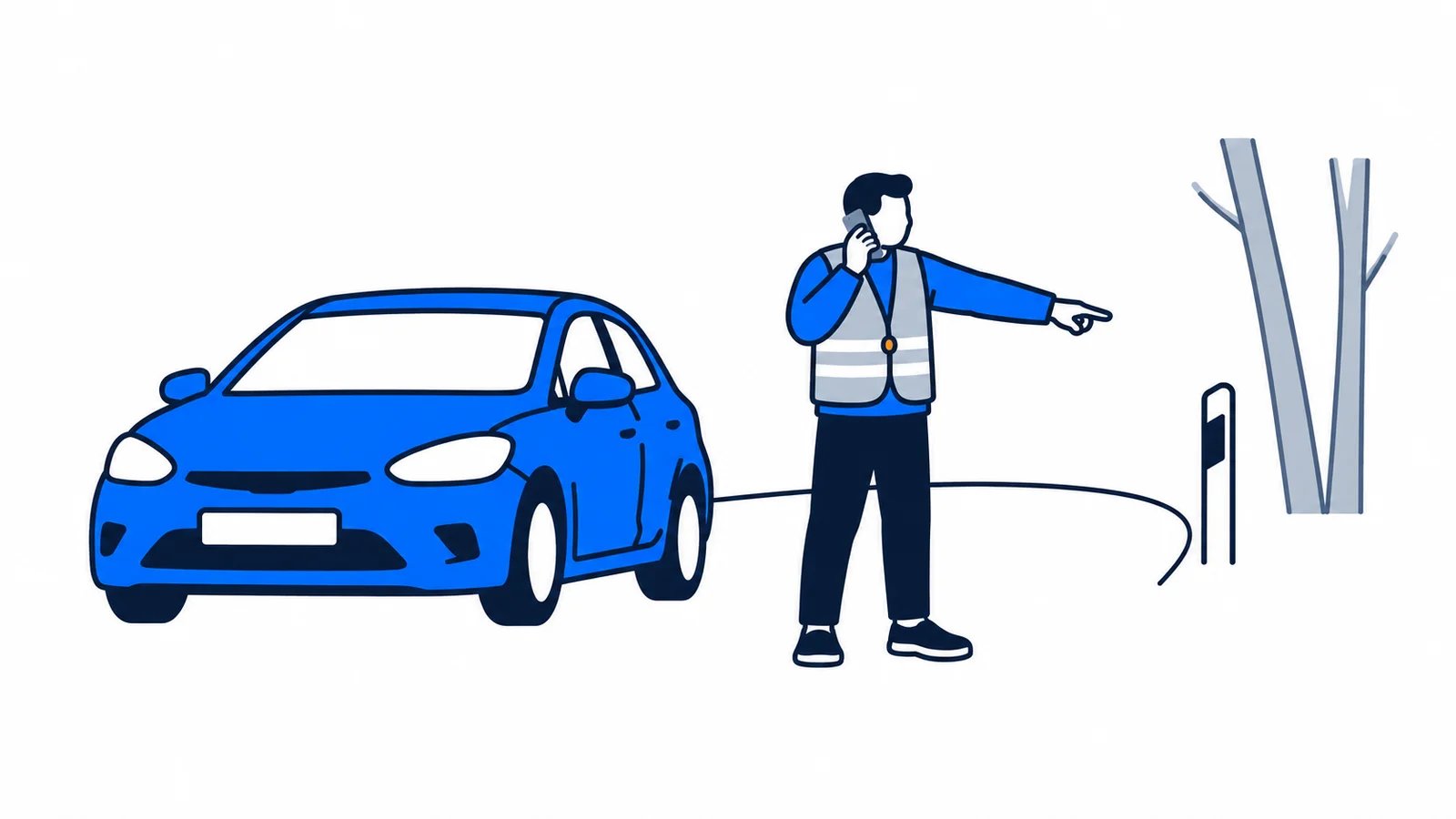
Switch on your hazard lights. Put on a reflective vest before getting out, and place a warning triangle if you can do so safely. Check the surrounding traffic before opening the door. Move the car only if it is safe.
Check whether anyone in the car or elsewhere at the scene is injured. Call 113 for injuries to people or a serious road accident. Explain where you are, what happened and how many people need help. Follow the instructions you receive by phone.
You must stop when involved in a road accident, regardless of fault. Statens vegvesen, the Norwegian Public Roads Administration, explains the first steps at an accident scene. An injured animal must not distract attention from people in danger or passing traffic.
Who should you call about the animal?
02800 is the police number when the situation does not require emergency police assistance. Call it to report the collision and follow the instructions. If you need immediate police assistance, use 112. The numbers are on the police contact page.
After a collision with large game, such as a moose or roe deer, the police notify the municipal wildlife management service. This may be called viltnemnda or the tracking team. They organise help for the animal. You do not need to find a local hunter yourself before calling.
The police’s own account of a moose collision shows that an animal can run on after being hit. It is therefore important to report the incident even if you can no longer see it.
Give precise location information
Start with the location and what happened. A simple example of a phone report is:
“I have hit a roe deer. I am on road 7, heading towards …, just past …. The animal ran off on the right. No people are injured. The car is …”
Replace these details with what you actually know. Say “I’m not sure” if you do not know the species or location. You do not need to guess to give a useful report.
It helps to have these details ready:
- road number or name, municipality and direction of travel
- nearest sign, junction or other clear landmark
- your position on your phone’s map, if you can find it safely
- roughly when the collision happened
- what animal you saw and whether it is still there or has disappeared
- whether the animal, car or vehicle parts are obstructing traffic
Explain the difference between where the animal was hit and where the car is now. If you drove a little farther to stop safely, these may be different places. Ask whether the person taking your call needs more information before you hang up.
When the animal has run away
Do not follow the animal into woodland or across a field. An injured animal can be dangerous, and following it can make tracking harder. Tracking means qualified people search for the animal, often with a dog.
Explain which side of the road the animal disappeared on. When the police give you permission to leave, the collision site must be marked so the people arriving afterwards can find it. Agree on how to do this safely and explain what you used as a marker.
The Roads Administration’s advice on animal collisions covers reporting, marking and why you should not follow the animal. A map location and a clear explanation are especially useful when several turn-offs or similar stretches of forest make the place hard to describe.
If it is a cat, dog or another domestic animal
Mattilsynet, the Norwegian Food Safety Authority, says the duty to help applies to both wild and domestic animals. An animal that has been hit should generally be considered injured unless it is clearly unharmed and does not need help.
For a cat or another domestic animal, you can contact the owner. If you neither reach the owner nor take the animal to a vet, you must call the police on 02800. Also call if you are unsure what to do.
Do not provide help you lack the skills to give, or put yourself or others at risk. Do not try to catch, lift or transport the animal unless you can do so safely. Ask the police or a vet for advice.
Mattilsynet’s guidance on animals needing help explains the responsibility in more detail. If the animal is badly injured, describe the situation and ask for urgent help. Do not attempt to put it down without the necessary expertise; this requires a separate assessment.
Agree on the handover before leaving
Use the end of the phone call to clarify anything still uncertain:
- May I leave, or should I wait?
- Are the location and marking clear enough?
- Should I call back if the animal moves or the situation changes?
- Do you need my phone number to contact me again?
Once the urgent situation is dealt with, you can note the time, location and whom you spoke to. Take any photos of the car and scene only when it is safe. Do not approach the animal to get a photo.
Contact your insurer about damage to the car. Ask what documentation they need and which terms apply to your policy. SamfunnPrep explains common types of cover in its guide to car insurance in Norway.
Before your next trip, you can read about traffic rules in Norway. To become more familiar with Norwegian words and public services, you will also find exercises and aids under tools.