
Using an electric car in winter takes extra planning because cold can reduce range and charging speed. Distinguish cabin heating from battery preheating. Plan charging stops with a reserve, and follow the car’s manual.
Why does an electric car have less range?
Cold affects the battery, and the car uses energy for heating. Snow, slush and other driving conditions can also increase consumption.
A traction battery is the large battery storing the energy used for driving. When cold, it works differently from a warm battery. At the same time, you need heating and good visibility inside the car.
Norsk elbilforening, an organisation for electric car owners, explains the causes in its electric car winter advice. This guide’s advice was checked on 4 October 2026. The loss varies with the car, temperature, speed and route.
There is therefore no single percentage that guarantees the result for your car. An advertised range is also no promise of how far you can go on a particular winter day. Use your experience of your own car and the conditions you will drive in.
SamfunnPrep has a general guide to buying and owning a car in Norway. Here we focus on the car you already use and planning charging in cold weather.
How do cabin heating and battery heating differ?
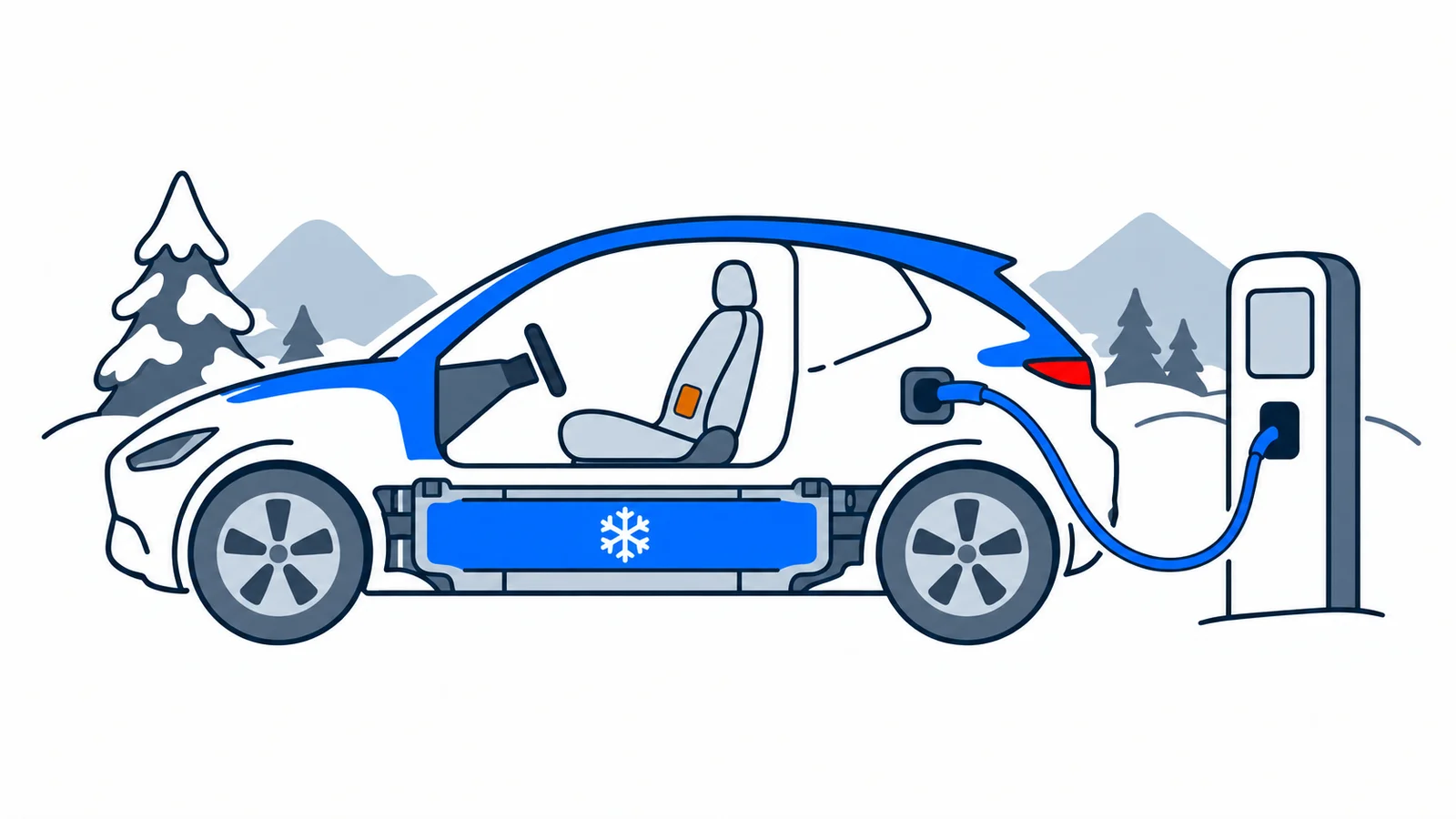
Cabin heating warms the space where you and passengers sit. Battery heating prepares the traction battery for driving or charging, depending on the car’s system.
A warm cabin does not automatically mean the battery is warm enough for fast rapid charging. This commonly explains why a car can be comfortable inside but still charge slowly.
Some cars have a separate preheating function before rapid charging. In certain models, it activates when you select a charging station in the car’s navigation. Others have a menu or app. Cars do not all have the same function.
Norges Automobil-Forbund, abbreviated NAF, describes this in its cold-weather rapid charging advice, updated on 19 May 2026. Find the manual and learn how your car controls heating.
Preheating uses energy too. Plan it with departure and charging as the manufacturer recommends. Do not promise yourself a specific range improvement just because you activated heating in an app.
How do you plan winter charging stops?
Choose stops before the battery becomes critically low, and have an alternative if the first station cannot be used. Allow time for charging and possible queues.
A warm battery can accept power faster than a cold one. Charging after driving may therefore be more efficient than stopping just after a cold start. If the car has battery preheating, use it according to the manufacturer’s advice.
Before a longer trip, investigate:
- where the first planned charging stop is
- which connector the car uses
- whether the station suits the car’s charging capabilities
- how you pay and start charging
- where an alternative charging point is
- whether weather and road status may cause waiting or detours
Check the charging operator’s information. A station shown on a map does not mean every charger works or is available. Prepare the necessary payment method before standing outside in the cold.
Do not gamble on reaching the next station with an almost empty battery to get the fastest possible charging. NAF stresses that stopping too early is better than too late when uncertain. A safe reserve matters more than following an ideal from a charging test.
Why is rapid charging slow?
A cold battery may limit charging power even at a powerful station. Charging speed also changes with battery level and the car’s own limits.
Charging power, measured in kilowatts and written kW, indicates how fast energy is being transferred at that moment. A kilowatt-hour, written kWh, is an amount of energy. A charger with a high kW figure does not promise that the car will accept that power continuously.
Compare the power the car can use with what the station offers. The lower limiting capability matters. A more expensive or powerful charger does not necessarily give your car a faster stop.
Many cars charge more slowly as the battery approaches full. On a long trip, another short stop may be more practical than waiting a long time for the final part. You still need enough energy to reach the next safe opportunity.
| What you see | Possible explanation | What to check |
|---|---|---|
| Low charging power after a cold start | The battery is cold. | The car’s preheating and manual. |
| Power falls at a high battery level | The car limits charging. | The energy needed for the next part of the trip. |
| Charging does not start | Payment, connector or station may be the problem. | Operator support and an alternative point. |
The table lists possible causes and is not a diagnosis. Contact the operator for station problems. Follow the manufacturer’s advice if the car displays an error.
How do you choose a safe charging point?
Use a suitable charging point and an undamaged cable compatible with the car. Do not extend the charging cable with an extension lead or make your own adapter.
Direktoratet for samfunnssikkerhet og beredskap, the Norwegian Directorate for Civil Protection, abbreviated DSB, explains safe use in its electric car charging guide. DSB recommends a dedicated charging station as the normal solution. New electrical installations must be assessed and completed by qualified professionals.
Stop charging and ask for help if the cable or connector shows damage or unusual heat develops. Follow operator instructions. Do not use tools or force to repair a public charger.
If you rent or live in a co-ownership building, clarify access and rules with the landlord or board. A cable from a window is no safe substitute for a suitable solution. SamfunnPrep explains more about electrical work and what you may do yourself.
What should you check before departure?
Check visibility, lights, tyres and necessary fluids before a winter trip. An electric car still needs normal attention despite having no petrol engine.
Many electric cars also have a smaller low-voltage battery, often called a 12-volt battery. Problems with it may prevent the car from starting even with energy in the traction battery. NAF discusses this in its electric car and cold weather guide.
Follow manufacturer advice if such an error appears. Do not use another car’s procedure without checking the manual. Also have washer fluid suitable for the temperature and clean windows before departure.
An example of a winter trip
Plan both the first charging stop and a backup, without fixing the plan to one expected charging speed. Winter weather may change consumption and travel time.
In an illustrative example, you are visiting family. You find a station before an exposed part of the route and another nearby. You learn how the car activates battery preheating and check the payment method.
On the trip, the car shows higher consumption than usual. You choose an earlier stop rather than gambling on the range estimate holding. The example guarantees no driving distance, charging time or price.
Use SamfunnPrep’s tools for practical tasks as a starting point for a departure checklist. A simple plan for charging, payment and a backup makes winter travel easier.