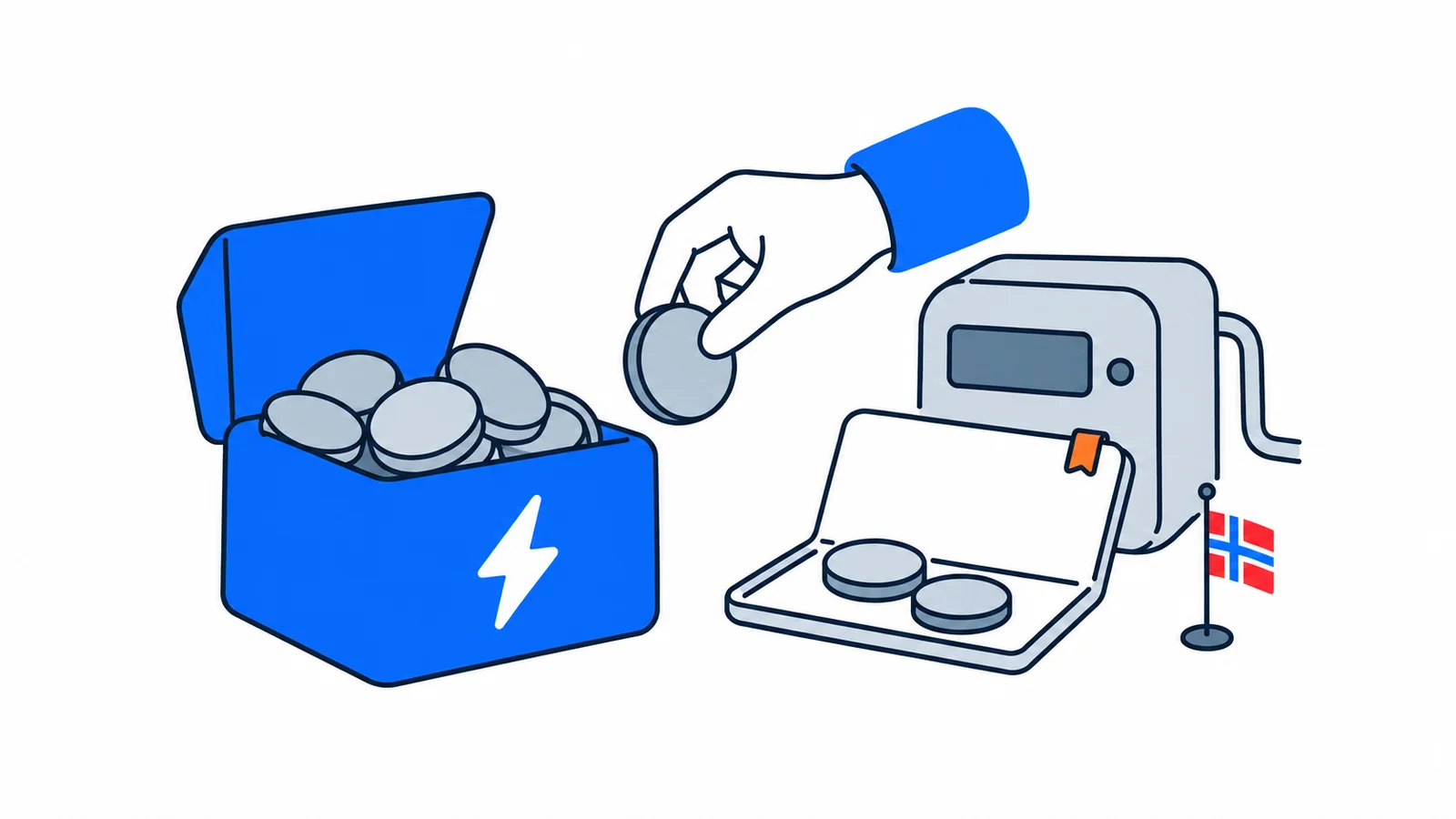

You can buy part of a home your cohabiting partner already owns. Clarify its value, the ownership share and the mortgage before paying. Use the correct document to register the transfer, and allow for taxes, fees and other costs.
What should you agree on first?
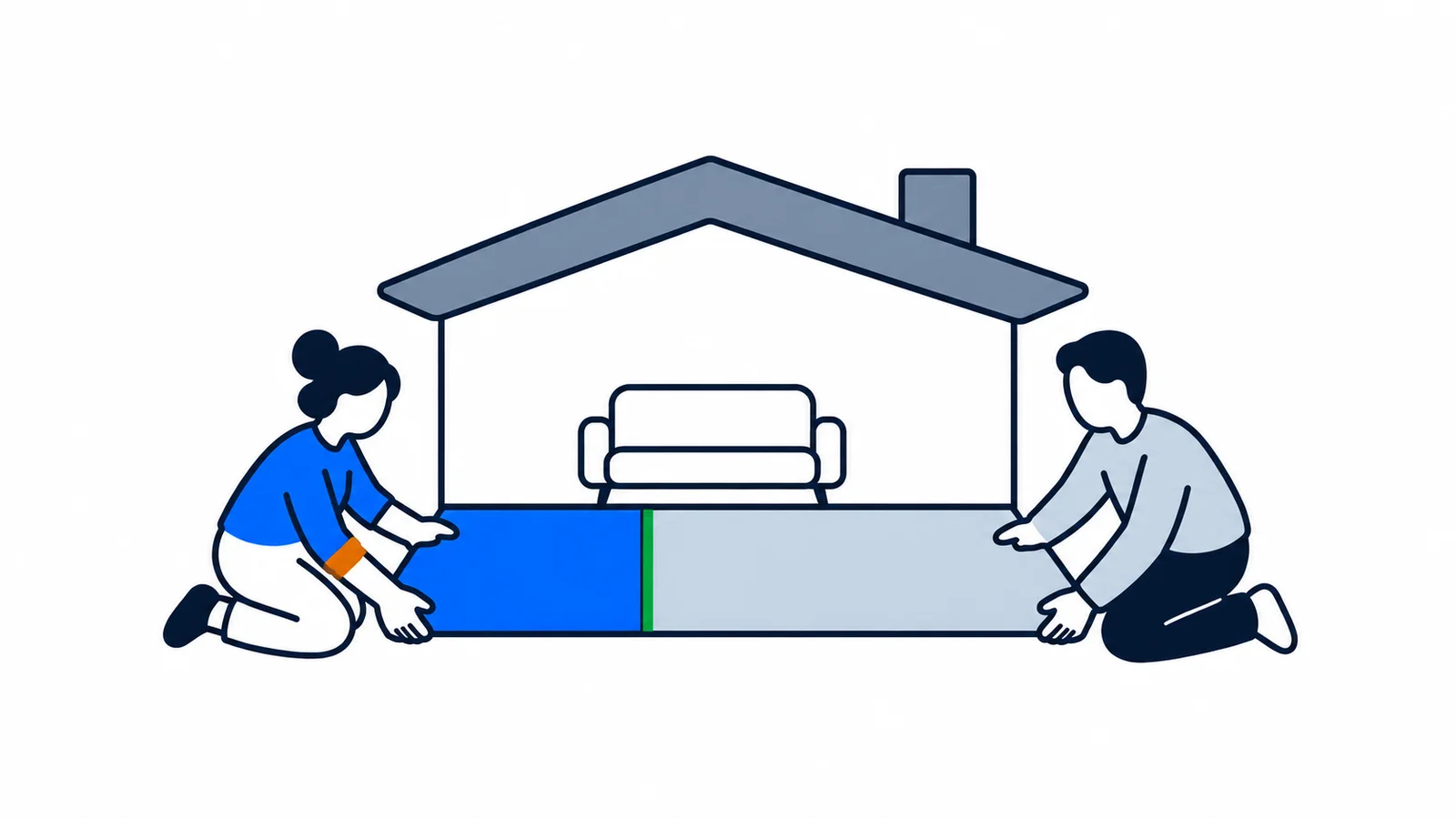
Agree on how large a share you will buy and what you will pay. For example, you could own 30 percent and your partner 70 percent. You do not need to buy half.
An up-to-date valuation is a useful starting point. It indicates what the home could sell for now. The original purchase price is not necessarily its current value. See SpareBank 1's guide to buying into a home, produced with Advokatfirmaet Legalis, the Legalis law firm.
Write down the ownership share as a fraction or percentage. Also clarify how much each of you will contribute in equity, interest, mortgage repayments and ongoing expenses. Different equity contributions can be handled through different ownership shares or a different division of the mortgage. See DNB's examples of ownership shares and mortgages. These examples offer advice on dividing costs; they are not a loan offer.
Are ownership share and mortgage liability the same?
No. The ownership share states how much of the home you own. The loan agreement states your liability to the bank. Clarify both before agreeing to the purchase.
If you become a co-borrower, you become responsible for repayment together with the other borrower. SpareBank 1 describes this as equal responsibility for ensuring the loan is repaid. The bank assesses combined income and debt when several people apply together. See what being a co-borrower means.
Ask the bank to explain who will be named on the loan, what each person is liable for and which documents it needs. A division you write down between yourselves does not by itself create a new agreement with the bank. Clarify the financing before completing the settlement.
How do you calculate the price and payment?
The purchase price for the share you take over can consist of money, assuming debt or both. State the total value. See Kartverket's guidance on transfers between cohabiting partners.
This is a simplified calculation for a selveierbolig, a directly owned home. It assumes that you agree on the value and have clarified the financing with the bank:
| Item | Example |
|---|---|
| Value of the home | 3 000 000 kroner |
| Share you buy | 1/2, or 50 percent |
| Agreed purchase price for the share | 1 500 000 kroner |
| Money you pay | 500 000 kroner |
| Debt included in the payment | 1 000 000 kroner |
The table shows payment for the ownership share. It does not determine the bank's claims against you.
How much are the document tax and registration fee?
A normal transfer of real property between cohabiting partners during their relationship is subject to dokumentavgift, document tax. The tax is 2.5 percent of the market value of the share transferred at the time of registration. Debt is not deducted from this basis. See Kartverket's explanation of the tax basis.
In the example, half the property's market value is 1 500 000 kroner. The document tax is therefore 37 500 kroner. It is not calculated only on the 500 000 kroner you pay with your own money. Using the sale value as the basis also follows from Lov om dokumentavgift (dokumentavgiftsloven) section 7, the Document Tax Act, on Lovdata, which publishes legal texts.
In 2026, the usual registration fee is 545 kroner per document, for both a deed and a housing cooperative share transfer. Several documents, such as a mortgage document, may generate several fees. Bank, valuation and settlement costs may be added. See Kartverket's fees for 2026. This information was checked as of 7 October 2026.
How do you register the purchase of a directly owned home?
Use a new Skjøte, a deed, to register the transfer with Kartverket, the Norwegian Mapping Authority. Tinglysing means registration in the land register. This gives your ownership rettsvern: legal protection against competing rights. Ownership can exist without registration, but then this protection is missing. See Kartverket's explanation of deeds and legal protection.
Check who is registered as owner and which encumbrances are registered in Eiendomsregisteret, the Property Register. Encumbrances can include mortgages. The fractions for the transferred share must be correct on the deed. The purchase price and market value have separate fields and may differ. Follow Kartverket's guidance for Skjøte.
For a normal paper submission, the registered owner signs by hand. As a general rule, two adult witnesses living in Norway confirm the signature. They must not be close relatives of the recipient. For the transfer of a separately owned unit, the buyer must also sign the declaration in point 7. Send all pages and two copies: two originals, or an original and a copy.
What if the home is in a housing cooperative?
Use Overføring av hjemmel til andel i borettslag, the form for transferring title to a housing cooperative share, rather than a deed. This form is also used when the ownership fractions between joint owners change. You need the cooperative's organisation number and the share number. The property manager can help you find them.
There is no document tax on a housing cooperative share transfer, but the registration fee applies. Follow the form's signature and witness rules too. See Kartverket's guidance for cooperative shares.
Clarify any right of first refusal with the property manager. This means others may have the right to buy on the same terms. People who have belonged to the same household as the owner for the past two years are among those exempt. Do not assume every cohabiting relationship provides an exemption. See Forbrukerrådet's rules on rights of first refusal, from the Norwegian Consumer Council. SamfunnPrep also explains the difference between housing cooperatives and direct ownership.
Do you need to contact the municipality about acquisition permission?
Clarify whether the municipality needs to process or register the konsesjon status before you send documents to Kartverket. Konsesjon means permission to acquire property. Some transfers require a self-declaration; others require neither an application nor a declaration.
Kartverket's guide covers common cases. Cooperative shares may also need clarification in municipalities with a reduced threshold for requiring acquisition permission. If necessary information is missing, documents may be returned without registration. See Kartverket's guide to konsesjon.
How do you complete the settlement safely?
Make a written purchase agreement and clarify how payment and transfer will happen. Settlement means carrying out the payment and transfer. Forbrukerrådet recommends an estate agent or lawyer for the settlement to safeguard both parties' assets. See the guidance for the purchase contract. Ask for a price and a description of the tasks before ordering help.
The selling partner should also check tax. A sale may produce a taxable gain, while use as the owner's home may give a tax exemption when the conditions are met. See Skatteetaten's guidance on selling a home, from the Norwegian Tax Administration. Document tax and tax on gains are two separate issues.
What should you check after the purchase?
Update the cohabitation agreement so it shows the new ownership arrangement and the division of payments. This agreement does not replace the registration document. An ordinary financial cohabitation agreement normally cannot be registered as it stands. Kartverket's cohabitation guidance explains the difference.
Collect the documents and check that they agree:
- the agreed price and ownership share in the purchase agreement
- the loan agreement and your agreed division between yourselves
- the registered transfer in the land register
- receipts and the updated cohabitation agreement.
Raise any differences with the bank or whoever helped with the settlement. You can read more about marriage and cohabitation in Norway on SamfunnPrep. You will also find practical tools for everyday life.