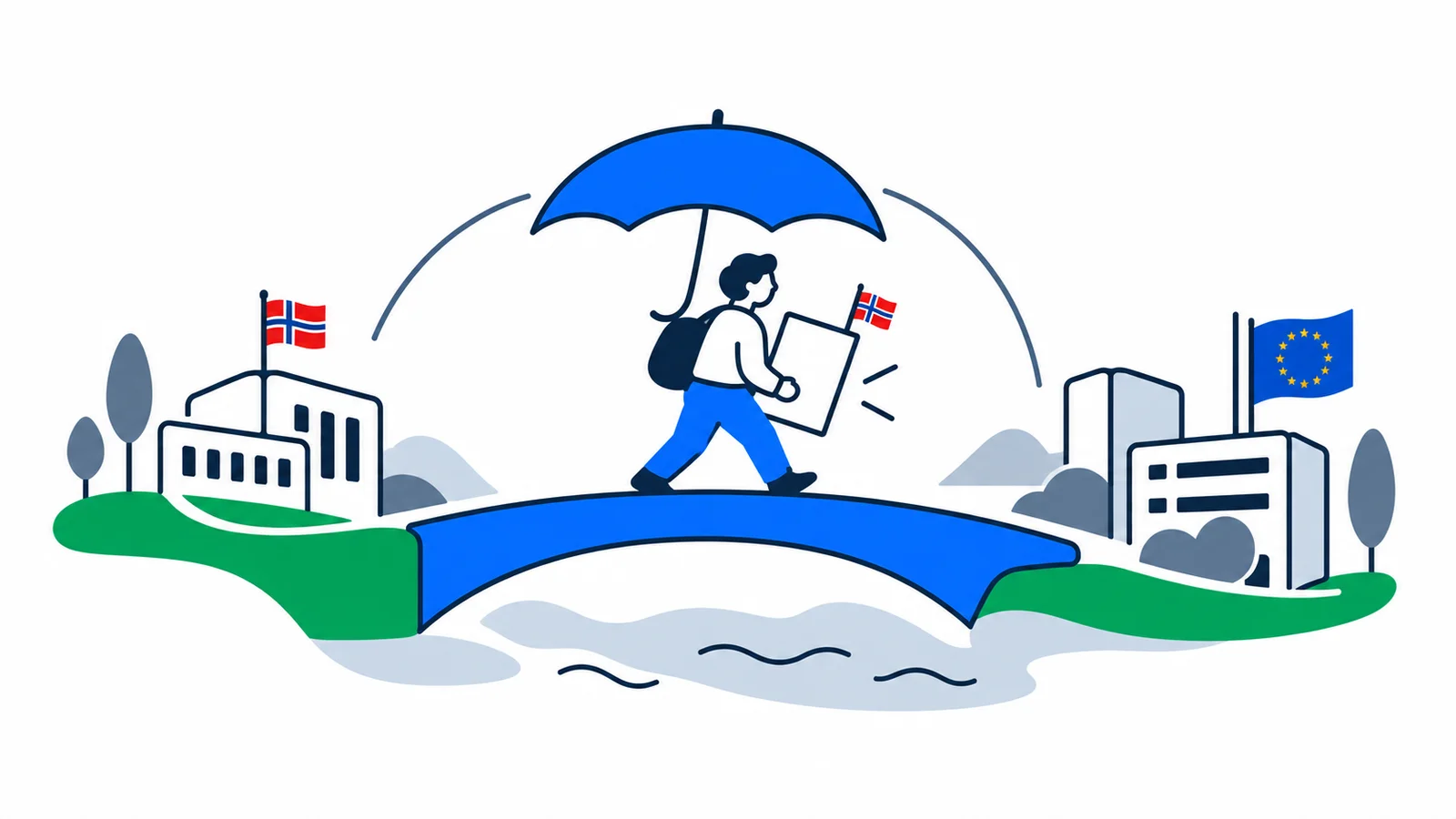

The A1 form shows which country you pay social security to when you work in more than one EEA country. It determines your right to sick pay, family benefits and pension – and prevents you from paying social security in two places at the same time.
What Is an A1 Form?
“Trygd” is the Norwegian word for social security, meaning schemes such as sick pay, pension and unemployment benefit. An A1 form, also called an A1 certificate, is a document that shows which country's social security legislation applies to you. It is used when you work in more than one EEA country, or when your employer sends you temporarily to another country. The form confirms where you are a member of the social security system, and where your employer must pay social security contributions for you. The rules apply to all EU and EEA countries, as well as Switzerland. In Norway, NAV issues the A1 certificate. If you work in another country, you apply to the social security authority there instead. The certificate is free, and you should keep it available in case the authorities in the country where you work ask for documentation of your social security affiliation, for example during a workplace inspection.
Why Do You Only Pay Social Security in One Country?
The EEA Agreement is based on a simple principle: you should only be a member of the social security system in one country at a time. This is called the single-state principle, and it is regulated in the EU's social security regulation, regulation 883/2004. The principle is meant to prevent two problems. One is double payment, meaning that you pay social security contributions in two countries at the same time. The other is a gap in coverage, meaning that you are not insured anywhere. The main rule is that you pay social security in the country where you actually work, even if you live in another country or work for a foreign employer. The regulations, regulation 883/2004 and the implementing regulation 987/2009, have been part of the EEA Agreement for Norway, Iceland and Liechtenstein since 1 June 2012.
Posted Workers
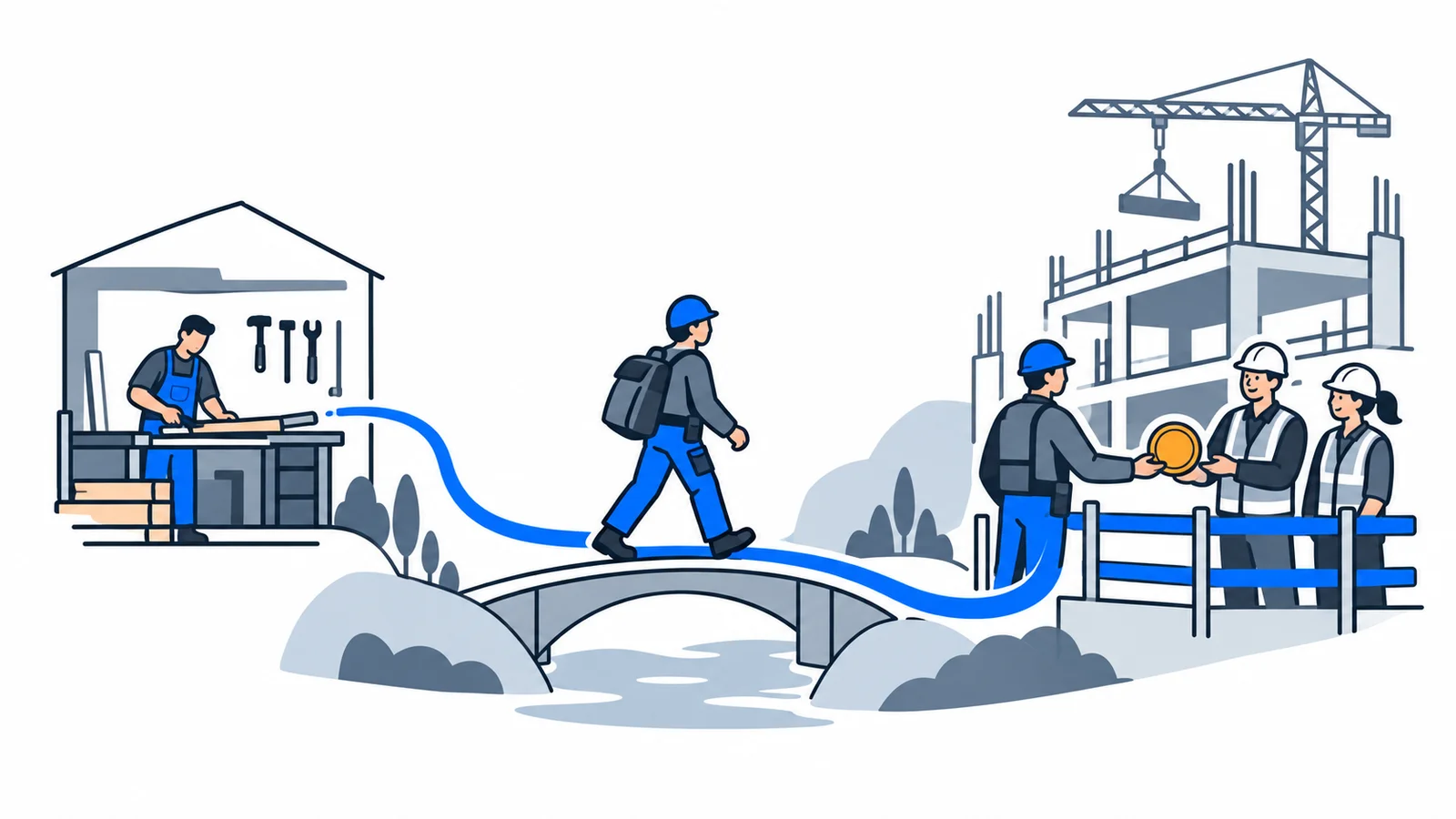
Some employees are sent temporarily to Norway by a foreign employer, or sent from Norway to another EEA country. These are called posted workers. They can continue to be a member of the social security system in their home country for up to 24 months, even though they work in another country. A typical example is a tradesperson who is employed and insured in their home country, but sent to a construction project in Norway for a few months. The conditions are strict: the employer must carry out genuine business activity in the home country, and the assignment must be temporary. The scheme therefore cannot be used to move permanently without changing your social security affiliation. The A1 certificate documents that the exception applies. Without a certificate, the country you work in can require you to become a member there instead, and the employer may face a claim for back payment if the social security authorities in the country of work do not approve the arrangement afterwards. Always check that your employment contract describes the assignment correctly, since NAV uses it as documentation.
Working in Two Countries at the Same Time
Some people work regularly in several countries, for example drivers, flight crew or people who work from home across the border. Special rules apply in these cases. The main rule is that you are a member in the country where you live, if you carry out a significant part of your work there. If you work for one employer and do most of the work in a country other than where you live, the employer's country usually applies. This applies, for example, to a transport driver who lives in one country but drives assignments in several countries during the week. The employer has a duty to notify the social security authorities of such a work pattern. The rules are complicated, so always apply for an A1 certificate to get a written clarification. Without a certificate, you risk a claim for back payment of social security contributions.
Health Coverage: The Health Insurance Card and Helfo
Your social security membership determines which health services you are entitled to. If you are a posted worker and still a member in your home country, you use the European Health Insurance Card for necessary health care in Norway. If you instead become a member of the National Insurance Scheme (folketrygden), for example because you work permanently for a Norwegian employer, you have the same right to health services as other National Insurance members. This applies even if you live in another EEA country. Helfo then covers your costs on the same basis as residents of Norway, but you pay the usual co-payment (egenandel). In addition, there is the S1 document, which gives family members and certain pensioners the right to health services in their country of residence, paid for by the country where the main person is insured. If you are unsure which scheme applies to you, Helfo can contact NAV to clarify your membership.
Family Benefits and Pension
The A1 certificate also matters for your family. Child benefit (barnetrygd) and cash-for-care benefit (kontantstøtte) can only be paid from one country at a time, even if the family lives in a different EEA country than the one where you work. The rules determine which country has the main responsibility, and which country, if applicable, pays a supplement up to its own level. NAV cooperates with the social security authorities in the other country to clarify responsibility, so that the family does not lose benefits during the transition. For pensions, coordination is even more important. If you have worked in several EEA countries, the insurance periods from each country are added together when your pension is calculated. This is called aggregation, and it applies even if you have only worked a short time in one of the countries. Without the correct documentation, such as the A1 certificate, years of accrual can disappear from the record. This can give you a lower pension than you are actually entitled to.
How to Apply for an A1 Certificate
Both employees and self-employed people may need an A1 certificate, depending on their work situation. If you are employed, your employer usually applies for the certificate. If you are self-employed, you apply yourself. In Norway, you apply digitally through NAV, and you must attach documentation about the assignment and the employment relationship. Apply well in advance of starting work, since processing can take time, and you can follow the status of your application digitally. If you move permanently to Norway instead of being posted, different rules apply for membership of the National Insurance Scheme. If you have already moved to Norway, remember to also register as an EEA citizen with the police, and check what NAV can help you with as a new employee. The rules on social security and residence in the EEA are also part of the curriculum for the Samfunnskunnskapsprøven. Practice for free on SamfunnPrep while you wait for a reply from NAV.