
Safe wood burning requires dry wood, enough air and correct use of the stove. Follow the instructions, add small amounts of wood and treat ash as a potential fire source. Ask the fire and chimney sweeping service for help if you are unsure about your fireplace or stove.
What should you check before your first fire?
Check that the stove is suitable for use and find its instructions before lighting it. An unfamiliar or damaged stove should be assessed by a professional before use.
An ildsted is a fireplace, wood stove or another permanent installation for burning fuel. A skorstein, also called a pipe in Norwegian, is a chimney that carries smoke outside. The stove, connecting flue and chimney must work together.
If you rent, ask your landlord how to use the stove and whether there are any known faults. Ask about the last inspection and whom to contact if problems arise. Do not alter the stove or chimney yourself.
Also locate smoke alarms and fire extinguishing equipment. SamfunnPrep explains the requirements in the guide to smoke alarms and fire safety. Keep the area around the stove clear of clothes, bags of wood and other combustible items.
Direktoratet for samfunnssikkerhet og beredskap, abbreviated DSB, provides advice on preventing chimney fires. The advice in this guide was checked on 4 October 2026. Your stove’s instructions determine details such as the amount of wood and how to operate air controls.
What kind of wood can you use?
Use dry wood or another fuel that the stove is designed to burn. Damp wood and poor air supply produce more soot and can make burning wood less safe.
Buy or store firewood so that it stays dry. A wet bag of logs brought straight in from the snow is not a good starting point. Ask your supplier whether the wood is ready to burn and how to store it.
Do not use the fireplace as a rubbish bin. Plastic, painted materials and other waste are not firewood. Follow the manufacturer’s information about suitable fuel.
Asker og Bærum brann og redning IKS, the local fire service, stresses this in its advice on correct wood burning. It recommends dry wood and being awake and present while using a fireplace or stove.
You do not need to fill the entire stove to get heat. Too much wood can be difficult to burn correctly. Use the amount and size of wood suitable for your stove.
How do you light a wood stove?
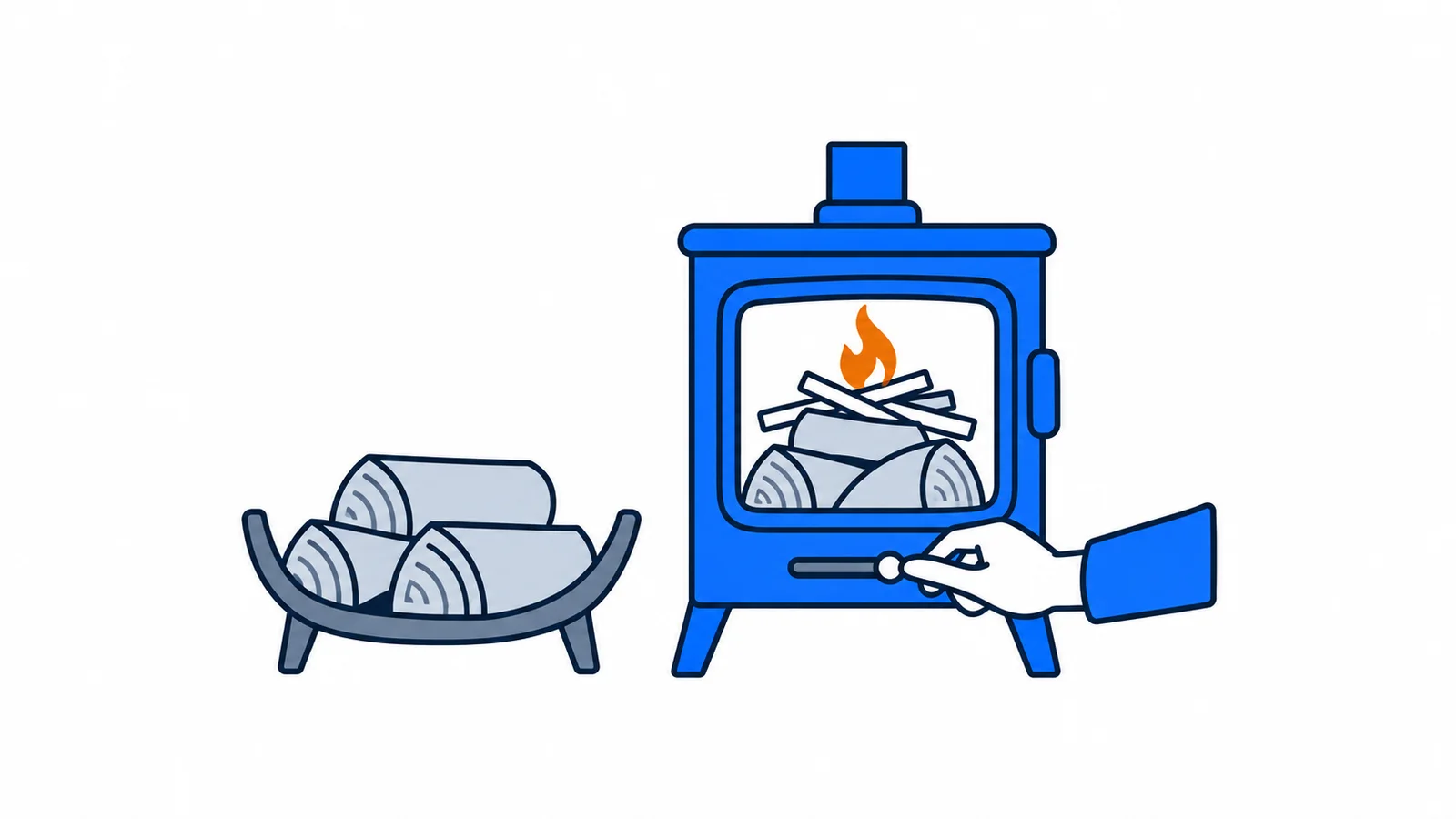
For many wood stoves, lighting from the top is a good method. Place dry logs at the bottom and kindling at the top, leaving enough space for air.
Folkehelseinstituttet, abbreviated FHI, describes the method in its advice on wood burning. The institute explains that correct burning reduces soot and particle emissions. Also follow your stove’s own instructions.
A practical sequence is:
- Check that the stove and surrounding area are ready for use.
- Put in dry wood and kindling as described in the manual.
- Provide the right air supply when lighting the fire.
- Use a lighting method suitable for the fireplace or stove.
- Watch until the wood is burning well.
- Adjust the air as the manual instructs once the stove is warm.
Never use petrol, lighter fluid or other flammable liquids to start a fire. A liquid can ignite rapidly and cause a dangerous situation. Do not try to compensate for poor draught by adding more fuel.
An open fireplace and a closed wood stove are used differently. A method you have seen at a neighbour’s home may not be right for your stove. Ask for a demonstration if the manual is difficult to understand.
How do you maintain steady heat?
Add a little wood at a time and make sure there are visible, steady flames. Do not fill the stove and close the air supply to make the wood smoulder for a long time.
Trekk means draught: the airflow that helps combustion and carries smoke outside. Good draught when lighting the fire is important. Once the stove is warm, the air supply can normally be reduced according to the manual.
DSB explains that damp wood and poor draught can produce beksot, tar-like deposits in the chimney that can catch fire. Letting a large amount of wood smoulder with little air is therefore not a safe way to save fuel.
The fire service advises you to stay awake and present. Do not put in a lot of wood and reduce the draught before going to bed or leaving home. Plan your wood burning so you can keep an eye on it.
A wood stove can provide heat during a power cut, but it does not replace all preparation. See SamfunnPrep’s guide to emergency preparedness at home for water, food and other needs.
What should you do if smoke enters the room?
Stop adding wood and investigate without exposing yourself to smoke. Recurring problems should be checked by the fire and chimney sweeping service or a qualified professional.
A cooker hood or ventilation that extracts air can affect the chimney’s draught. FHI explains that the stove also needs a supply of air into the home. Use the manual and advice from professionals for your particular home.
Do not block all ventilation to retain heat. Do not try to repair a chimney or stove while it is hot. If there is heavy smoke or you suspect a fire, get everyone to safety and call 110, the fire service’s emergency number.
Once the situation is calm, note what happened. Explain which stove you have, when smoke appeared and which extractor fans were running. This helps the professional find the cause.
How do you dispose of ash safely?
Put ash in a metal container with a lid and let it cool completely outdoors, far from combustible items. Do not put potentially hot ash in a plastic bag or rubbish bin.
In a warning published on 30 January 2026, DSB recommends leaving ash in the stove for a day before emptying it. Then keep it outside in a zinc or metal bucket with a lid, well away from walls and other combustible materials. It can take up to 3 days before it is completely cold.
This is safety advice, not a guarantee that all ash will be cold after a certain number of hours. Hidden embers can stay hot for a long time. DSB advises placing completely cold ash in residual waste; also follow local disposal instructions.
Agree who in the family empties the ash and where the container should stand. This prevents someone bringing it inside or throwing away its contents too soon.
When should you ask for help?
Contact your municipality with questions about chimney sweeping and inspections, and request a check if you see damage. Do not wait until next winter to deal with a stove that works poorly.
Chimney sweeping and inspections take place as needed. A chimney sweeping fee therefore does not necessarily mean an annual visit on a specific date. Report cracks, poor draught or other problems.
Use SamfunnPrep’s tools for everyday life in Norway as a starting point for a checklist: the manual, your landlord’s contact details, the fire service and a safe place for ash. A clear routine makes correct wood burning easier when the cold weather arrives.