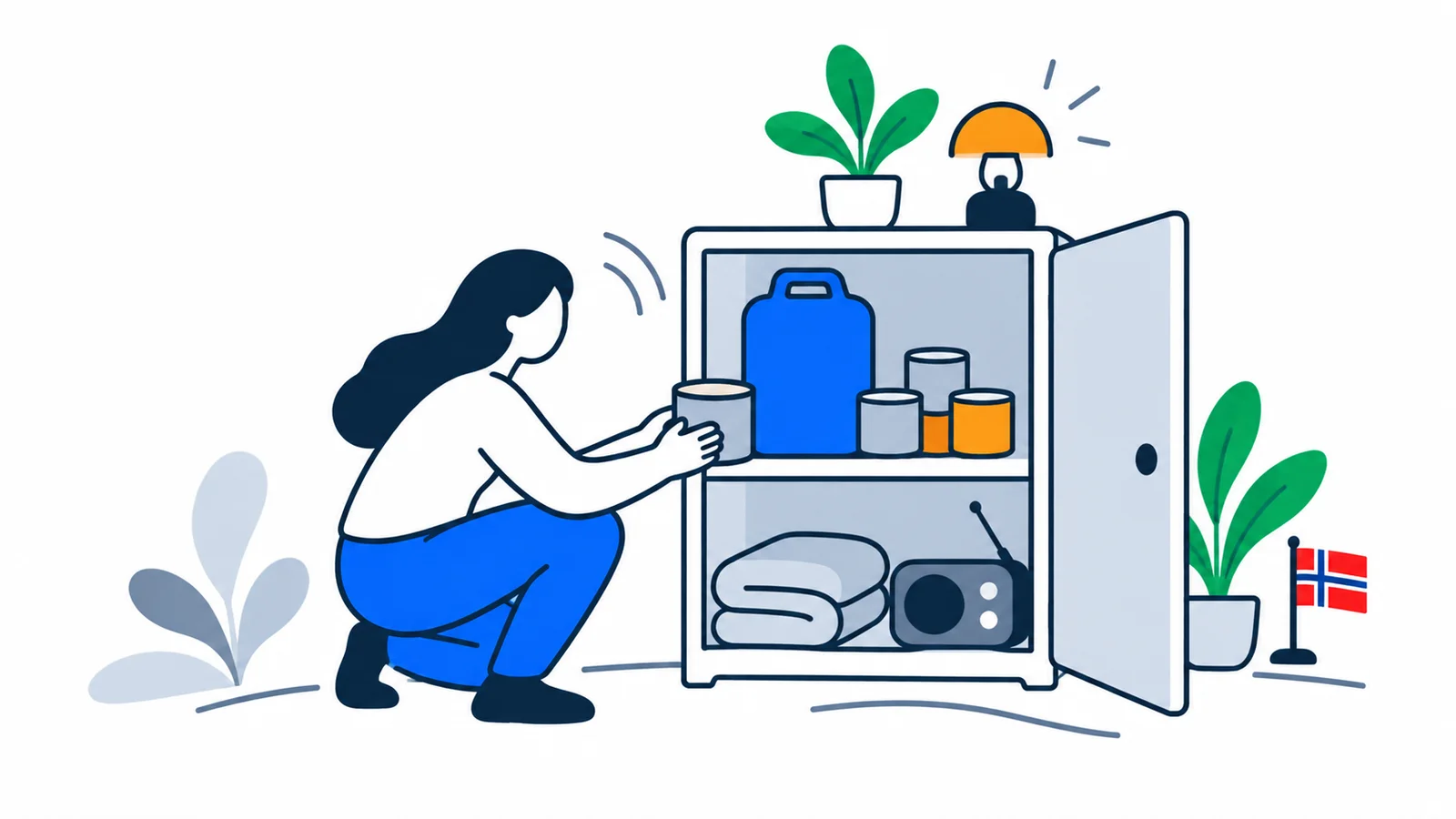

The Norwegian Directorate for Civil Protection (DSB) recommends that every household be able to manage on its own for at least 7 days during a crisis – raised from 3 days in 2024. Here is the official checklist for your emergency stockpile: water, food, medicines, heat, a DAB radio, cash and iodine tablets.
Forget "3 days" – now it is at least 7
Many older websites and brochures still say you should manage for 3 days (72 hours). That figure is outdated. In May 2024 DSB updated its advice, and the biggest change was that the recommended time you should be able to manage on your own rose from at least three days to at least one week – 7 days. In autumn 2024 DSB mailed an updated brochure to every household in the country. The advice applies to everyone living in Norway, whether you have lived here for years or just arrived.
Why longer? In a major event – for example a prolonged power outage, extreme weather, a water supply failure or a breakdown in payment systems – emergency and support services can come under heavy pressure, and help is prioritised for those who need it most. If you can manage on your own for a week, you free up help for others. Self-preparedness is not about fear, but about an ordinary household standing firm through the first days. You probably already have most of what you need at home.
Water and food: start here
Water is the most important thing. DSB recommends storing about 20 litres of water per person. That covers the most essential needs for a week if the tap water should fail. A simple rule of thumb is roughly 3 litres of drinking water per person per day. Keep the water dark and cool, and replace it at regular intervals. You can also fill clean bottles yourself.
For food, keep a few days' supply that stores well and needs no refrigeration or much preparation:
- Crispbread, oats and crackers
- Canned goods: ready meals, beans and fish
- Dry goods such as pasta and rice (remember you need water and heat to cook)
- Long-life spreads, some chocolate or energy bars
- Food and supplies for children, and feed for pets
Think about what your family actually eats, and replace items before they expire.
Heat, light and information
If you lose power in midwinter, heat quickly becomes the priority. Have ready:
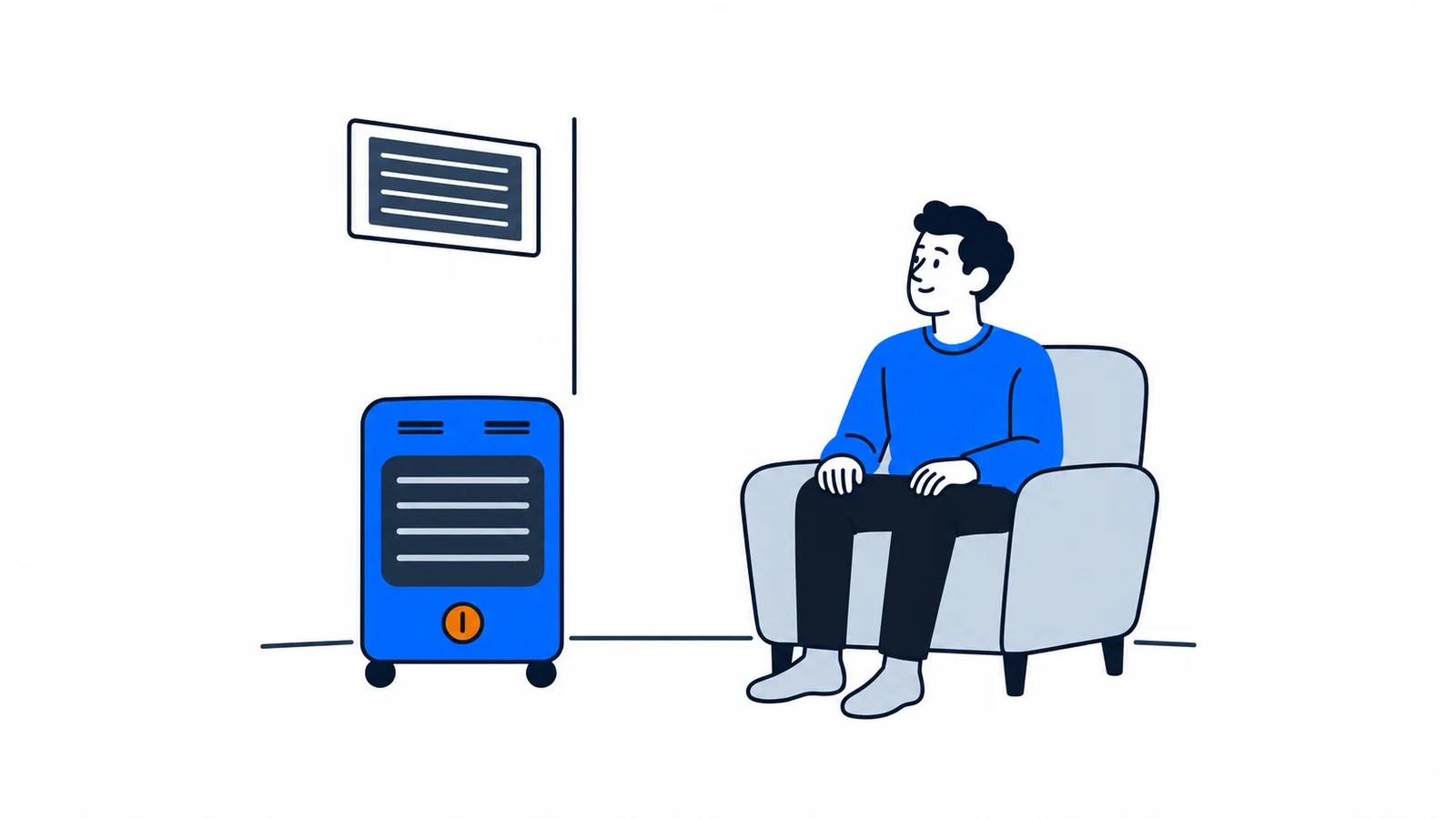
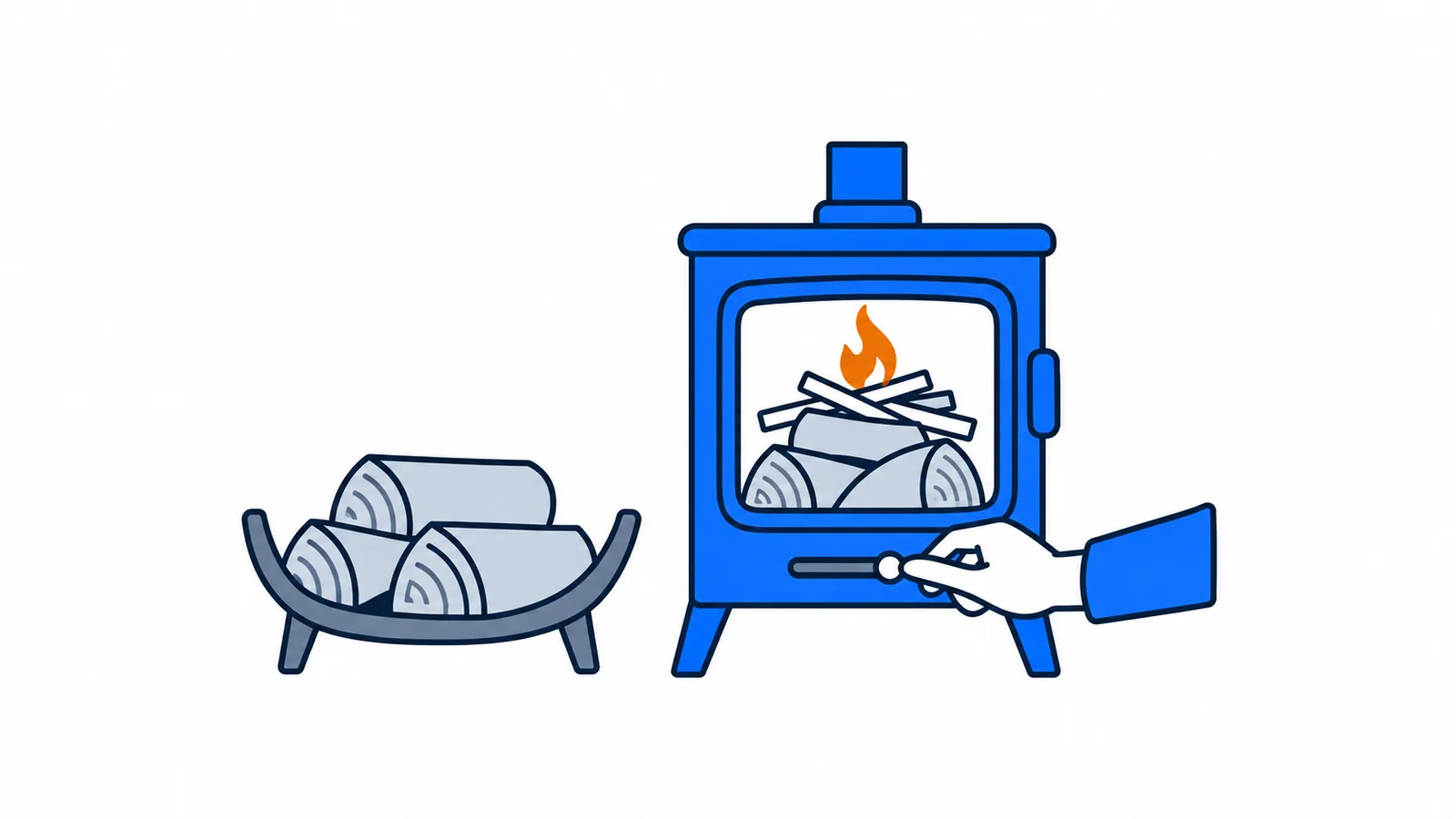
- An alternative heat source – for example a wood stove, paraffin or gas heater (always follow the safety rules and ensure ventilation)
- Matches or a lighter, candles, plus warm clothes, a wool blanket or a sleeping bag
- A flashlight or head torch with spare batteries
- A battery-powered DAB radio (or one with a hand crank or solar cell) so you get important information from the authorities if the mobile network goes down
- A power bank to charge your phone
Medicines, hygiene and cash
- Medicines: keep at least one week's extra supply of your regular medicines, a basic first-aid kit, paracetamol and iodine tablets (see below)
- Hygiene: wet wipes, hand sanitiser, toilet paper, and if needed nappies, sanitary pads or anything else you depend on
- Cash: keep some cash in small notes at home. In a power outage or IT failure, cards and Vipps can stop working, and then cash is often the only means of payment
- Write down important phone numbers and addresses on paper, in case your phone runs out of power
Iodine tablets: who needs them?
Iodine tablets can protect the thyroid gland against radioactive iodine in a nuclear accident. The Norwegian Radiation and Nuclear Safety Authority (DSA) recommends keeping iodine tablets at home if you are under 40, pregnant, breastfeeding, or have children living at home.
- They benefit children and young people under 18, pregnant women and breastfeeding mothers most, because they have the highest risk of thyroid cancer after inhaling radioactive iodine
- Adults between 18 and 40 may need them in very special situations; people over 40 have very little risk and normally do not need them
- The tablets (for example JODIX 130 mg) can be bought over the counter at a pharmacy and stored at home in advance
- Very important: take them only when the authorities give the message through radio and media – never on your own initiative. Follow the dosage in the package leaflet
How to make a simple preparedness plan
You do not need to buy everything at once. Start with water and what you already have, and build up the stockpile little by little.
| Step | What you do |
|---|---|
| 1. Check | See what you have of water, food, heat and batteries |
| 2. Top up | Add what is missing, and gather everything in one place |
| 3. Talk together | Agree with your family what to do in a power outage |
| 4. Write it down | Note important numbers and addresses on paper |
| 5. Maintain | Replace water, food and batteries before they get too old |
Remember your neighbours – the elderly or sick especially may need help in a crisis. If you need quick help in an emergency, see Emergency help in Norway. To prepare for power outages and know your rights to electricity support, read Electricity in Norway and the power subsidy 2026. If you are new to the country, you will find more practical advice in Your first week in Norway.