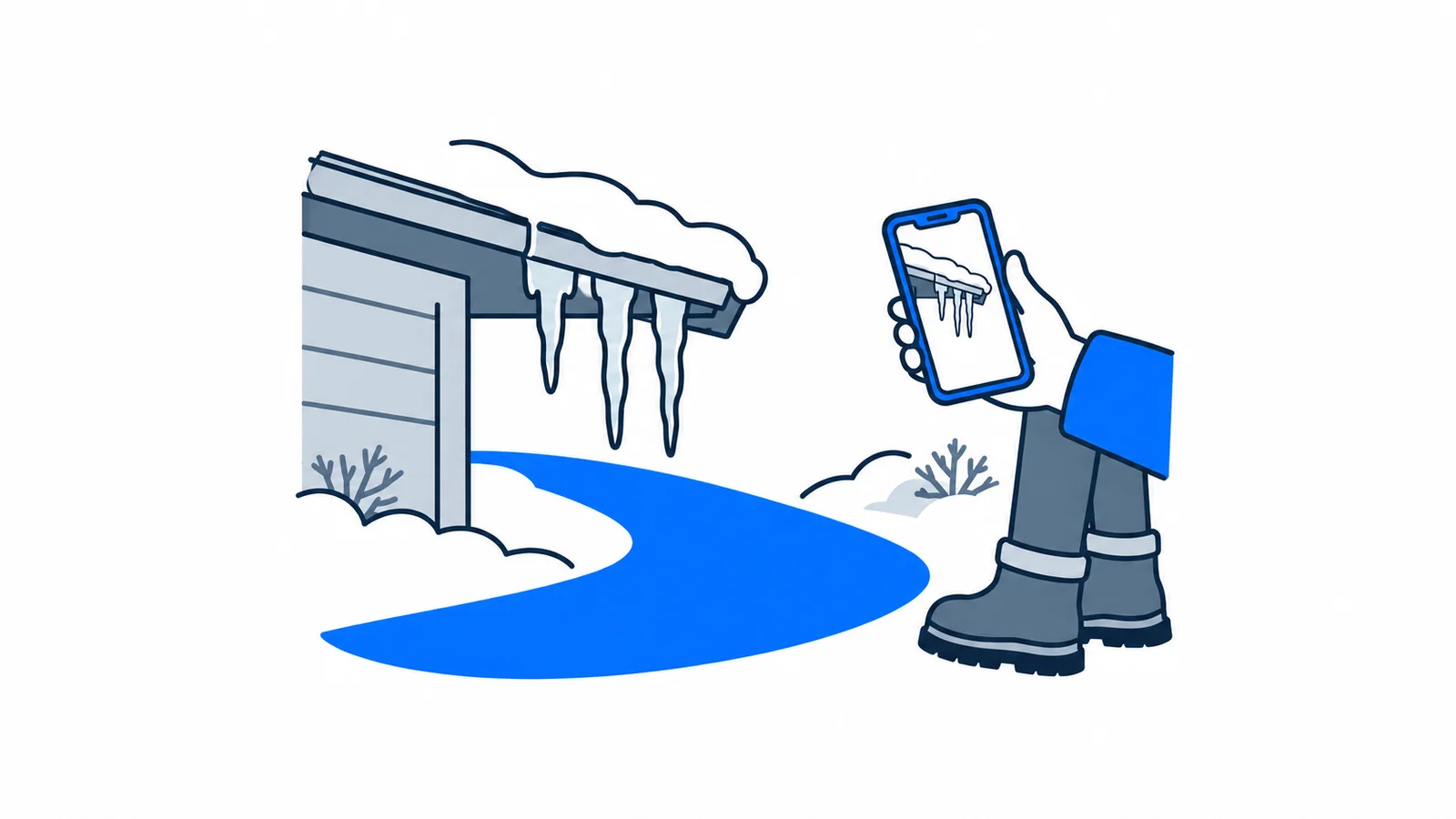
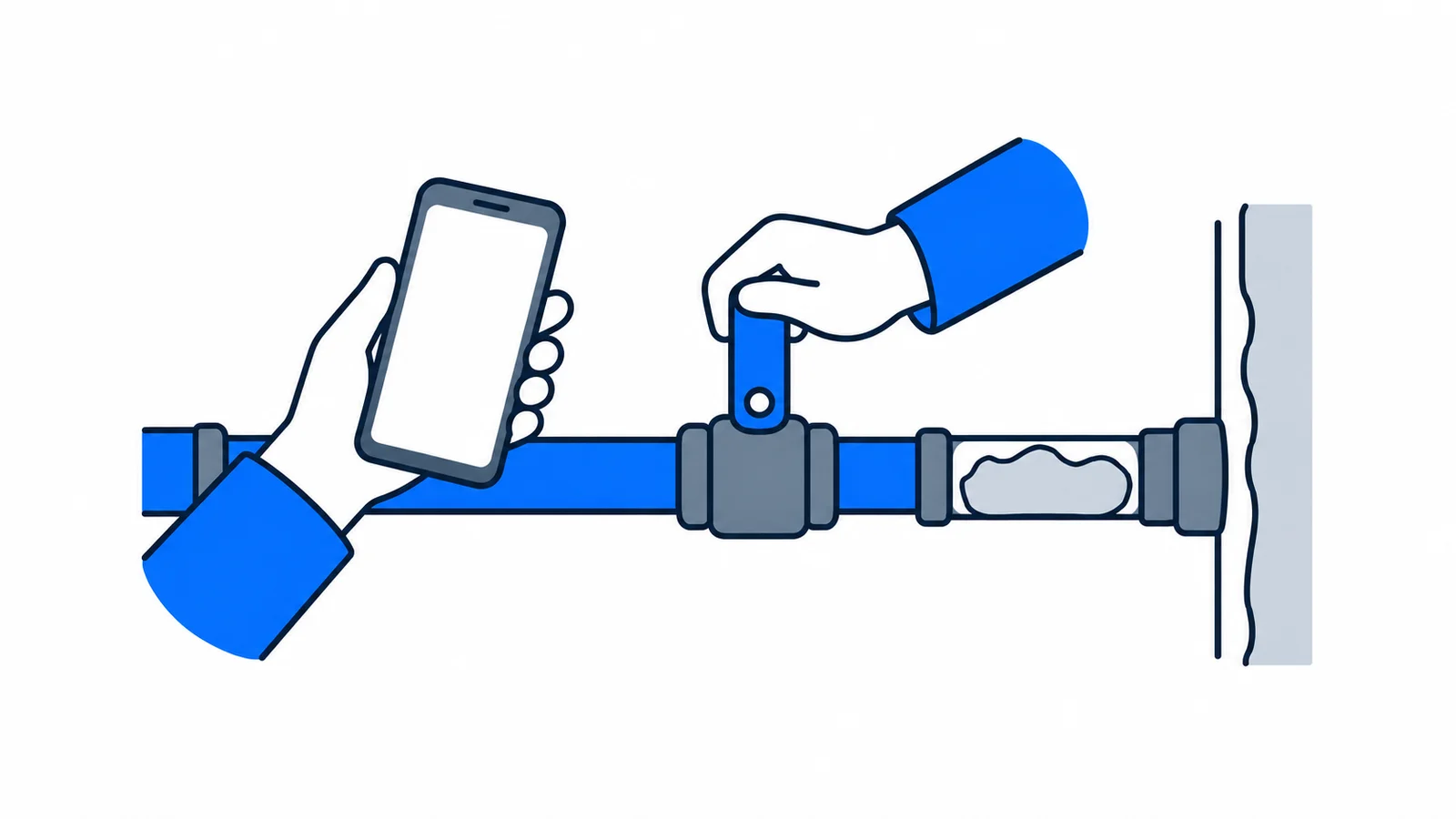

Frozen water pipes can reduce the flow or stop it completely. Close the main stop valve if you suspect frost damage, and contact a plumber. If you rent, also notify the landlord. A leak may only become visible when the ice thaws.
What should you do first when the water stops?
Check whether there is a known water outage in the area or the problem only affects your home. If you suspect frozen private pipes, close the main stop valve and ask a plumber for help.
A main stop valve shuts off the water entering your home. Find it before winter. If you live in an apartment building, ask the landlord or board which valve you may use and who has access.
Nordre Follo kommune municipality explains that low pressure or loss of water in cold weather may mean frozen pipes. The municipality’s frozen pipe advice was checked on 4 October 2026. Check local contact arrangements and the boundary between private and municipal pipes where you live.
Ask whether neighbours also have no water, and check municipal service notices. If several homes are affected, the cause may be outside your home. That does not rule out needing to protect your own installations at the same time.
SamfunnPrep has a guide to household emergency preparedness in Norway. This article focuses specifically on water pipes, who to contact and limiting damage.
Why do water pipes freeze?
Pipes can freeze when the water becomes cold enough, particularly in exposed parts of the building. The living room temperature does not always show the temperature beside a pipe.
Pipes near external walls, in cold rooms or in draughty places may be exposed. A house left empty without enough heating may also have problems. A warm living room therefore does not guarantee protection for every pipe.
Research institute SINTEF explains the mechanism in its frost and water damage advice. Water expands when it freezes. A weak point in a pipe or joint may then split.
Ice can temporarily block water in a damaged pipe. When it melts, water may start escaping. Having no visible leak while everything is frozen therefore does not mean the system is undamaged.
Do not assume plastic pipes always withstand frost. SINTEF describes how these pipes may also be exposed. Protection must be assessed for the particular installation.
Preventing problems before cold weather arrives
Keep areas containing water pipes sufficiently warm and have exposed installations assessed before freezing periods. Ask a professional for advice if you do not know where the pipes run.
A simple check can begin with these questions:
- Where is the main stop valve, and does it work?
- Do pipes run through cold rooms or near external walls?
- Are there cold draughts where the pipes lie?
- Which rooms need heating while you are away?
- Who can check the home during a long cold spell?
- Are there previous frost problems that need fixing?
A plumber can assess insulation and other measures. A heating cable must suit the system and be used correctly. Do not make your own electrical arrangement to heat pipes.
There is no single living room temperature that guarantees frost-free pipes in every home. Distance from heating, airflow and the building’s condition matter. Follow professional advice and your home insurer’s terms.
If frost problems have occurred over several winters, address the cause. Thawing a pipe each time is not a lasting plan. Note which rooms and weather conditions are involved.
What if you rent?
Notify the landlord promptly about missing water, suspected frost or a leak. Describe what you see and clarify who will arrange help.
You can write: “The bathroom water has stopped in the cold. I have checked municipal notices and suspect freezing. Where is the correct stop valve, and who will book a plumber?” Include photographs if they show the situation.
If water is already escaping, limiting damage should not wait for a long message. Close the correct valve if safe and call the contact person. Then document what you did and when you gave notice.
Who ultimately pays depends on the cause, responsibility and agreement. Reporting damage does not mean you automatically accept payment responsibility. Avoid promising to pay before the matter has been assessed.
See SamfunnPrep’s guide to tenancy agreements and responsibility in the home for what to clarify. Do not replace or modify pipework yourself.
What should you do about a leak?
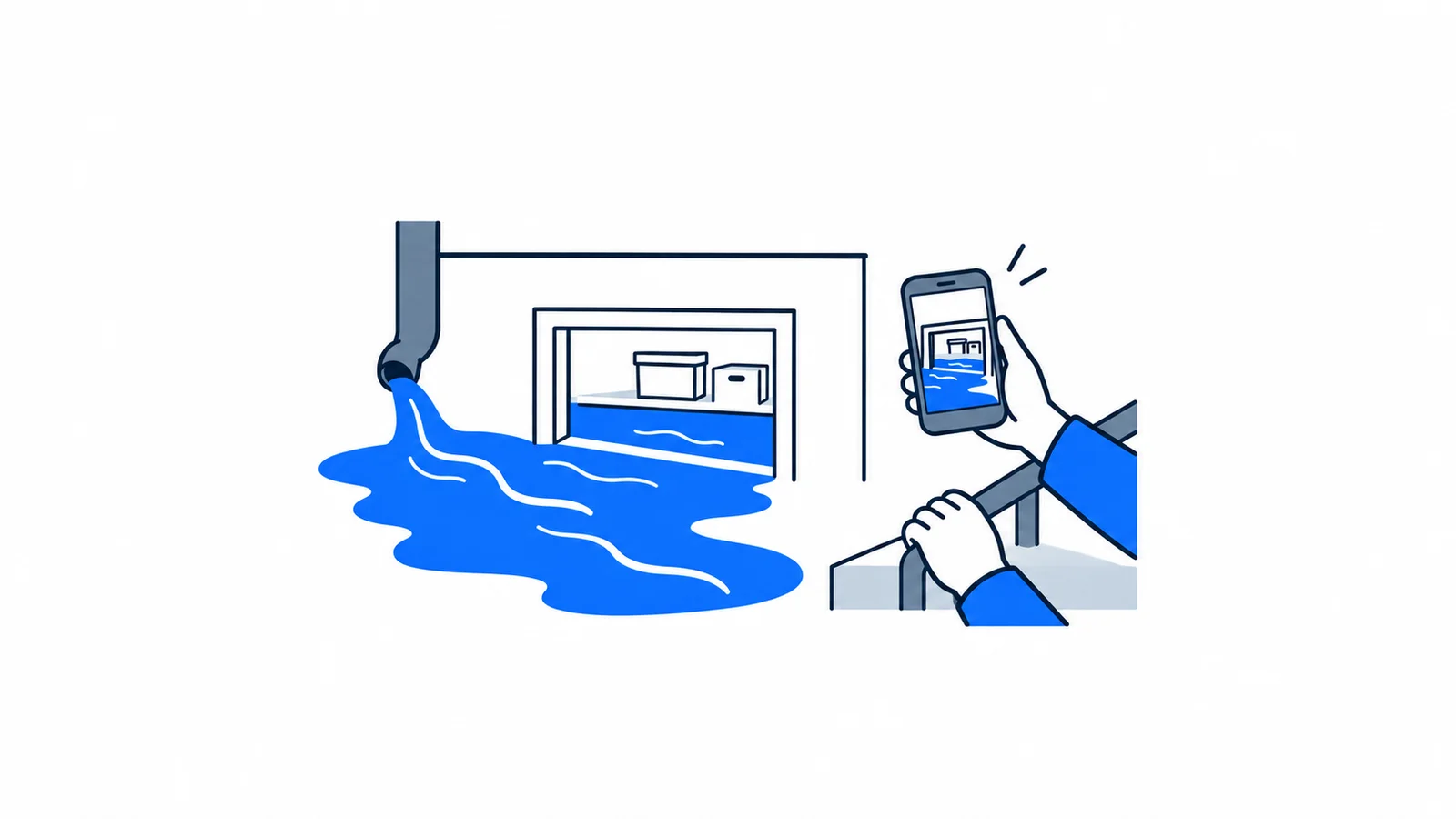
Close the main stop valve if safe, and contact a plumber and the relevant insurer. Water near electrical equipment requires extra caution.
Move loose belongings away from water when this can be done without danger. Photograph the damage location, water and affected belongings. Keep receipts for necessary expenses.
Do not use an open flame to thaw a pipe. The municipality warns against thawing pipes yourself because it can cause leaks and fire. A plumber can inspect the system and use appropriate equipment.
Damage to the building and damage to your belongings may fall under different insurance policies. A tenant should therefore notify both the landlord and their own insurer when necessary. SamfunnPrep explains how to report an insurance claim.
Do not throw away damaged items before clarifying documentation with the insurer. At the same time, follow advice on limiting further damage. Ask for clear instructions if these considerations seem to conflict.
What should you arrange before a winter trip?
Clarify heating, water supply and supervision before leaving the home empty. Shutting off and possible draining must suit the installation.
SINTEF points out that unoccupied houses and cabins may be especially exposed. Water damage can develop for a long time when nobody is present. Ask someone you trust to check the home when needed.
Closing the stop valve does not necessarily remove all water from the pipes. Ask the plumber whether the system needs draining and how. Do not experiment with unfamiliar valves or the water heater.
If you rent, agree with the landlord what to do before departure. Share contact details for anyone following up on the home. Check the insurance terms for absence, heating and supervision.
Make a simple water and heating plan
Keep drinking water and have a plan to stay warm if water or electricity is lost. Frost damage can cause several practical problems at once.
The Norwegian Directorate for Civil Protection, abbreviated DSB (Direktoratet for samfunnssikkerhet og beredskap), provides cold-weather preparedness advice. Stored water is useful when water pipes freeze too. Follow safe heating and ventilation practices.
Use SamfunnPrep’s tools for practical tasks as a starting point for a contact list. Include the landlord or board, plumber, municipal water service and insurer. Find the correct valve and telephone numbers while everything works.