
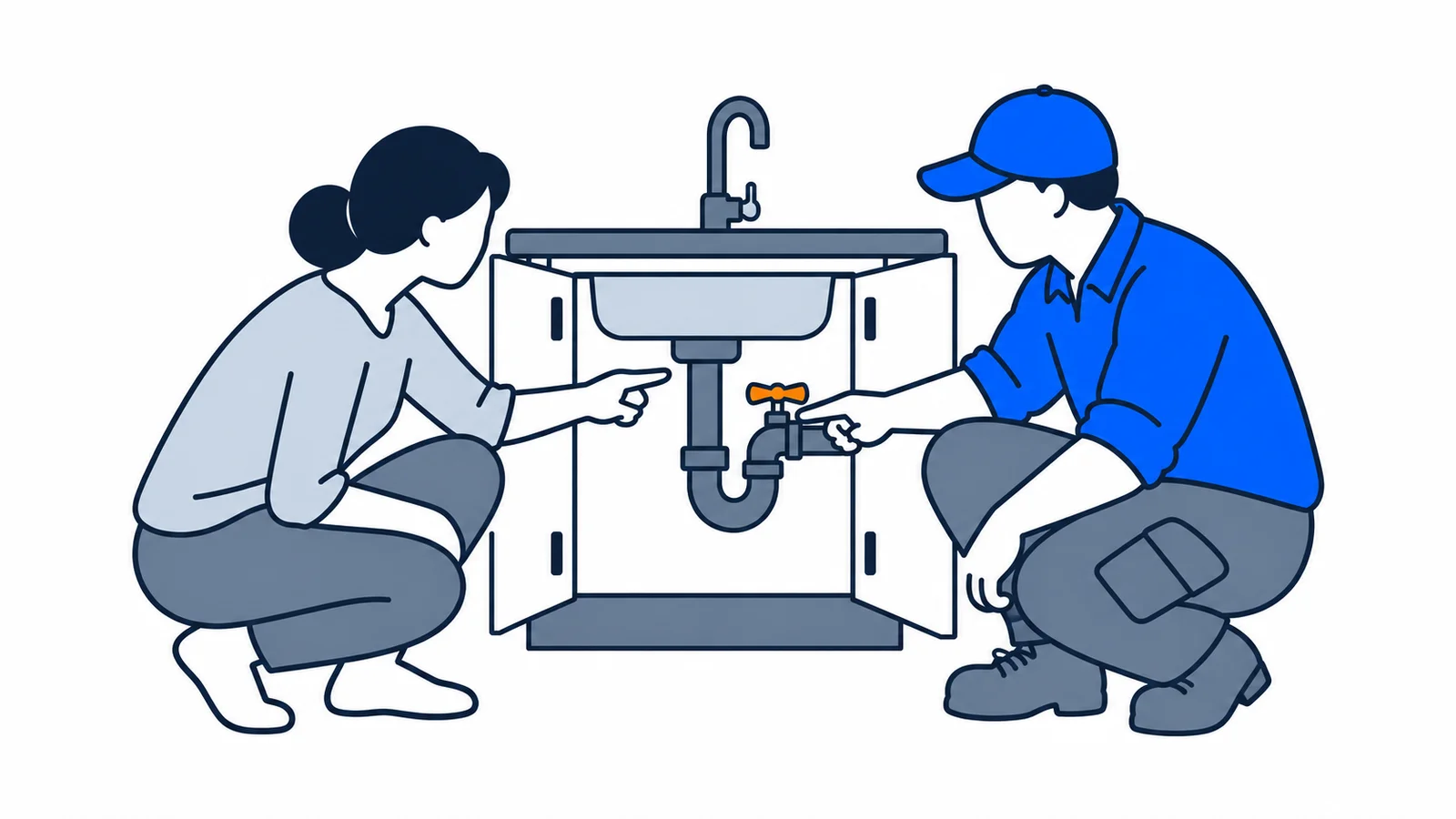

Find a plumber in Norway by describing the problem, contacting local companies and comparing written quotes. Ask about relevant experience and a clear agreement. For a leak, first clarify how to limit damage and who orders emergency help.
Do you need emergency help or a planned job?
An ongoing leak needs a different order from a new mixer tap. Tell the company what is happening now and ask what help is needed first.
Say whether water is flowing, whether it has been turned off and which rooms are affected. Describe the situation without guessing the cause. ‘Water is coming out under the kitchen sink’ is more useful than a definite diagnosis of a hidden pipe.
If you rent, contact your landlord. In a block of flats, the board or caretaker may have information about valves and shared pipes. Clarify who orders the work. Take photos if it is safe.
SamfunnPrep has a separate guide to frozen water pipes and limiting damage. This article is about finding a plumber and making a clear order, for both emergencies and planned work.
Where do you find a local plumber?
Search for a plumber and your municipality, or ask about companies that already know the building. A quotation platform is another starting point for planned work.
Your landlord, the board or neighbours may have contact details for previous suppliers. Ask what the company actually did. Experience replacing a tap tells you less about a larger plumbing installation.
On Mittanbud, you can describe the job and receive replies from businesses. You can also examine profiles and previous reviews. The process was checked on 13 October 2026. It provides candidates; it does not decide who suits your job.
For planned work, you can contact several companies with the same description. For emergency help, first ask about availability and the price of the first visit. Clarify when help can actually arrive, rather than just whether the company has a phone number open around the clock.
How do you check the company and skills?
Ask for the company's name, organisation number and experience with the same type of work. Check the information before entering an agreement.
An organisation number identifies the business. Brønnøysundregistrene's register search provides access to business information. Brønnøysundregistrene manages Norway's business registers. Compare the registered name with the quote and the company you are speaking to. The register service was checked on 13 October 2026.
Ask who will do the work, what vocational training they have and who follows up the result. You can ask for an example of a recent, similar job. If you contact a reference, ask about delivery, communication and follow-up.
Some companies refer to sentral godkjenning, central approval. Direktoratet for byggkvalitet, abbreviated DiBK, Norway's building authority, explains that it is a voluntary scheme. It describes skills and procedures, among other things. See DiBK's questions and answers, checked on the same date.
If a company uses the approval in marketing, ask for the correct business and approval area. Do not treat a logo as a guarantee for your job. Ask the company to explain how its skills suit exactly what you need.
What do you write in the enquiry?
Describe the desired result and what you know about the current installation. Include photos and distinguish what needs investigation from what you want replaced.
A simple enquiry could be:
‘I need a plumber for [task] in [municipality]. I [own/rent] the home. The problem is [short description]. Can you investigate this and send a written quote? Specify the costs of investigation, travel and materials. I would like explanations in [language].’
Say where the equipment is, whether previous documentation exists and when the company can come. Send the model name if you know it. Do not dismantle equipment just to provide more information.
If you bought a product yourself, say so before the quote arrives. Ask whether the company will install it and what it needs to check. Clarify who handles product defects and who is responsible for installation.
How do you compare quotes?
Compare the whole delivery, not just the hourly rate. Ask for clear pricing, included costs and what happens if the job changes.
Use these points when assessing quotes:
| Point | Question for the company |
|---|---|
| Work | Investigation, repair or replacement? |
| Products | Which parts and models are included? |
| Other costs | Are travel, attendance and waste included? |
| Price | Fixed price, estimate or hourly payment? |
| Handover | What is tested, and which documents do you receive? |
Ask for the total price including merverdiavgift, often called mva., meaning value added tax. Ask whether there is a separate rate outside normal working hours. For emergency help, you need to know what the first visit covers before agreeing.
A quote may concern only plumbing. Carpentry, tiles or electrical tasks may be additional. Ask for an explanation when several trades need to cooperate. Forbrukerrådet, the Norwegian Consumer Council, recommends a written contract for tradespeople's work.
What should you clarify for bathroom work?
Clarify whether the job concerns just one product or changes the bathroom's installations and structure. Ask the company to explain what other trades and permissions may be necessary.
As of 13 October 2026, DiBK distinguishes different types of work. Ordinary maintenance and certain work within one building unit (bruksenhet) or fire compartment may be exempt from an application. Work affecting several such units may require an application. A fire compartment is an area intended to limit the spread of fire.
Exemption from an application does not mean all technical requirements disappear. See DiBK's overview of bathroom work. If uncertain, clarify the job with the municipality before ordering structural interventions.
Ask for clear responsibility for sealing and connections between the work components. If a pipe goes through a wall, you need to know who closes and documents the opening. Do not leave such a point as a verbal assumption between several companies.
How to follow up work and handover
Agree on how you approve changes and go through the result before the job ends. Keep the work documents.
Ask the company to contact you if it discovers other problems. Get an explanation of what was found, what is proposed and what it costs. Confirm a new order in writing. A photo may help you understand something otherwise hidden.
At handover, ask for:
- a description of what was replaced or repaired
- information about new products and maintenance
- an explanation of relevant valves and shut-off points
- the documentation you agreed on
- information about any remaining tasks.
If something seems wrong, contact the company in writing and describe the problem. Take photos and keep the agreement. See SamfunnPrep's guide to complaints about tradespeople's services for further help.
Use SamfunnPrep's tools for practical tasks as a starting point for everyday organisation. Save contact details for the plumber and the person responsible for the home before the next problem occurs.