
A safety alarm is a simple button you can press if you need help at home. In Norway, this is a municipal service you apply for. The alarm and other welfare technology allow elderly to live safely at home for longer. Here's how to get help.
What is a safety alarm?
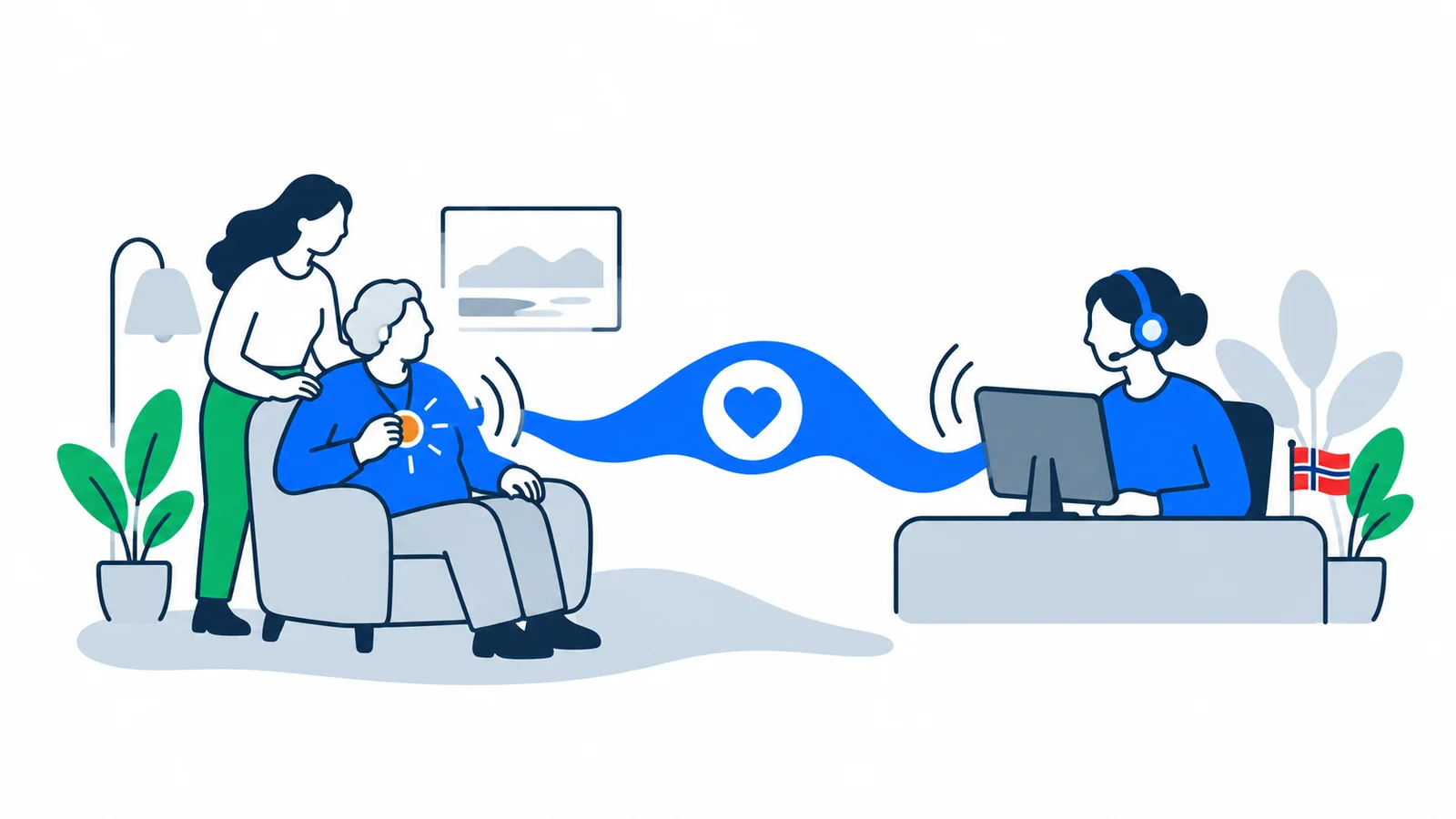
A safety alarm is an alarm you wear like jewelry around your neck or on your wrist. When you press the button, you get in contact with an emergency center – a place that answers alarms 24/7.
The emergency center talks with you and sends help if you need it. Often it is the home care service (the municipality's helpers who come to your home) who respond. You can use the alarm if you fall, become ill, or feel unsafe – regardless of the time of day.
The alarm is connected to a small box in your home or works over the mobile network. You don't need to set up anything technical yourself. The municipality sets everything up for you. A safety alarm is part of elder care in Norway, and you can read more in our overview of elder care in Norway.
What happens when you press the alarm?
When you press the safety alarm, it automatically calls the emergency center. You don't need to dial a number or look for your phone.
A person at the emergency center talks with you through the alarm and asks what has happened. If it is serious, they send the home care service or call 113 (the medical emergency number). If it is less serious, they can calmly talk with you until you feel safe again. The alarm also works if you cannot speak. Then the emergency center sees that you have pressed it, and they contact you anyway to check that everything is okay. You are never alone when you have pressed the button.
What is welfare technology?
Welfare technology is technology that helps you manage on your own at home. The safety alarm is one example, but there is much more. Here are some common aids:
- Fall sensor – automatically detects that you have fallen and alerts help even if you don't manage to press the button.
- Door alarm – gives notice if a door opens at night. Useful if someone with dementia might go outside.
- GPS alarm – a GPS alarm shows where you are, so family members or helpers can find you if you get lost. Safe for people with dementia.
- Medicine dispenser – reminds you to take your medicine at the right time and dispenses the correct dose.
- Digital supervision – a sensor or camera that lets the home care service watch over you at night without coming home and waking you.
You decide for yourself which aids you want to have. No one uses a camera or GPS without your consent. Many people think welfare technology is only for the very sick. That's not true. The goal is for you to live safely at home longer and manage your everyday life on your own.
Who can get a safety alarm?
Anyone who lives at home and needs a little extra safety can apply for a safety alarm. The municipality (the place where you live and pay taxes) assesses who receives it.
You don't need to be seriously ill to get help. The municipality looks at, among other things, whether you have fallen before, whether you feel unsafe when you are alone, or whether your health means you might need quick help. In some municipalities, everyone above a certain age has the right to an alarm. In Oslo, for example, you have the right to an indoor safety alarm if you are over 75 years old and want one yourself.
How to apply for a safety alarm
You apply for a safety alarm at your municipality. Contact your municipality's allocation office or service office, which handles applications for health and care services.
In the application, you describe your situation and what you need help with. You can get help filling out the application, and many municipalities have their own forms online. If you are an adult son or daughter, you can apply on behalf of your mother or father.
The municipality responds with a decision – a written answer about whether you receive the service or not. If you get no, you have the right to appeal. You send the appeal to the municipality, which reviews the case again. If you still get no, Statsforvalteren decides the case. The Patient and User Ombudsman can help you for free along the way.
What does a safety alarm cost?
A safety alarm is not free throughout the country. The price is a municipal co-pay – your share of the cost – and it varies from municipality to municipality. There is no fixed price for all of Norway.
Many municipalities let the price follow your income. If you have a low income, you often pay little or nothing. In Oslo, for example, you pay 321 kroner per month in 2026 if your income is above 3 G (the base amount in the National Insurance). If you have lower income, the alarm is free. There may also be a one-time setup cost. This too often follows your income.
A safety alarm is a health and care service. If the alarm is part of necessary healthcare, the municipality cannot charge for it. Ask your municipality therefore what applies for you specifically.
If you are uncertain about finances as an elderly immigrant, it can help to read about pensions and residence in Norway and supplementary benefits for elderly. Then you will know better what you can afford.
Welfare technology gives you freedom
Welfare technology is about freedom, not illness. With a little help, you can live at home and make your own decisions for longer.
Feel free to talk with your doctor about what you need. Your doctor knows your health and can give good advice. If you have a disability, you also have your own rights as a person with a disability. If you want to understand more about how Norwegian welfare services work, you will find exercises and practice tools about society on SamfunnPrep.
Learn more about the welfare state
Safety alarms and welfare technology show how the municipality helps you to live safely at home. You don't need to navigate the system alone – the municipality should guide you.
How the welfare state and the municipality help you is part of the civic knowledge many learn for the civic knowledge test – practice free on SamfunnPrep.