
Traffic rules in Norway are strict and apply to everyone. You drive on the right side, have right-of-way for traffic from the right, keep to 50 km/h in built-up areas and 80 km/h outside, have an alcohol limit of 0.2 and always use seatbelts.
Traffic rules in Norway exist to protect everyone on the road. The rules apply to drivers, cyclists and pedestrians. They are enforced strictly by the police, and breaking them can result in fines, penalty points or loss of your driver's license.
This guide brings together the most important rules in one place. If you are going to drive here, you should also read about driver's licenses in Norway and how to convert a foreign driver's license.
Right-hand traffic and right-of-way rule
In Norway you drive on the right side of the road. This is a fundamental part of Norway's traffic rules.
Right-of-way for traffic from the right is the main rule at intersections without signs. It means you must give way to vehicles coming from your right side.
The rule can be overridden. Traffic lights, right-of-way signs and signals from police officers always take priority over the right-of-way rule. If you see such a sign or signal, follow it.
In a roundabout, traffic already in the circle has priority. You wait until it is clear before you drive in, and you signal with your indicator when you leave.
Always give clear signals in good time. Use your indicator when you change lanes, turn or exit a roundabout. This helps others understand what you plan to do.
Speed limits: how fast can you drive?
The speed limit in Norway is 50 km/h in built-up areas and 80 km/h outside. These are the general limits when no signs say otherwise.
Statens vegvesen is the state agency responsible for the roads. They and the police set the speed limits and post deviations.
| Location | Speed limit |
|---|---|
| Built-up area (no sign) | 50 km/h |
| Outside built-up area (no sign) | 80 km/h |
| Specific sign | Follow the sign |
A sign can set the limit both lower and higher. Near schools and residential areas it is often 30 km/h. On motorways it can be up to 110 km/h.
If you drive too fast, you get a speeding fine. For serious speeding violations, police can take your driver's license on the spot.
Alcohol limit 0.2 and zero tolerance
The alcohol limit in Norway is 0.2. If you have more than 0.2 per mille of alcohol in your blood, you are considered impaired and are not allowed to drive.
Alcohol limit means the legal limit for alcohol in your blood. The rule is set out in the Road Traffic Act § 22. The 0.2 limit is low, so the safest thing is not to drink at all before you drive.
The punishment is strict. Driving under the influence can result in a fine, loss of your driver's license for up to two years and in serious cases imprisonment. For high alcohol levels, police can confiscate your driver's license on the spot.
Remember that medicines can also affect you. If you drive on prescription medicines that make you sleepy or confused, you can be punished in the same way as for alcohol.
Lights 24 hours a day
In Norway you must drive with lights on 24 hours a day, regardless of weather or season. Dipped beam or approved driving lights must always be on when the car is in use.
This makes you easier to see for others. The rule also applies in the middle of summer in full daylight. Most newer cars turn on driving lights automatically.
Seatbelts and child safety
Everyone in the car must wear a seatbelt, both in front and in back. The driver is responsible for ensuring that passengers under 15 years of age are secured.
Children have their own rules. The most important points:
- Children under 135 cm must always sit in an approved child seat adapted to their weight and height.
- Children between 135 and 150 cm use approved equipment if available, otherwise a regular seatbelt.
- A rear-facing child seat must never be placed in front of an active airbag.
Proper safety saves lives. The seatbelt is the simplest and most important protection you have in an accident.
Mobile phone ban while driving
It is forbidden to use a hand-held mobile phone while driving. You can only use your phone if it is in a holder or connected to a hands-free system.
The fine is high. From 15 February 2026, the fee for unlawful mobile phone use is 10,750 kroner, plus three penalty points on your driver's license.
What happens if you break the rules?
Breaking Norway's traffic rules can result in fines, penalty points or loss of your driver's license. The police enforce the rules, and checks are common.
Penalty points is a system for counting violations. If you receive 8 penalty points within three years, you lose your driving privileges for six months.
For serious speeding or driving under the influence, police can take your driver's license on the spot. In serious cases you may also be required to retake your driving test. If you need to report a traffic accident or a crime, you can read about contacting the police.
Everyone shares the road
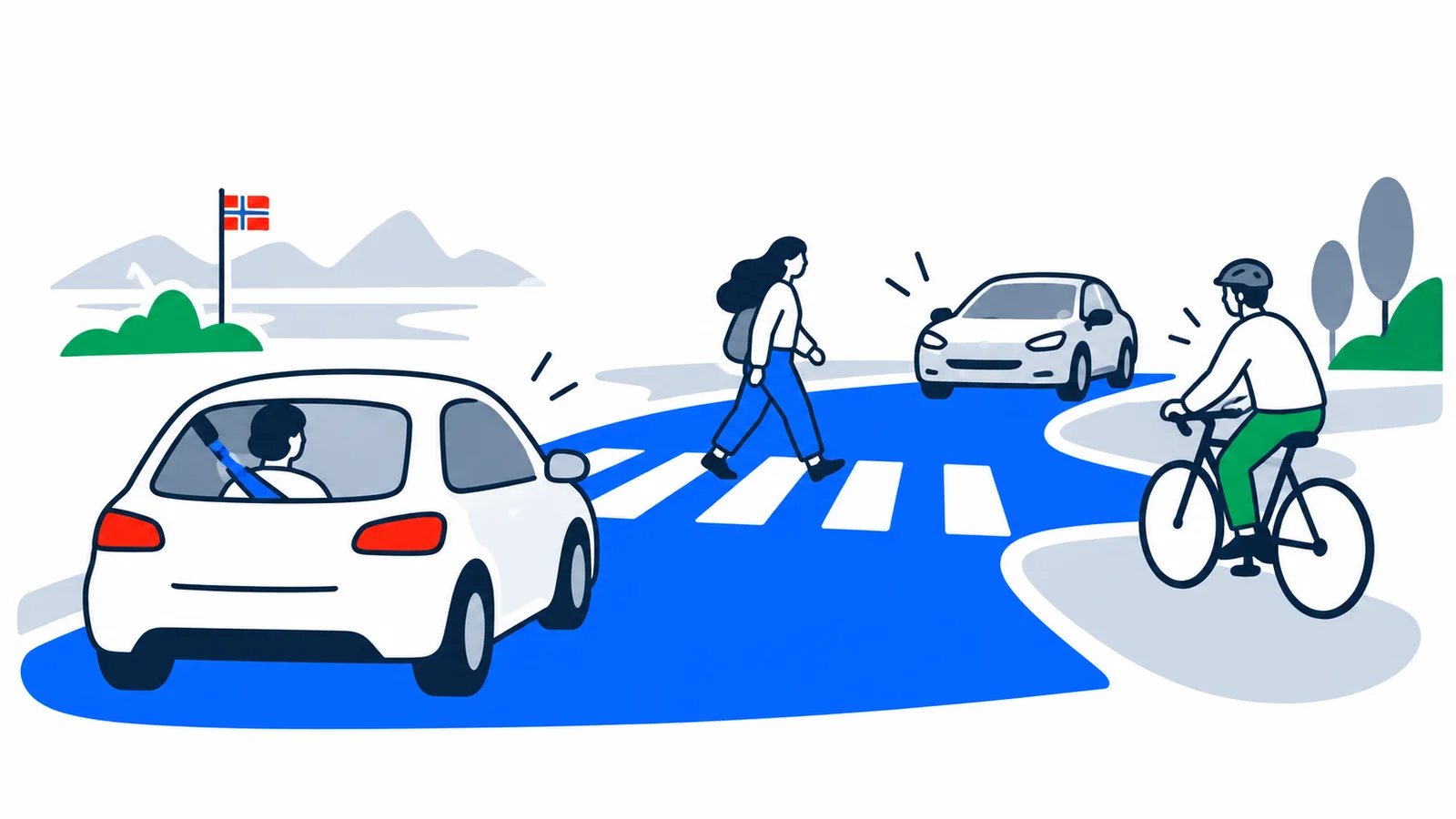
Traffic rules also protect vulnerable road users: pedestrians, cyclists and children. At pedestrian crossings without lights, you must give way to pedestrians who are crossing.
Be extra careful near schools, bus stops and residential areas. Drive according to the conditions, and reduce your speed when visibility is poor.
In winter the roads are often slippery and dark. Then you must use good winter tyres, keep a good distance from the car in front and take even longer to brake. Keeping a good distance gives you time to react.
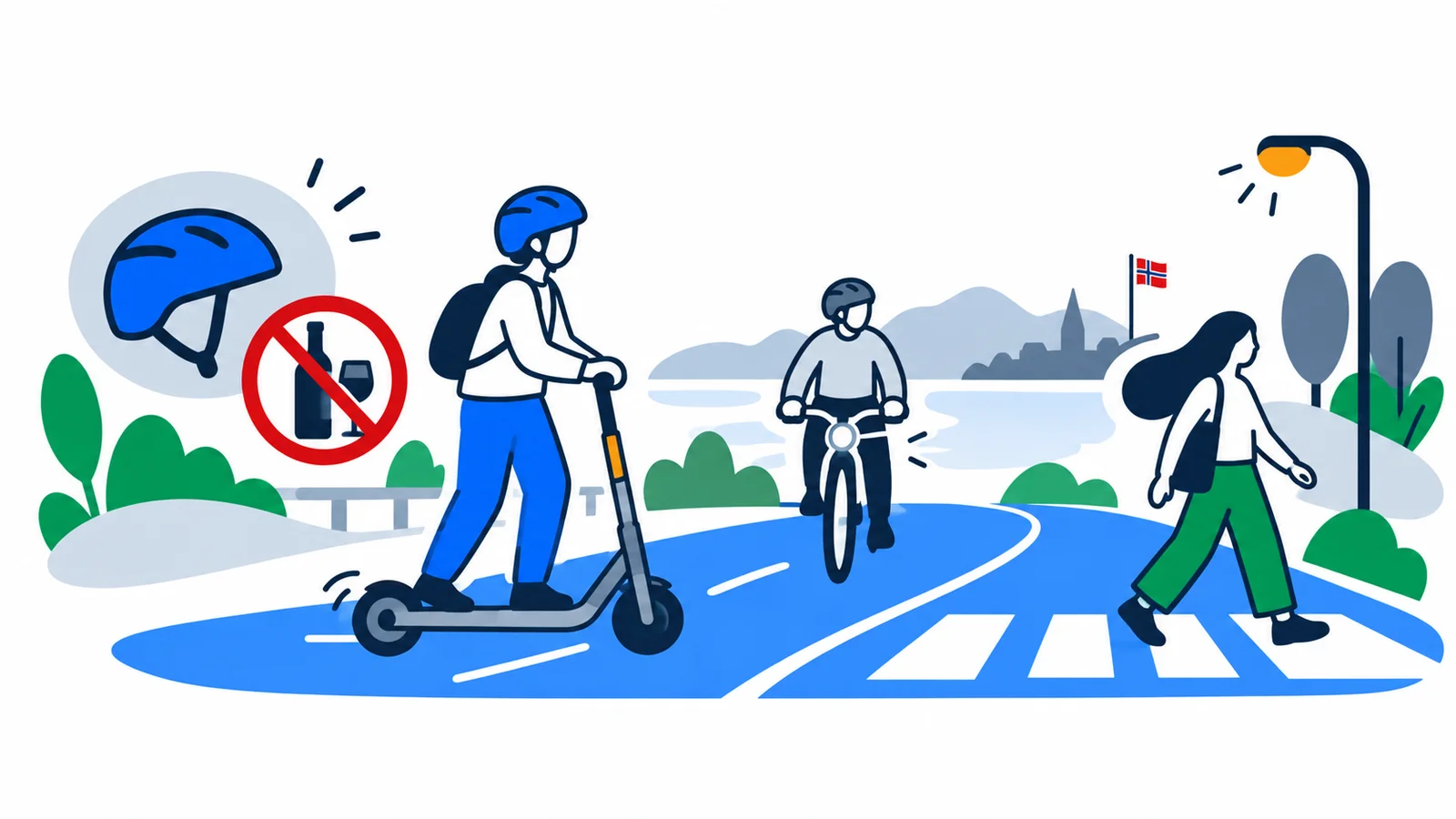
If you are yourself a pedestrian or cyclist, you also have rights in traffic. Use pedestrian crossings and cycle paths where they exist, and use reflectors in the dark. Reflectors make you visible and safe.
The rules exist not to scare you, but to keep everyone safe. If you want to own your own car, you can read more about buying and owning a car in Norway.
Rules and duties in society are part of the curriculum for the Citizenship Test – practise for free on SamfunnPrep.
At SamfunnPrep you will find updated articles and practice questions about rules in Norwegian society. With SamfunnPrep you can prepare yourself safely and for free.