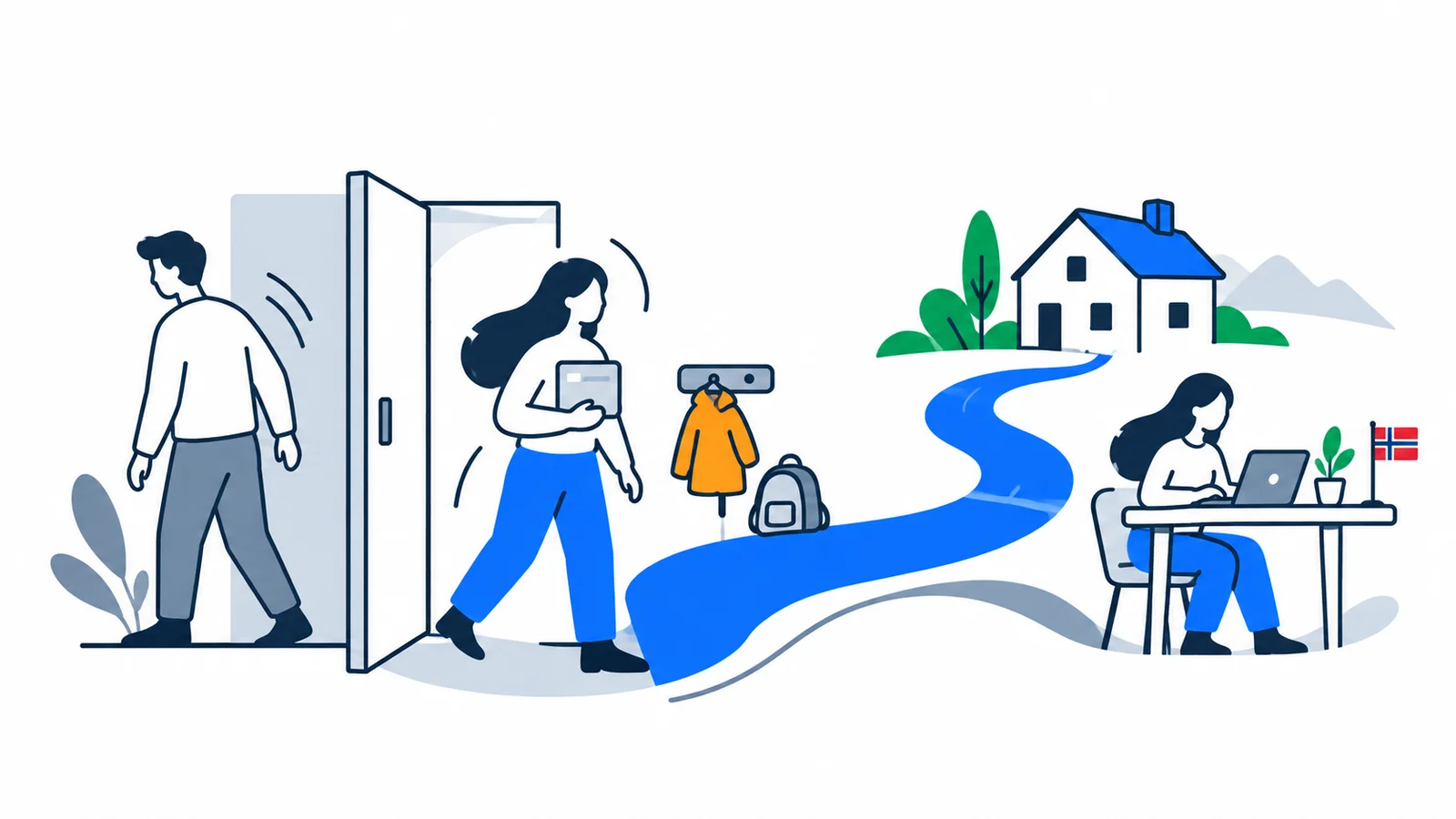

If your marriage or cohabitation breaks down, you do not automatically lose the right to live in Norway. The Immigration Act has several rules that allow continued residence – including a specific right for those who have experienced abuse, without requiring a report or proof. The rules in this guide apply as of July 2026.
Main rule: the permit is tied to the relationship
If you have a residence permit through family immigration with a spouse or partner, the permit was granted because you live together. If you move apart, the grounds for the permit disappear, and you have an obligation to notify UDI (Norwegian Directorate of Immigration).
But that does not mean you must leave Norway immediately. Your permit generally remains valid for the period it was granted, and the law provides several ways forward. The most important advice is therefore: do not panic and leave, and do not stay in a harmful relationship out of fear of losing your residence. First, investigate your rights.
Fear of losing residence is well documented: according to the Norwegian Institution for Human Rights (NIM), it is one of the biggest obstacles preventing abused immigrants from seeking help. This is precisely why the rules in this guide exist – they are designed to make it safe to leave.
Abuse gives you the right to residence on independent grounds
Immigration Act § 53 gives you the right to a new residence permit on independent grounds if the relationship is over and you or your children experienced abuse in the relationship. Abuse means threats, coercion, violence or restriction of your freedom – physical, psychological or sexual.
This rule is stronger than many think:
- You do not need to report the person who abused you. A police report is not a requirement.
- Your account is generally taken as the basis. There is no requirement for documentation or proof; you tell about what you have experienced in an interview with the police, with an interpreter if you need one.
- It does not matter who ended the relationship – you may have moved out yourself.
- Abuse from your partner's family or others in the household also counts, not just from the partner.
- The application is free, and there is no income requirement.
If you are experiencing violence now, help is available 24/7 and free: crisis centres receive you regardless of residence status. Read more in the guide on violence in close relationships.
Other grounds in § 53: death, home country and forced marriage
The section has several rules that allow continued residence after the relationship ends:
- Death: If your spouse or partner dies, you generally have the right to a new permit on independent grounds.
- Unreasonable difficulties in your home country: If a divorce would cause you unreasonable difficulties in your home country due to social or cultural conditions there, you can receive a new permit after an individual assessment.
- Forced marriage: If you bring a case to have your marriage dissolved because it was entered into under duress, you receive temporary residence for six months at a time until the case is decided – and then a new permit if the marriage is annulled. Read more about forced marriage and available help.
Children in Norway can provide separate grounds
If you have children in Norway, your position is stronger. Under Immigration Act § 52, you may have the right to continued residence if you have parental responsibility or contact with your child here – precisely so that a child does not lose a parent through relationship breakdown. The requirement is that you actually exercise your contact rights.
The best interests of the child are a fundamental consideration in all cases concerning children, and Norwegian authorities cannot send out a parent without considering this.
The finances after a break-up concern many, but the welfare system supports you: as a single provider, you may be entitled to extended child allowance, transition benefit from NAV and housing benefit from Husbanken. These benefits are independent of why the relationship ended.
Multiple ways forward: work, residence time and new relationship
Even without abuse, children or death, you have several options:
- Permanent residence permit: If you have enough time on permits that qualify and meet the other requirements, you may apply for a permanent residence permit. A breakup can affect the conditions of your temporary permit while the application is processed. Check your situation with UDI or the police.
- Residence on your own grounds: If you have a job, you can apply for a permit as an employee, for example as a skilled worker. Studies can also provide grounds.
- New relationship: If you get a new spouse or partner with residence in Norway, you can apply for family immigration again. The requirements for income and housing then apply to the new reference person.
- EEA citizens: If you are yourself an EEA citizen, or were married to one, separate and often more favourable rules apply regarding residence rights.
On SamfunnPrep's topic page on family immigration, you will find guides on all these paths.
How to proceed after a break-up
Do things in the right order, and ask for help early:
- Ensure safety first. If you are experiencing violence or threats, call the police on 112 or contact your nearest crisis centre – free and open 24/7.
- Do not wait until your permit expires. Notify UDI about the break-up and apply for a new permit as soon as possible, preferably before the old one runs out.
- Gather what you have, such as documentation of residence, work and children. In abuse cases there is no requirement for proof, but medical certificates or reports can support your case.
- Get free legal aid. In abuse cases you often have the right to a free lawyer. Jussbuss and JURK (legal advice for women) provide free assistance in immigration cases.
- Learn the system. Rights, equality and family life are part of the syllabus for the civic knowledge exam. On SamfunnPrep you can practice free and become more confident about how Norway works.