
The dark season is the dark winter period in Norway, and in the north the sun can disappear completely for several weeks. During this time, the skin produces less vitamin D, and many feel more tired and down than usual.
The dark season affects both body and mood. Below we explain why this happens, what you can do about vitamin D, and how to care for your mental health when the days are short and dark.
What is the dark season in Norway?
The dark season is the period in winter when the days are very short or the sun does not rise at all. In South Norway, this means short, gray days. North of the Arctic Circle, for example in Tromsø and the rest of North Norway, the sun disappears completely for a few weeks around Christmas. This is called the true dark season, or "polar night" in English.
Even in South Norway, the days are much shorter than in summer. The sun is low on the horizon, and the light is weak even in the middle of the day. This affects both your body and your mood.
Why does your body produce less vitamin D in winter?
Your body produces vitamin D in the skin when sunlight hits it. In winter, the sun is too low in the sky in Norway, and the rays that produce vitamin D simply do not reach the ground.
This means that from approximately October to March, your body cannot produce vitamin D from sunlight, no matter how much time you spend outdoors. You must get vitamin D from food or supplements instead.
Do you need vitamin D supplements in winter?
Yes, many people need vitamin D supplements in winter, especially if you eat little fatty fish. The Norwegian Institute of Public Health (FHI) and the Health Directorate recommend that adults get approximately 10 micrograms (µg) of vitamin D per day (check current recommendation), and that people over 75 years old get approximately 20 micrograms per day (check current recommendation).
You can get vitamin D from:
- Fatty fish, such as salmon, mackerel and herring
- Cod liver oil (fish liver oil), an old Norwegian tradition that many still use in winter
- Food with added vitamin D, such as certain types of margarine and milk
- Dietary supplements in tablet or drop form, which you can find at the pharmacy or in the store
Talk to your GP or pharmacy if you are unsure about which dose is right for you. You can read more about how pharmacies and prescriptions work in Norway if you are new to the country.
Who has the highest risk of vitamin D deficiency?
Some groups have a higher risk of vitamin D deficiency than others. It is wise to be extra careful if this applies to you.
- People with dark skin produce less vitamin D from the same amount of sunlight than people with light skin
- People who cover their skin for religious or cultural reasons, for example with clothing that covers arms and legs
- Elderly people, because the skin becomes less efficient at producing vitamin D with age
- People who spend little time in daylight, for example due to work or illness
If you are a new immigrant to Norway from a country closer to the equator, it is especially important to think about vitamin D during the first winters. Many are not used to so little sunlight, and it takes time to adjust. Vitamin D deficiency is one of several topics within public health in Norway that health authorities monitor closely.
What is seasonal depression?
Seasonal depression, also known as seasonal affective disorder (SAD), is a type of low mood that returns each winter when the days become short and dark. It is considered a distinct type of depression, and it is linked to lack of daylight.
Common signs of seasonal depression are:
- You are more tired than usual, even though you sleep enough
- You have less energy and motivation
- You crave sweet and fatty food more, and may gain weight
- You withdraw from friends and social activities
- Your mood is lower than usual, and everything feels heavier
These signs often appear during fall or early winter, and often go away on their own when spring comes and the days become brighter again.
How can light therapy help?
Light therapy means sitting in front of a special lamp with bright light for a while each day, preferably in the morning. The light should resemble daylight and can help your body regulate sleep and mood better.
Many people experience better mood and more energy after a few weeks of regular light therapy. The lamps can be bought in ordinary stores, but it can also be wise to talk to your GP first, especially if the symptoms are severe.
If you feel low for an extended period in winter, there is nothing to be ashamed of. Seeking help is a sign of strength, not weakness. Your GP can help you further, and health care in Norway is available to everyone who lives here.
How do you cope with the dark season in everyday life?
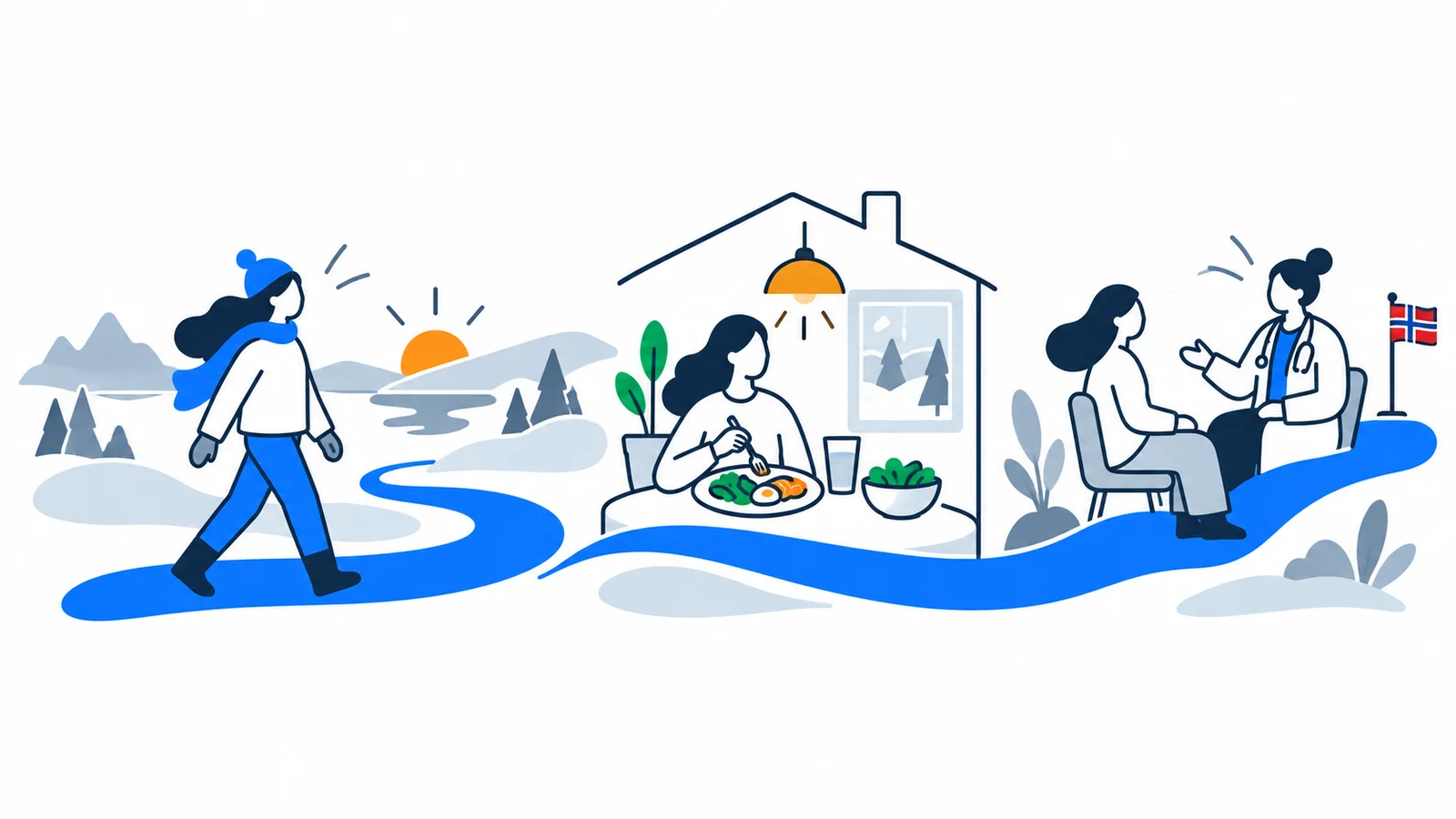
Simple habits can make a big difference during a long, dark winter.
- Go out in daylight every day, even if it is cloudy
- Maintain a regular sleep schedule
- Move regularly, preferably outdoors
- Stay in contact with other people, even when you prefer to be at home
- Consider vitamin D supplements according to recommendations from health authorities
A long, dark winter can also give you good time to prepare for things you need to do further in life in Norway. Many use the dark evenings to read and learn, for example for the citizenship exam or the Norwegian society exam. SamfunnPrep helps you practice both exams at your own pace, with questions in multiple languages. Try free on SamfunnPrep and use the dark season for something useful.
The dark season is a natural part of life in Norway, and most people adapt to it after a few years. With enough vitamin D, some daylight every day and good contact with others, you will get through winter just fine. Remember that help is available if you need it, both from your GP and from SamfunnPrep when you prepare for the exams.