
Start with your GP if you have difficulty hearing. Professionals assess and fit hearing aids. You may receive support from Nav, but you must pay some costs yourself.
Where do you start if you have difficulty hearing?
Book an appointment with your GP. The doctor can refer you to an ear, nose and throat doctor, often called an ØNH-lege. This specialist examines your ears and finds the cause of the hearing problems. Some ear conditions need treatment. A hearing aid is therefore not always the first step.
An audiograf is a healthcare professional who tests hearing and fits hearing aids. This professional also provides follow-up and advice. Explain which situations are difficult: conversations, telephone calls, meetings or television. This makes it easier to assess your needs. See Helsenorge, the public health portal, on the professionals who treat hearing.
The route to a hearing aid goes through a hearing centre or an ENT specialist with a public contract. See § 4 of Forskrift om stønad til høreapparat og tinnitusmaskerer, the regulations on support for hearing aids and tinnitus maskers, for the application route. Other assistive devices follow a different route. See the overview of assistive devices from Nav.
Who can receive support for a hearing aid?
You may receive support when hearing in one or both ears is impaired over the long term. Nav describes this as reduced hearing for more than two years or permanent hearing loss. You therefore do not need to wait two years if the condition is permanent.
An ENT specialist must confirm the diagnosis. The device must be necessary and useful, and you must be able to use it. You must also be a member of folketrygden, Norway's public national insurance scheme. See the hearing-aid conditions from Nav, the labour and welfare administration.
What might you have to pay yourself?
Support has a monetary limit depending on the device type. If the device costs more, you usually pay the difference. There are exceptions for necessary equipment for children under 18 and hearing loss caused by an approved occupational injury. Establish your costs before choosing. See § 8 of the regulations.
The device itself and the doctor's appointment are different expenses. Adults usually pay a contribution at the doctor's. Approved contributions count towards frikort, an exemption card. From 1 August 2026, everyone under 18 is exempt from contributions for healthcare services included in the frikort scheme. With a private specialist who has no public contract, you pay for the entire treatment yourself. See Helsenorge on paying for doctor's services.
Do not buy a device privately expecting to get your money back. Nav does not reimburse such purchases. Ask whether the treatment provider follows the public scheme before booking. See Nav on private purchases.
How do the application and fitting work?
The audiograf writes the application to Nav when examinations show that a hearing aid may benefit you. You must sign it. Nav and the supplier settle the covered part directly. You do not have to pay that amount upfront. See Helsenorge on rights.
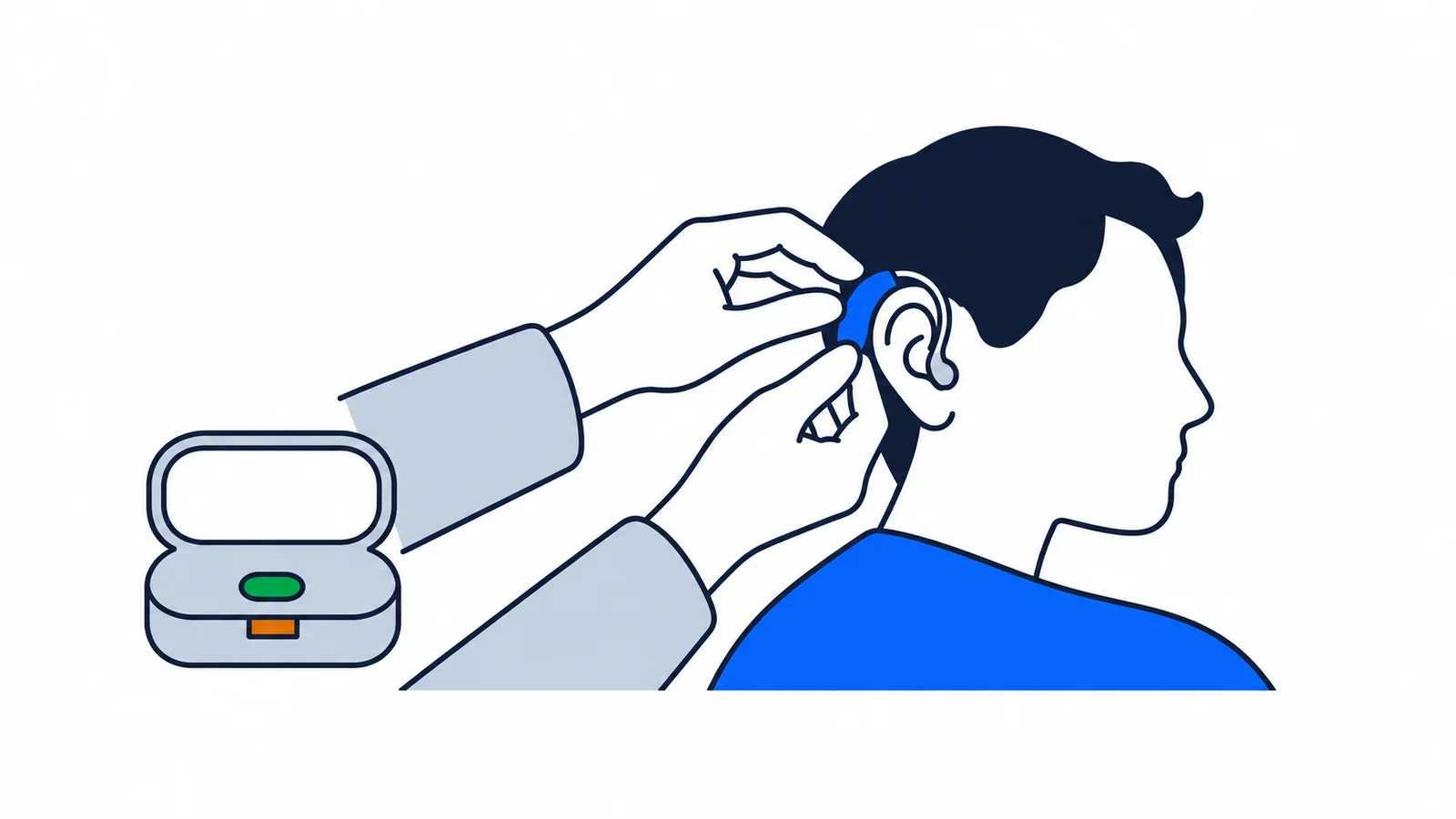
The audiograf fits the device to your hearing and needs. You receive training in putting it in place, charging it or changing the battery, and keeping it clean. After fitting, you are entitled to a trial period and check-ups during the trial. Explain what works and what is difficult so that settings can be adjusted. See Helsenorge on fitting and trials.
| Stage | What do you do? |
|---|---|
| Examination | Explain when you struggle to hear. |
| Fitting and trial period | Learn to use it and give the audiograf feedback. |
| You keep the device | Clarify maintenance, your costs and the next check-up. |
What should you do during the trial period?
Use the period to find out how the device helps in daily life. You could keep a simple hearing diary. For example, note where conversations improve and where you still struggle. Take the notes to your check-up.
Ask for important information in writing. There may be a lot to remember from one appointment. You can also bring someone close to you. Ask for a copy of the hearing test, called an audiogram, and documents you sign. Ask whom to contact between appointments.
Before taking the equipment home, ask for written information about responsibility for loss or damage. Insurance is voluntary. Check whether insurance you already have covers the device, and what conditions and deductibles apply. Do not assume contents insurance automatically covers everything. See Helsenorge's practical tips.
Who helps after the device becomes yours?
When the device fits and Nav has approved support, it becomes your property after the trial. This differs from an ordinary loan from Nav hjelpemiddelsentral, Nav's assistive technology centre. After your first allocation, you are entitled to a follow-up check-up 6–12 months after the device becomes yours. Clarify how to obtain follow-up from the audiograf. See Helsenorge on follow-up check-ups.
You are responsible for ordinary cleaning and maintenance. Adults normally pay for consumables and simple servicing. Necessary repairs may be covered by Nav. Contact the supplier or the place where you received the device if it does not work.
Servicing is also covered for children under 18. Repairs to damage caused by careless handling are not covered, but this exclusion does not apply to damage from children's normal activities. See §§ 2 and 8 of the regulations.
When can you apply for a new hearing aid?
Once at least six years have passed since you received support for the hearing aid, you can get help applying for a new one. This is not automatic. The old device must function poorly and be uneconomical to repair, or a trial must show that a new one gives substantially better hearing.
In certain cases, you may receive support earlier. If your hearing loss has changed, a new device with different technical features must be capable of substantially improving hearing function. Earlier support may also be possible if a substantial change in your functional ability means you can no longer operate the device. A new device type that addresses your hearing loss substantially better may also provide grounds. Discuss this with the specialist. Children under 18 have a separate exception for loss or damage during normal play and activities. See § 3 of the regulations.
What if you need more than a hearing aid?
A hearing aid does not help in every situation. The municipality's hearing contact can assess other assistive devices at home, such as alerts from a doorbell or fire alarm. Call the municipality's switchboard if you do not know who this is. See Helsenorge on hearing-related assistive devices. If your family needs wider support, see elderly care in Norway.
Accessories, such as a microphone or a connection to your television, must be compatible with your device. If you obtain them through the specialist, they normally become your property after the trial. If you obtain them from Nav hjelpemiddelsentral, they are a loan. Ask which scheme applies. See Nav on accessories.
You do not need a hearing aid to receive listening aids for television and radio. However, ordinary retail products are not covered by Nav. The municipality can help with needs at home; for workplace needs, you can contact Nav hjelpemiddelsentral directly. See Nav on listening aids.
SamfunnPrep has tools and guides about life in Norway. The rules here were checked on 7 October 2026.