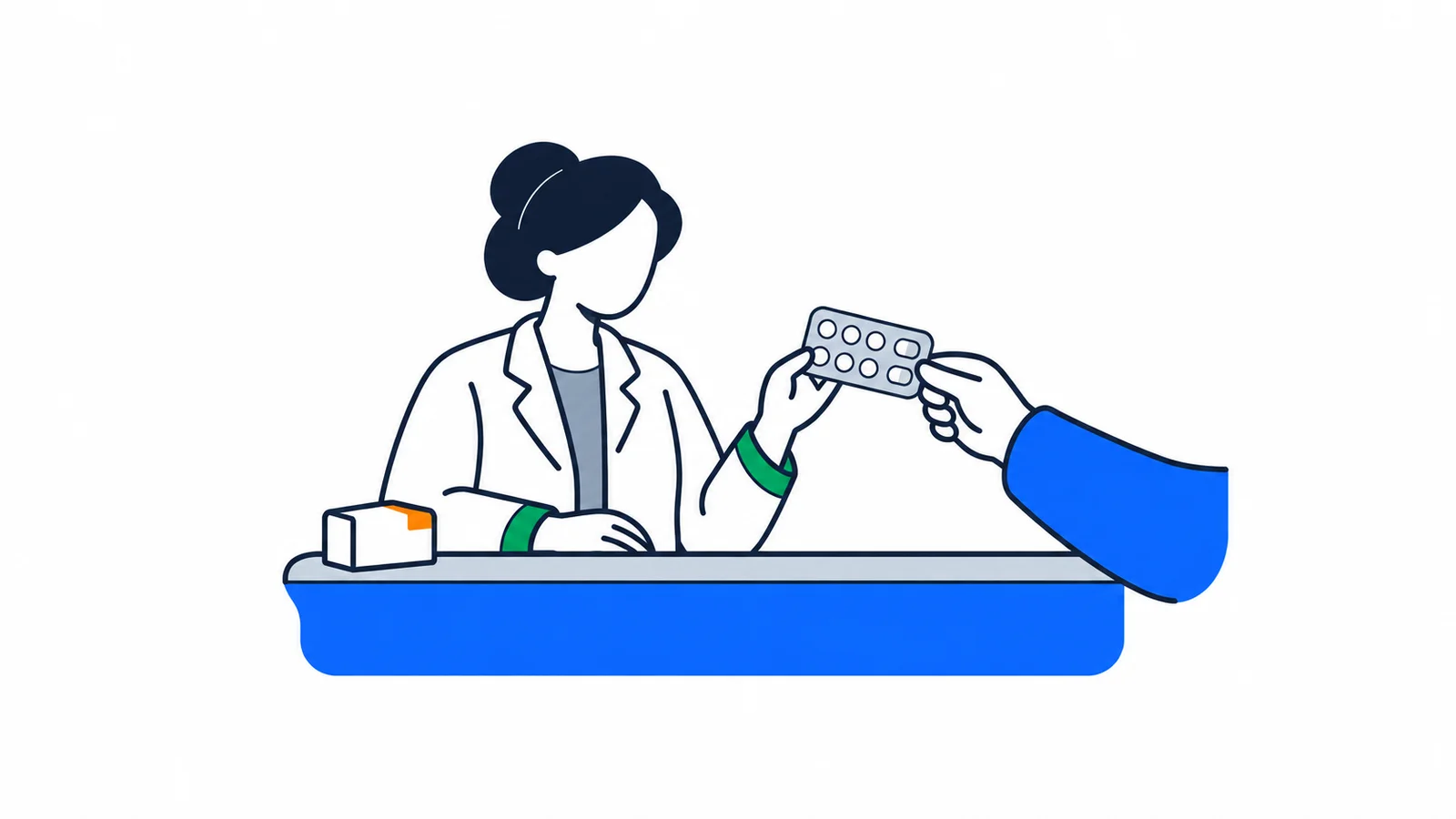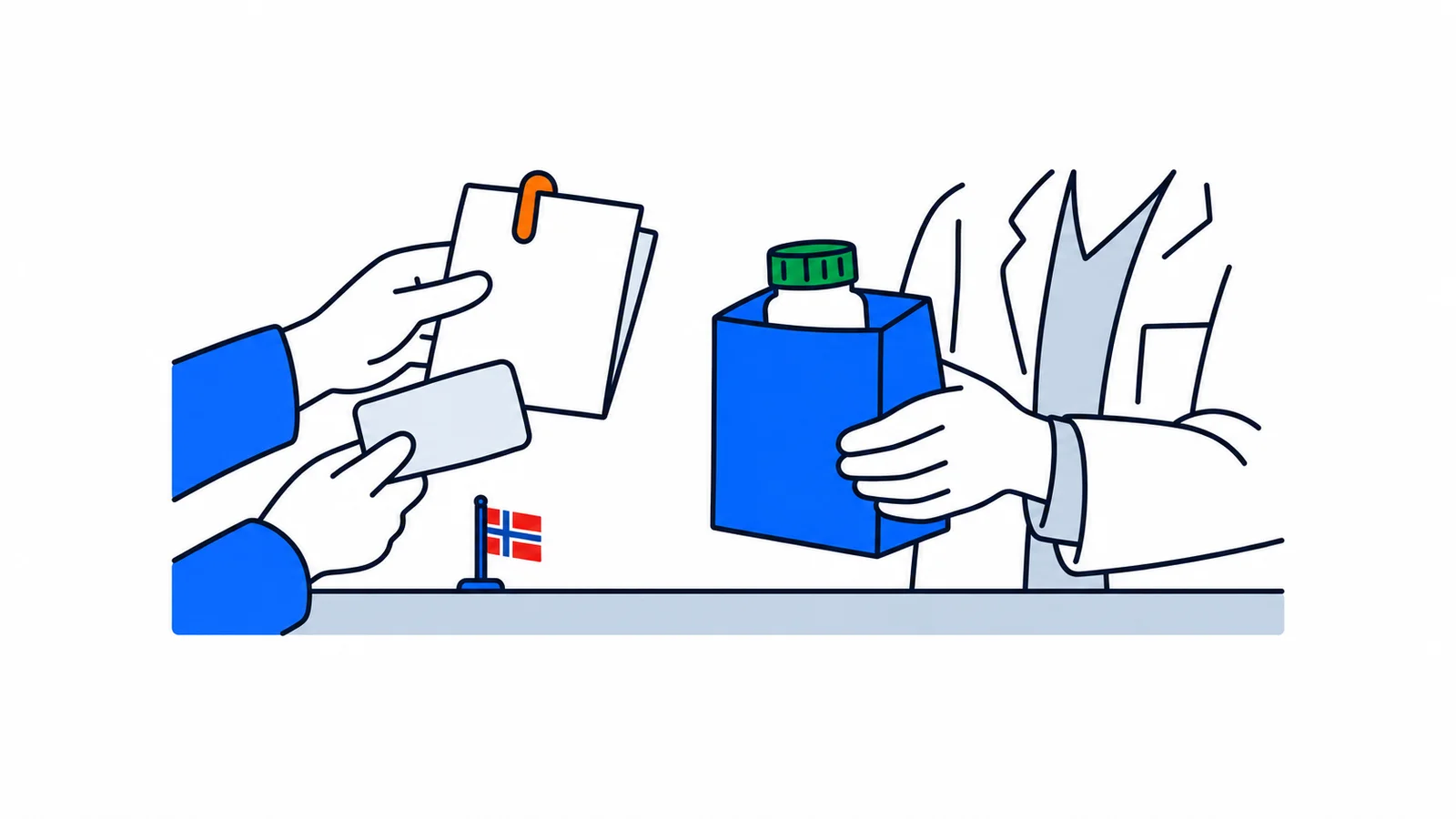

To collect medicines for someone else, you usually need authorisation and identification. The digital pharmacy authorisation on Helsenorge remains a pilot at Apotek 1 and Farmasiet. Other pharmacies may require written authorisation on paper.
Which authorisation do you need at the pharmacy?
You need authorisation that covers collecting prescription products. General access to another person's Helsenorge account serves a different purpose and should not be treated as proof of permission to collect medicines.
Authorisation, called fullmakt in Norwegian, means that someone gives another person permission for a particular action. The person who needs the medicine grants the authorisation. The person collecting it is the authorised representative. Being related does not make the checks unnecessary.
The pharmacy must check that prescription products are handed to the right person. A pharmacist, a healthcare professional trained in medicines, may therefore request documentation before dispensing them. This also protects the medicine user's health information.
SamfunnPrep's guide to digital authorisation explains differences between access to public services. Here, the task is getting prescription products collected at the right pharmacy.
Clarify the arrangement with the pharmacy before sending a friend or family member. Ask what it accepts, which identification is needed and whether the authorisation must be shown again for later collections.
When does Helsenorge's digital authorisation work?
As of 7 October 2026, Helsenorge states that “Fullmakt til å hente reseptvarer”, authorisation to collect prescription products, can only be used at Apotek 1 and Farmasiet. The scheme is being piloted.
Helsenorge is the public portal for digital health services. You can create the authorisation there, but that does not mean every pharmacy already uses the system. Check your chosen pharmacy, including if you have previously granted a different Helsenorge authorisation.
The person collecting medicines under this scheme must bring their own identification and the national identity number of the person named on the prescription. Pharmacies connected to the system get access to the authorisation automatically. See Helsenorge's information about authorisation for prescription products.
You can set the duration and change or delete the authorisation. If the help is only needed for one period, an end date is useful. Also agree exactly which products the helper should collect.
Example: You are ill at home and want your sister to collect medicine. Before she goes, you check whether the pharmacy uses Helsenorge's prescription authorisation. If it does, you create the correct authorisation. If not, clarify the paper form first.
What age and consent requirements apply digitally?
Helsenorge states that you must be over 16 to grant prescription authorisation and over 18 to receive it. Both people must have consented to the Basis access level or higher.
Consent level describes which Helsenorge services you have agreed to use. You can find the setting under your consent settings. This information was checked as of 7 October 2026.
If you cannot create the authorisation, check the correct service and your consent before trying repeatedly. For questions about the age limit or signing in, use Helsenorge's guidance. Do not try to solve the problem by lending someone your BankID.
BankID is personal electronic identification. It must be used by its owner. Authorisation lets someone help without taking over another person's login.
This digital pilot is not a complete guide to collecting medicines for children or people under guardianship. Those situations may need separate clarification. Tell the pharmacy whom you represent and ask for the correct document list.
What must written authorisation include?
Use the pharmacy's authorisation form and include the identification it requests. The person collecting must also bring their own identification.
Apotekforeningen describes paper authorisation and documentation. You can download a form or obtain one at the pharmacy. Handwritten authorisation can also be used if it contains the necessary information.
The guidance lists these details for handwritten authorisation:
- Name and national identity number of the person granting authorisation.
- Name and national identity number of the person receiving authorisation.
- What the person is permitted to collect.
- Place and date.
- Signature of the person granting authorisation.
Clearly state that the document is an authorisation. Specify whether it covers particular prescription products and clarify its duration on the form. Ask the pharmacy to explain any unclear field.
Ask whether the pharmacy needs original identification or accepts a copy in your situation. Do not assume an ordinary mobile message or a photo of the authorisation is always enough. Follow the checks the pharmacy specifies.
Avoid sending national identity numbers and ID copies to more people than necessary. Clarify secure delivery directly with the pharmacy.
What does the helper bring when collecting?
The helper brings their own identification, the necessary patient information and the correct authorisation. With paper authorisation, the authorising person's identification is also needed according to the pharmacy's requirements.
| Arrangement | Check before collection |
|---|---|
| Helsenorge's prescription authorisation | The pharmacy uses the pilot and the authorisation is active. |
| Paper authorisation | The form and identification meet the pharmacy's requirements. |
| Home delivery or online ordering | The recipient and delivery conditions have been clarified separately. |
The helper should know which products to collect. Also agree how to answer the pharmacist's questions. It is easier if the person using the medicine can be reached if necessary.
Check the pack and label before finishing collection. If the brand or pack has changed, ask for an explanation. SamfunnPrep's guide to pharmacies and prescriptions explains ordinary dispensing and medicine substitution.
Does the authorisation also cover online orders and home delivery?
Authorisation can be used for online ordering or delivery when the pharmacy's system supports it. Collection in a shop and receipt of a parcel do not always involve the same practical checks.
Direktoratet for medisinske produkter, the Norwegian Medical Products Agency (DMP), supervises the medicines sector. DMP's guidance for pharmacies' online sales describes checking the correct recipient and using authorisation when others receive or collect medicines.
Read the online pharmacy's delivery information before ordering. Ask who can receive the parcel and what they must show. Do not share the patient's BankID so a helper can place an order.
What if the pharmacy cannot dispense the medicine?
Ask the pharmacy to explain exactly what is missing. Find out whether the problem concerns authorisation, identification, the prescription or stock.
Correct authorisation does not make an expired prescription valid. It also does not ensure the product is available. Ask for a specific next step, and let the authorising person follow up with the doctor if the prescription needs renewal.
When the help is finished, check that the authorisation has the correct end date or remove it. SamfunnPrep collects practical tools for everyday life. Use the overview to plan documents, and confirm collection requirements with the pharmacy concerned.