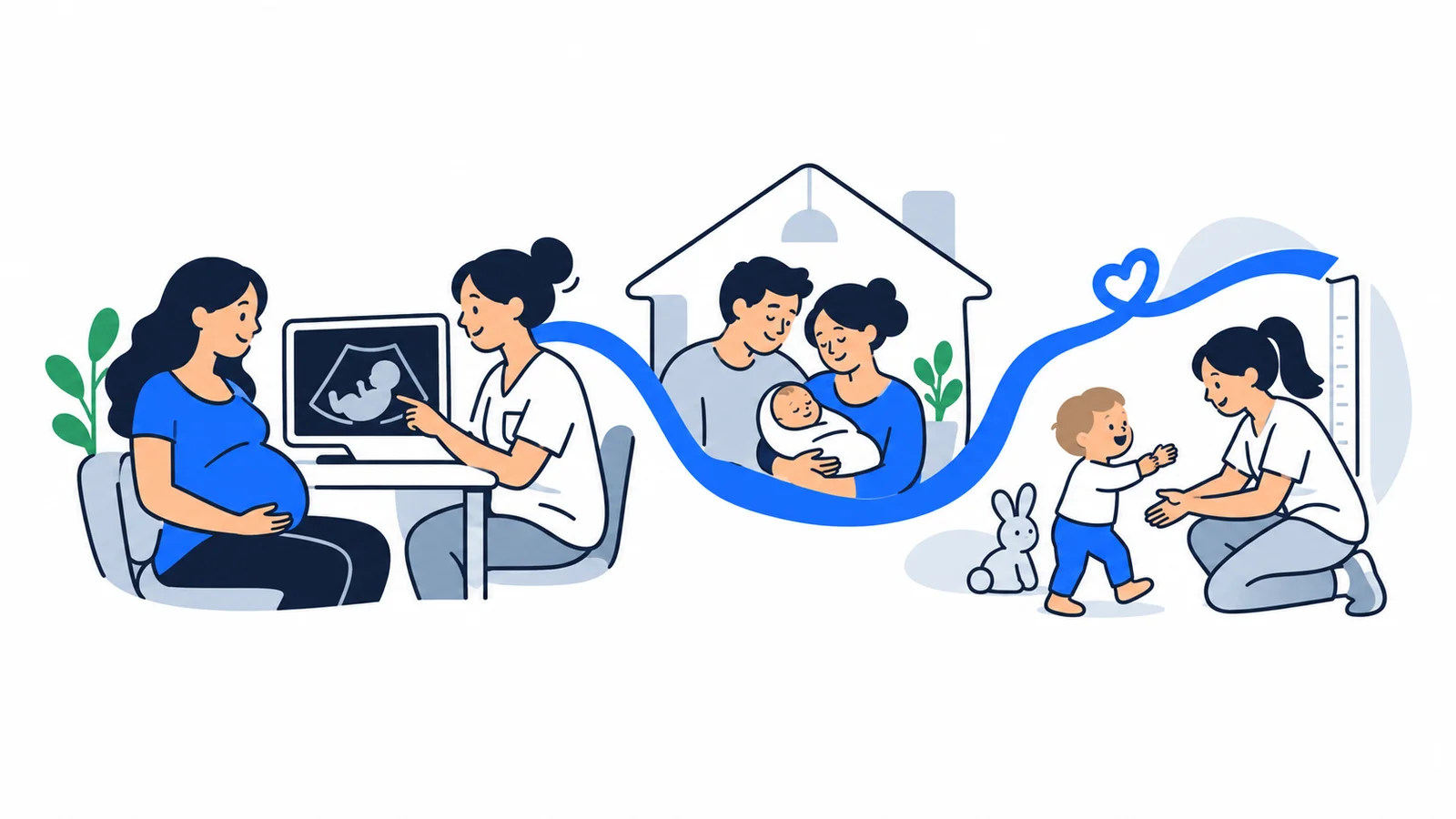

Are you expecting a baby in Norway? Then you have the right to free antenatal care regardless of your residence status. The recommended programme is around 8–9 check-ups with a midwife (jordmor) and/or your GP (fastlege), two free ultrasound scans, a home visit after the birth, and follow-up at the helsestasjon (child health centre) until the child turns 5.
Free antenatal care – what you are entitled to
All antenatal care in the public health service is free. You pay no user fee for the check-ups, and you do not need a frikort to be followed up through your pregnancy.
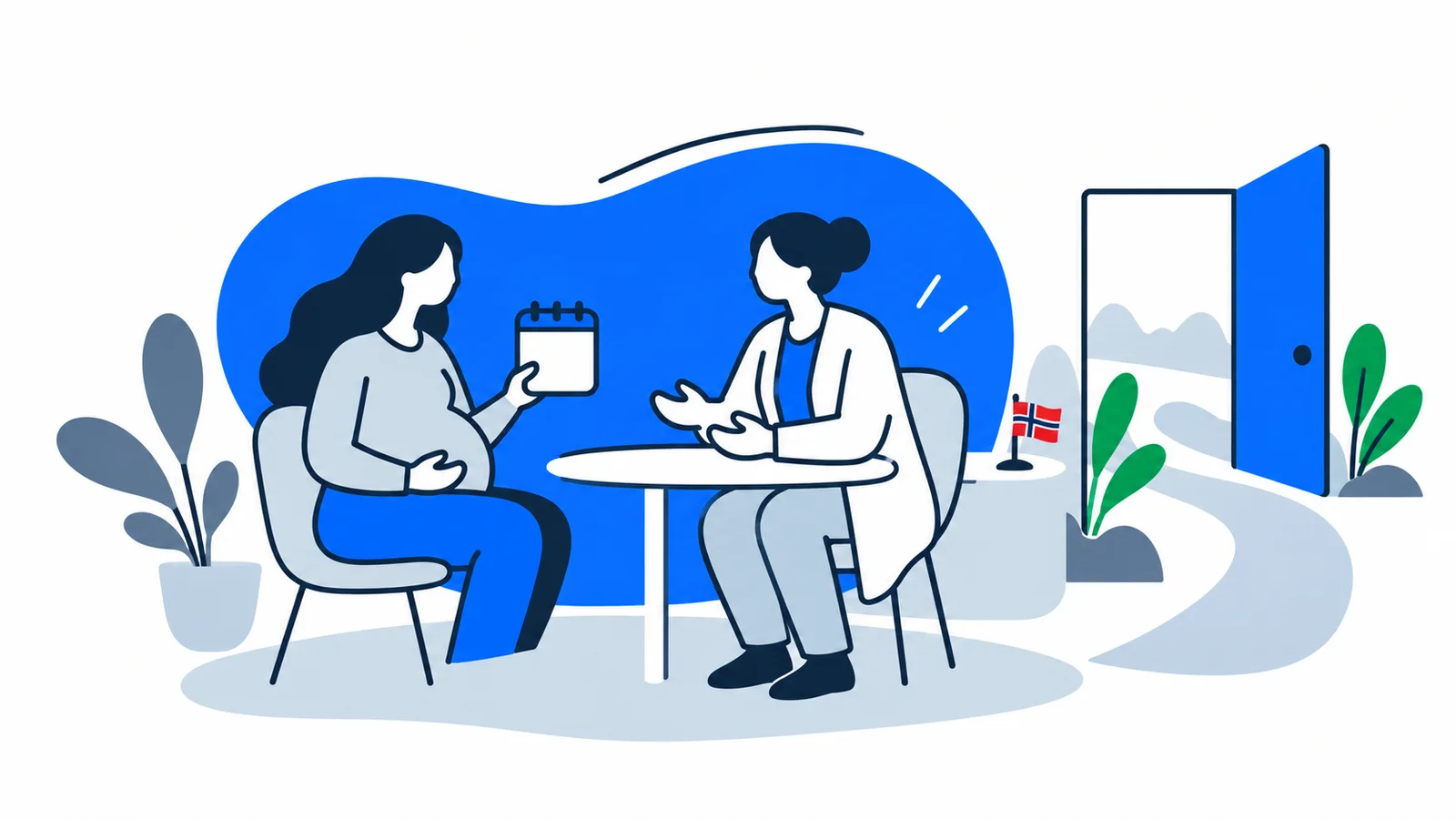
The national professional guideline recommends around 8–9 consultations in a normal pregnancy. The first check-up usually happens early, in week 8–12, and after that regular check-ups follow towards your due date – typically in week 24, 28, 32, 36, 38 and 40. The number is adapted to you and your situation: if you need closer follow-up, you get more visits.
The first appointment is often a little longer than the others. The midwife or doctor goes through your health, previous pregnancies, any illnesses and medicines, and you make a plan for the rest of the pregnancy together. Bring your national identity number (fødselsnummer) or D-number and information about your own health.
At each check-up they measure your blood pressure, take a urine sample, monitor the baby's growth and heartbeat, and talk with you about how you are doing – both physically and mentally. You are offered blood tests early in the pregnancy, and practical information about diet, birth, breastfeeding and your rights. It pays to get in touch as soon as you know you are pregnant, so the first check-up is arranged in time. You need no referral.
- First check-up: week 8–12
- Ultrasound: week 11–14 and week 17–19
- Regular check-ups: week 24, 28, 32, 36, 38 and 40
For an overview of how the Norwegian health system fits together, see how the Norwegian health system works.
Ultrasound: early scan and routine scan
All pregnant women are offered two ultrasound examinations, both free:
- Early ultrasound in week 11–14. This offer was extended to all pregnant women in Norway in 2022 – previously it was reserved for certain groups. The scan confirms that the pregnancy is developing in the uterus, the number of fetuses and heart activity, and estimates the due date. At the same time you are offered NIPT, a blood test.
- Routine ultrasound in week 17–19. Here the due date is set more precisely, twins are detected, and the fetus's anatomy is examined thoroughly.
The scans are done at a hospital or an approved ultrasound clinic. Both examinations are voluntary – you can say yes to one, both or neither. For many, the ultrasound is also a lovely first meeting with the baby.
Midwife or GP – you choose
You decide yourself whether you want to see a midwife (jordmor) at the helsestasjon, your GP (fastlege), or alternate between them. Many choose a combination. The midwife service is free, and you need no referral – you can contact the helsestasjon in your municipality yourself.
Do you have the right to an interpreter if you do not speak Norwegian? Yes – you have the right to an interpreter when meeting the health service, and you must not use your own children as interpreters. Say so in advance if you need one.
If you want to change your GP before or during pregnancy, you can do it easily online. Read more in how to change your GP. If you are unsure of the difference between the GP, the emergency room and the hospital, you will find answers in GP, emergency room and hospital.
After the birth: home visits
Follow-up does not stop at the birth. When you come home from the maternity ward, you are offered home visits:
- A midwife comes to your home 1–3 days after you have travelled home from the hospital. She focuses especially on the birth, breastfeeding and the emotional reactions afterwards.
- A public health nurse (helsesykepleier) from the helsestasjon comes for a home visit 7–10 days after the birth. Then you talk about your interaction with the baby, care, breastfeeding, sleep, safety and how you are doing as parents.
At the hospital the newborn is also examined by a paediatrician, and a blood test (newborn screening) is taken to check for certain rare diseases. If you feel low or exhausted in the weeks after the birth, it is important to speak up – both the midwife and the public health nurse are used to talking about this. Both visits are free, and you get them no matter how many children you already have.
The helsestasjon follows the child from 0 to 5 years
After the home visit, the helsestasjon takes over the further follow-up of the child. From 0 to 5 years your child gets a fixed programme of free consultations with a public health nurse and doctor. At the helsestasjon the child is:
- weighed and measured, so that growth and development are followed closely
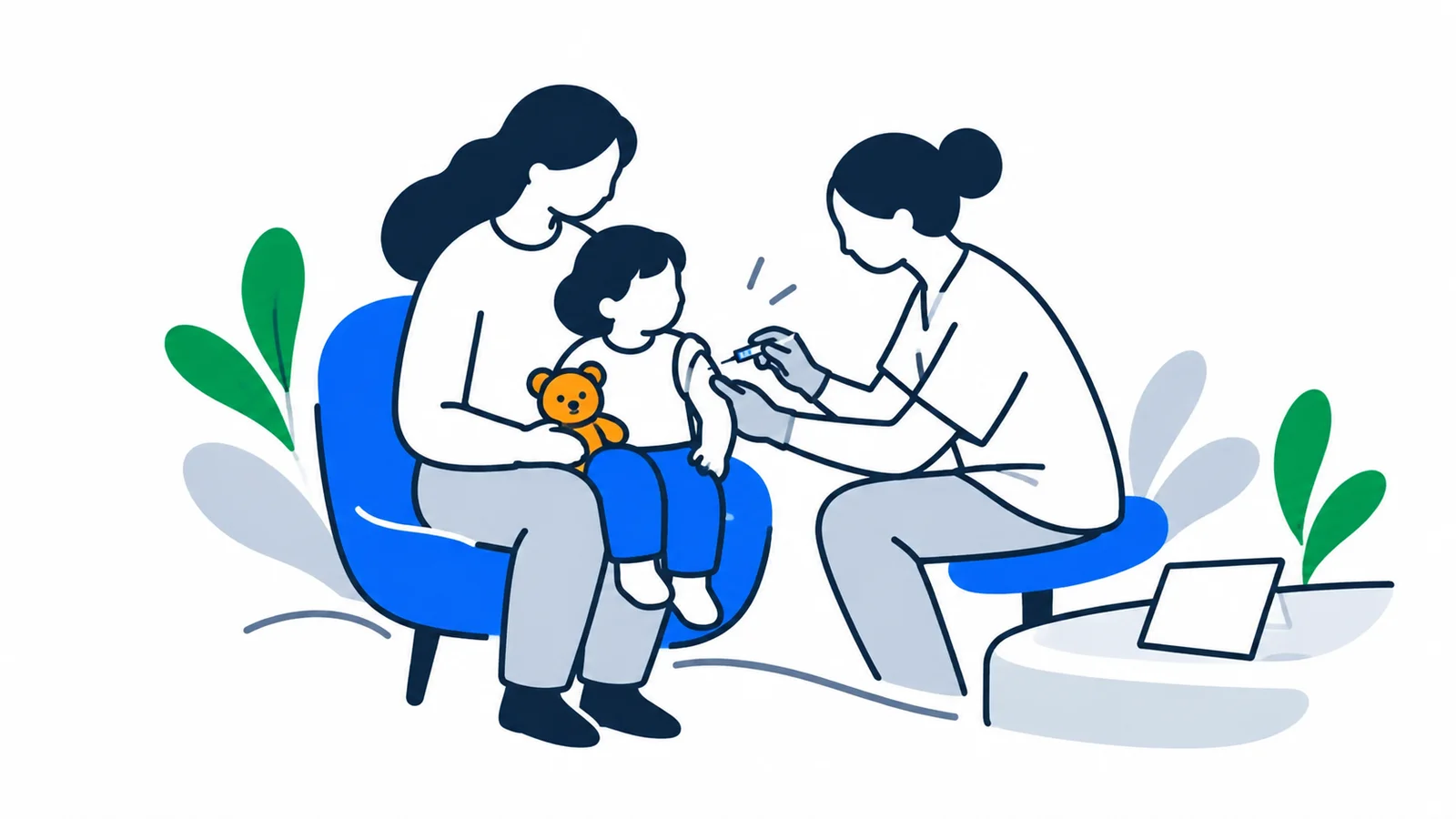
- offered vaccines through the barnevaksinasjonsprogrammet (childhood immunisation programme)
- examined by a doctor at set ages
- followed up on vision, hearing and language
The consultations follow a fixed schedule throughout the period. The vaccines are free and voluntary, but are recommended to protect the child against serious diseases. You also get advice on breastfeeding, food, sleep and the parenting role – and the helsestasjon is a safe place to ask about anything that is difficult. The service is free and voluntary.
You have the right to care regardless of residence status
Many newcomers are unsure whether they have the right to help. The answer is yes: pregnant women, women giving birth and new mothers have the right to pregnancy and birth care regardless of residence status – including asylum seekers and people without legal residence. Care for pregnant women counts as health care that cannot wait.
Accepting this help does not affect the child welfare service (barnevernet). The helsestasjon is a support for the family, not a control authority. You can also get help understanding Norwegian letters and applications, and the helsestasjon can refer you on if you need more follow-up. Once the child is born, you may also be entitled to parental benefit from NAV.
If you contact the helsestasjon in your municipality as early as possible in the pregnancy, you secure good follow-up all the way – before, during and after the birth.