

Emergency help in Norway is about choosing the right contact quickly. Call 113 when life and health may be at risk. Call 116 117 when it is urgent but does not seem life-threatening, and your GP is not available. Contact your GP first for ordinary health problems during the day. For new immigrants, the difference can be hard to grasp, because the words emergency number, out-of-hours clinic and GP feel similar in practice. This guide explains what they mean, when to use them, what to say on the phone and what happens afterwards. The goal is simple: you should get the right help without losing time or arriving at the wrong place. When you know this order, emergency help in Norway becomes less frightening even when the language is new.
When emergency help in Norway means calling 113
Call 113 when you think an illness, injury or situation may be serious. Helsenorge explains that you can call 113 when life and health are at risk, and that it is better to call once too often than too late. Typical examples are loss of consciousness, severe breathing difficulties, chest pain, a serious accident, acute risk of suicide or new signs of a stroke.
113 is the medical emergency number. When you call, you reach AMK, which means the medical emergency communication centre. There, health personnel assess how serious the situation is. They can send an ambulance, a doctor or an air ambulance. They can also give you advice while you wait.
You should not call your GP first if someone may die, lose consciousness or sustain lasting injury. With signs of a stroke, minutes count. Also call 113 if a child has swallowed something dangerous, if someone has a severe allergic reaction, or if a person is not breathing normally.
Emergency help in Norway is built on quick assessment. You do not need to be sure of the diagnosis before you call 113. Uncertainty is a good reason to call when symptoms could be dangerous.
Read more from Helsenorge on when to call 113. Save 113 in your phone, but remember that you can dial the number directly without an app or login.
When the out-of-hours clinic 116 117 is the right care
Call 116 117 when you need health care quickly but the situation does not seem life-threatening. The out-of-hours clinic helps when your GP is closed, when you are travelling, or when the problem cannot wait until the next regular appointment. Every municipality in Norway has an out-of-hours clinic available around the clock.
Examples can be a high fever in a child, moderate breathing difficulties, a cut that needs stitches, suspected fractures, severe pain or a sudden worsening of an illness. The clinic can give advice over the phone, ask you to come in, or assess whether you need an ambulance. You should therefore call before you arrive, if the situation allows.
When you call 116 117, you are usually connected to the out-of-hours clinic where you are staying. That is useful if you are on holiday or have just moved. If you call from abroad, you normally need to use a local eight-digit number for the clinic.
Emergency help in Norway does not always mean an ambulance. The out-of-hours clinic is often the right level when you need a doctor quickly but the person is awake, breathing well and seems stable. Health personnel on the phone can change the plan if they hear signs of greater danger.
Helsenorge has a dedicated page about the out-of-hours clinic and 116 117. Write down the address of the nearest out-of-hours clinic in your municipality before you actually need it.
When your GP is the right first contact
Your GP is the main contact in the health service when the problem is not acute. During opening hours you should normally contact your GP first. The GP assesses symptoms, treats common illnesses, writes prescriptions, gives sick leave and refers you on to a specialist or hospital when needed.
Choose your GP for problems that have lasted a while, medication reviews, mental health that is not acute, skin problems, pain that is not suddenly serious, or questions about tests and vaccines. The GP office can also assess whether you need a same-day appointment. You do not have to know how serious everything is, but you must describe the symptoms clearly.
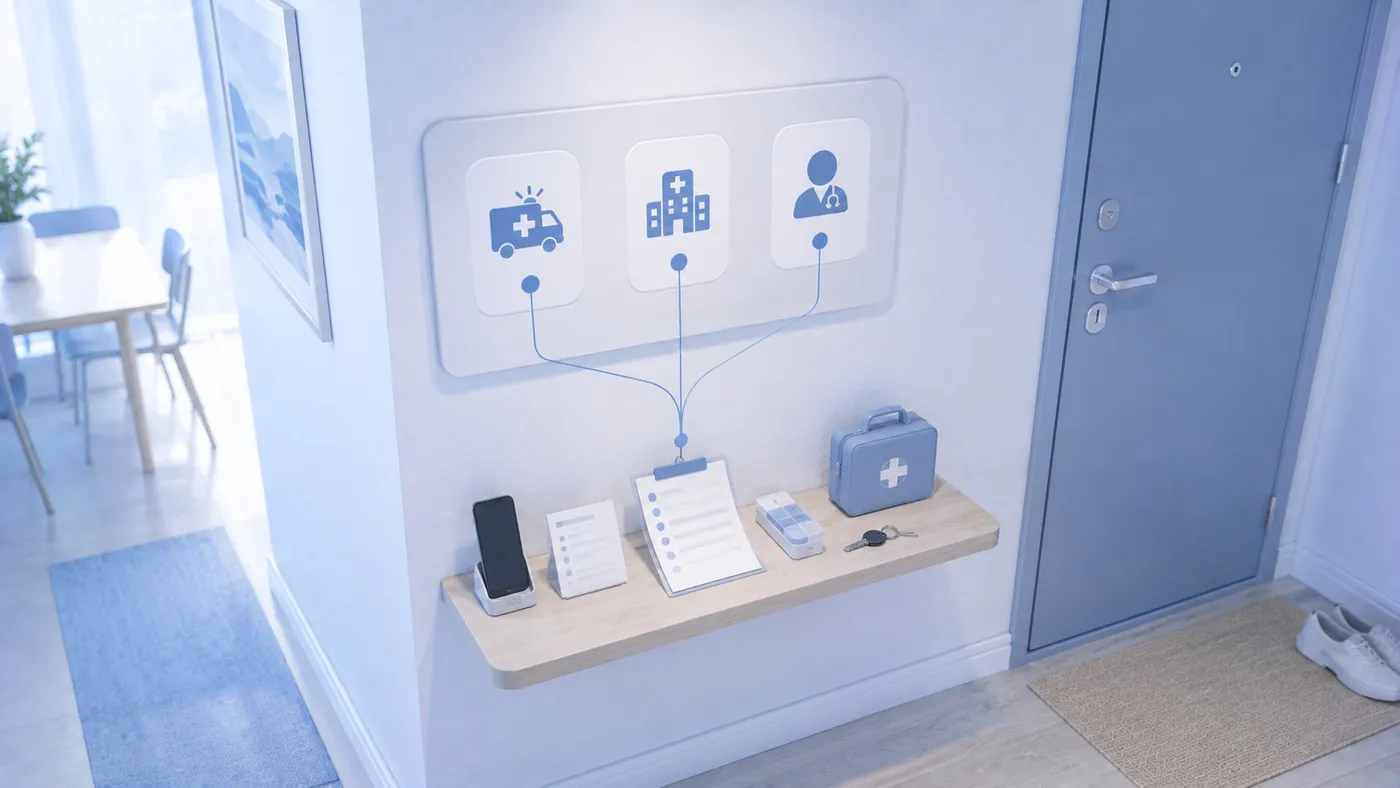
If your GP is closed and the help cannot wait, you call 116 117. If the situation could be life-threatening, you skip both the GP and the out-of-hours clinic and call 113. This is the practical order: GP during the day, out-of-hours clinic when it is urgent outside GP hours, 113 when life is at risk.
Emergency help in Norway is often better when the GP knows your history. Tell them about previous diagnoses, medication, pregnancy, allergies and recent visits to the out-of-hours clinic or hospital. Then the GP can assess risk faster.
If you do not have a GP you are happy with, it can be worth changing your GP on Helsenorge. Read also our overview of the Norwegian healthcare system to understand how GP, out-of-hours clinic and hospital fit together. Use your GP early, before small problems become acute.
What to say when you need emergency help in Norway
When you call 113 or 116 117, start with what matters most. Say who you are, where you are, the phone number you are calling from, and what has happened. Use short sentences. You do not need perfect Norwegian. The important thing is that health personnel understand the risk.
Describe symptoms concretely: when they began, whether they are getting worse, the person's age, known illnesses, medication and whether the person is awake and breathing normally. For an injury, say how it happened. For poisoning, say what the person may have taken, how much and when.
If you do not understand the question, say: "Can you say it more simply?" or "I need an interpreter." Helsenorge writes that patients with limited Norwegian skills may have the right to an interpreter when meeting the health service. On an emergency call, you must still try to explain quickly in Norwegian or English.
Emergency help in Norway often needs an address more than an explanation. Say the municipality, street address, floor, entrance and a clear landmark if you do not know the exact address. Keep the phone on and follow the instructions you are given.
Have your address, date of birth and medication list ready at home. That makes emergency help in Norway easier when minutes count.
How to choose the right number for illness and injury
Think about danger first. If the person could die, is breathing poorly, has severe chest pain, is unconscious, has new paralysis or is in acute risk of suicide, you call 113. If it is urgent but does not seem life-threatening, you call 116 117. If it can wait until ordinary opening hours, you contact your GP.
This simple rule helps under stress: life-threatening is 113, urgent is the out-of-hours clinic, ordinary health problem is the GP. You do not need to make a medical diagnosis yourself. You only need to choose the safest first contact. With emergency help in Norway, the safest choice is the right choice. If you are in doubt about whether it could be serious, choose 113.
For immigrants, it is also useful to know about copayments and rights. Many health services have a copayment, while emergency calls are free. For high health costs, an exemption card may apply. Read more in our guide on NAV and benefits for immigrants if health costs affect your finances.
The official information on the right to health care also explains GP, out-of-hours clinic, hospital and interpreter services. Emergency help in Norway becomes less stressful when you know the system before something happens, especially if you live alone or have small children. Also write your GP's number on paper at home, because the phone can run out of battery in a stressful situation. Save 113, 116 117 and your GP's number on your phone today, and emergency help in Norway becomes easier to use correctly.