Topic 4 of 11

Children and family

Children’s rights, family life and support schemes in Norway.

Reading time
≈ 6 min
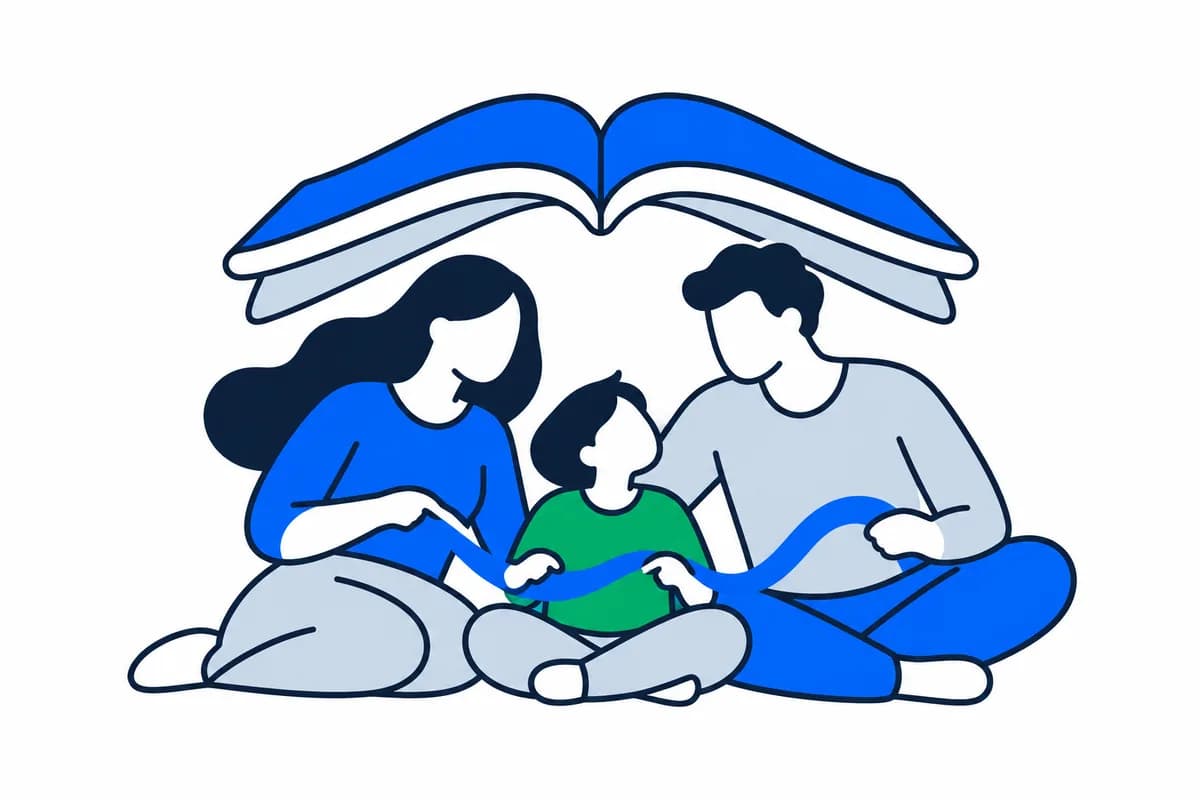
Two adults and a child sit together under a book-shaped arch.

At a glance

Children have rights of their own while parents remain responsible for care and safety. Understand how a child’s voice, family cooperation and public support fit together in different situations.

The essentials to remember

  • The child’s voice

    Children should be heard while adults remain responsible for care.

  • A safe childhood

    Violence is prohibited as a parenting method.

  • Family support

    Family counselling offers relationship and parenting support without a referral.

  • Different services

    Child welfare assesses care needs; parental benefit has separate eligibility rules.

Understand the topic

Children have rights in their own name

Parents must provide care, protection and the necessities of life. Children should be heard about matters affecting them, with increasing weight given to their views as they grow in age and maturity.

This does not require children to decide difficult adult matters alone. Parents remain responsible for finding suitable solutions.

Violence is prohibited in upbringing. Adults can set boundaries through explanation and follow-up; children still need safety when adults feel angry or disagree with one another.

Families may have one or more carers, and parents may live together or separately. Two people of the same sex can marry in Norway. Family structure does not determine a child’s worth or right to safe care. The “best interests of the child” concerns the needs of the individual child, rather than ranking family types.

Views of children have changed alongside schooling, laws and living conditions. Many children previously had to contribute to the family economy through work. Today play, learning, care and children’s own rights are emphasised. This does not mean children cannot have tasks at home, but those tasks must be understood within their needs for development and protection.

Cooperation can be learned and supported

Families may need help with communication, parenting or cooperation after separation. Family counselling offices offer conversations, guidance, courses and support for parents living apart.

You can contact an office directly without a referral. The purpose is to improve relationships and the arrangements of children’s daily lives.

When parents disagree, the child’s experience is part of the picture. Hearing a child means listening without making them responsible for resolving a conflict between the adults.

Cooperation with kindergarten and school can identify needs early: parents know the child at home, while staff see play and learning with others. A meeting about sleep, friendships or well-being can lead to a shared plan. Asking for this support is different from asking someone to take over care.

Child welfare provides help and protection

The child welfare service investigates concerns about children’s care and provides necessary help and protection. Support is primarily offered at home, for example through guidance or respite measures.

Intervention must not be more intrusive than necessary, and the child’s best interests carry particular weight. In serious circumstances, care outside the home may be required under specific rules.

Contacting the service is therefore not the same as a care order. It assesses the individual child’s needs, safety and relationships.

Parental benefit depends on eligibility

NAV parental benefit replaces income when a parent stays home following birth or adoption. Usual conditions include income in at least six of the previous ten months, a minimum annual income and membership of the National Insurance Scheme.

Some benefits can count towards the income requirement. The division of the period depends, among other things, on which parents have qualified.

Use NAV’s guidance for your family; another family’s payment or timetable does not automatically establish your entitlement.

Distinguish foreldrepermisjon, leave from work, from foreldrepenger, a NAV payment. A right to time off does not automatically mean a right to the same payment. Barnetrygd is a separate child-benefit scheme, while barnebidrag is money from one parent to the other for the child’s support when the parents do not live together. Shared permanent residence for the child (delt fast bosted) does not by itself rule out child maintenance; parental incomes and the particular arrangement matter. These arrangements have different purposes and conditions.

Useful distinctions

Familievern
Counselling for relationships and cooperation between parents. No referral is needed to contact the service.
Barnevern
The service providing necessary help and protection when a child’s care situation requires it.

From learning to everyday life

Think through an example

Two homes and a shared plan

The parents of a ten-year-old live apart and struggle to agree on pickups and holidays. They want support to cooperate better.

Where can they turn, and how should the child participate?

Explanation

They can contact a family counselling office without a referral for help with parental cooperation. The child should be able to explain their experience without being responsible for the parents’ conflict or deciding which adult is right.

Words you will meet in Norway

Connect each Norwegian term with its meaning.

12 terms for this topic

Browse the glossary
Foreldreansvar
Responsibility for care and decisions about a child’s personal matters.
Barnets beste
Assessing what best safeguards an individual child’s needs and rights.
Familievern
Support with couple relationships, family life and parental cooperation.
Barnevern
The service providing help and protection when a child’s care situation requires it.
Foreldrepenger
NAV benefit replacing income at birth or adoption when eligibility conditions are met.
Barnehage
An early childhood education service where children receive care, play, learn and develop together before they start school.
Barnetrygd
A Nav benefit that helps cover the costs of raising children under 18, when the eligibility conditions are met.
Samvær
Time a child spends with a parent they do not live with permanently. The arrangement must consider the child’s best interests.
Mekling
Conversations with a neutral mediator who helps parents agree on arrangements for their children after a separation.
Medvirkning
Children having a say in matters affecting them, with their views given weight according to their age and maturity.
Foreldrepermisjon
Leave from work connected with childbirth or adoption. The right to leave and the right to parental benefit follow different rules.
Barnebidrag
Money a parent pays towards a child’s living costs when the parents do not live together. It is different from child benefit.

Sample questions, explained

Explore two questions about this topic, with correct answers and explanations.

Example 01How has the view of childhood changed in Norway?

Correct answer

Many children previously had to contribute through work; today children’s rights to care, play and learning are emphasised

Explanation

Many children previously had to work and contribute to the family economy, although circumstances varied across families and periods. Today the child is viewed as a person with rights including care, participation, play and learning. This change is connected to schooling, laws and living conditions, not only to individual parents changing how they raise children.

Example 02What is the main condition for being entitled to parental benefit from NAV?

Correct answer

Income or qualifying payments in at least 6 of the last 10 months

Explanation

The main rule is work income or qualifying payments in at least 6 of the last 10 months before parental benefit starts. Annual income must be at least half the National Insurance basic amount, and National Insurance membership is required. Certain NAV benefits count. Student loans and grants do not themselves establish entitlement.

How to prepare

A child wants a different daily arrangement after the parents separate. How can the child be heard without becoming responsible for the conflict? Distinguish help with parental cooperation, protection where care is a concern and financial support. Also explain why parental leave, parental benefit and child benefit are separate arrangements.

Edited examples from SamfunnPrep’s question bank, not official HK-dir test questions.

Questions and answers

Does a child’s right to be heard mean deciding everything alone?

No. Children should be able to express views on matters affecting them, with greater weight given as age and maturity increase. Parents remain responsible for care and suitable solutions. A child should not have to resolve an adult conflict or choose which parent is right.

Are family counselling and child welfare the same service?

No. Family counselling supports relationships, parenting and cooperation, including when parents live apart, and can be contacted without a referral. Child welfare investigates concerns about children’s care and provides necessary support and protection, primarily at home. Contact with child welfare does not automatically mean a child will be moved.

Your next step

3 days free

Turn what you know into confident answers.

Put this topic into practice, learn from mistakes and see what you have mastered. One question at a time.

Practise this topic: Children and family

Start practising for free

No payment card needed.

20 practice questions in your trial. The full practice bank is available in Norwegian and English.

  • Focused practice

    Questions that help you use what you have learned.

  • Clear explanations

    Understand why an answer is right.

  • Your progress

    See your results and what to revisit.

Where would you like to go next?