
Places with a story
Lunner kirke
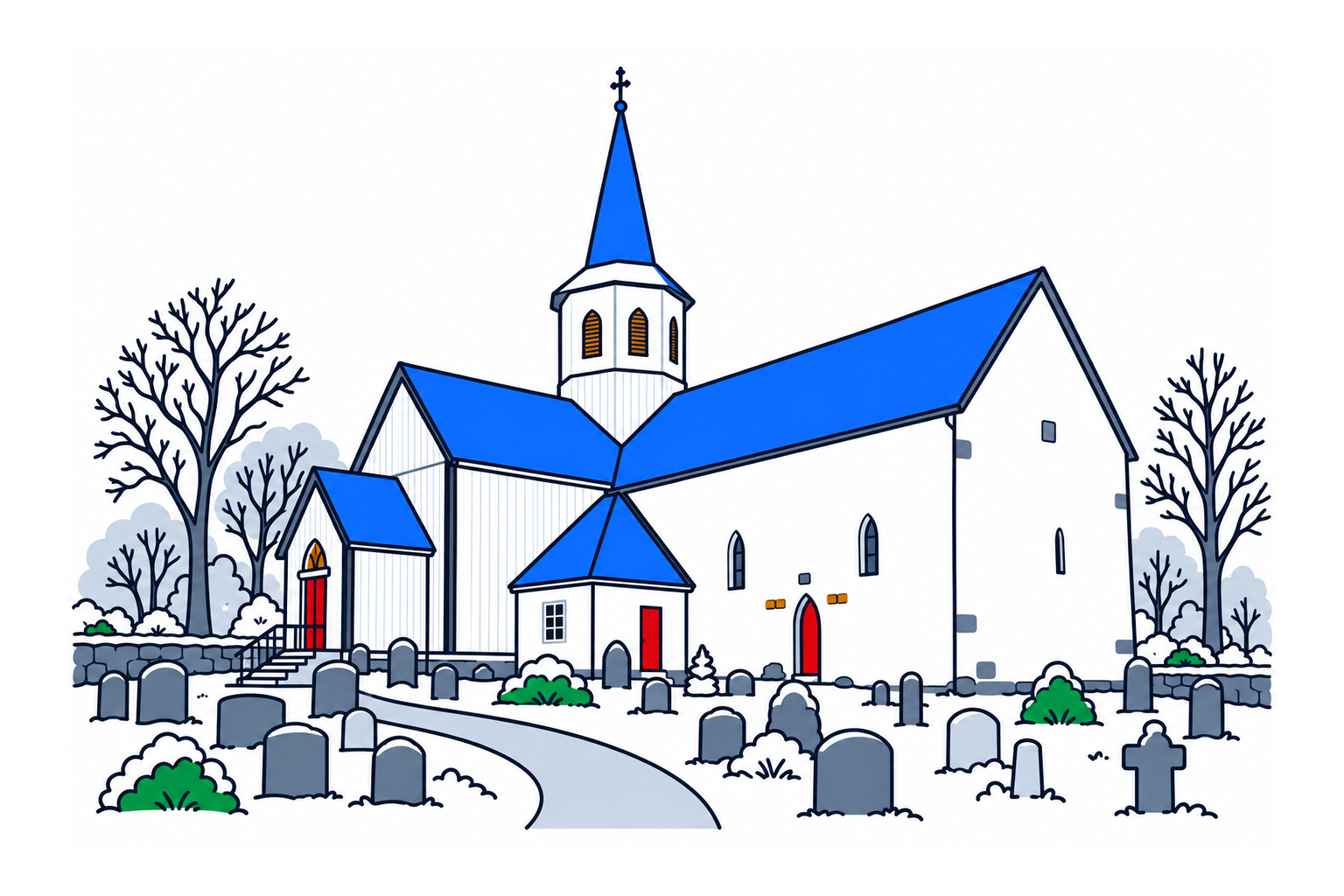
Lunner kirke combines a medieval stone church with later timber arms. The most unusual surviving trace is below the floor: foundations of a round west tower, uncovered during restoration and made visible beneath glass.
About the place1
The parish history dates the small stone church tentatively to the mid-twelfth century. In the 1780s, timber additions transformed it into a cross church. The result is a building whose different materials and spaces reveal expansion rather than a single architectural campaign.
History and local connections1
The church originally had a round tower at its west end. Restoration in 1987–1988 revealed the tower foundation, and a glass floor was installed so it could remain visible. Other additions, including sacristies in 1930, show how the historic church was repeatedly adapted for worship and practical parish needs.
What to look for1
Look for the junction between medieval stonework and later timber construction. Inside, the glass-covered tower foundation provides direct evidence of a vanished part of the building. It invites visitors to imagine the earlier church while recognising that the visible cross-shaped form belongs to a later phase.
Plan your visit12
Lunner parish lists the church at Kjørkevegen 125. Check current acts of worship and interior access before travelling specifically to see the glass floor, since that feature cannot be experienced from outside. The parish's detailed historical booklet is useful context, but its older practical details should not replace current visiting information.
Sources
Last checked:
More places in Akershus


SamfunnPrep
Discover Norway. Prepare for the test.
Practice questions, clear explanations and mock exams.