
Places with a story
Enebakk kirke
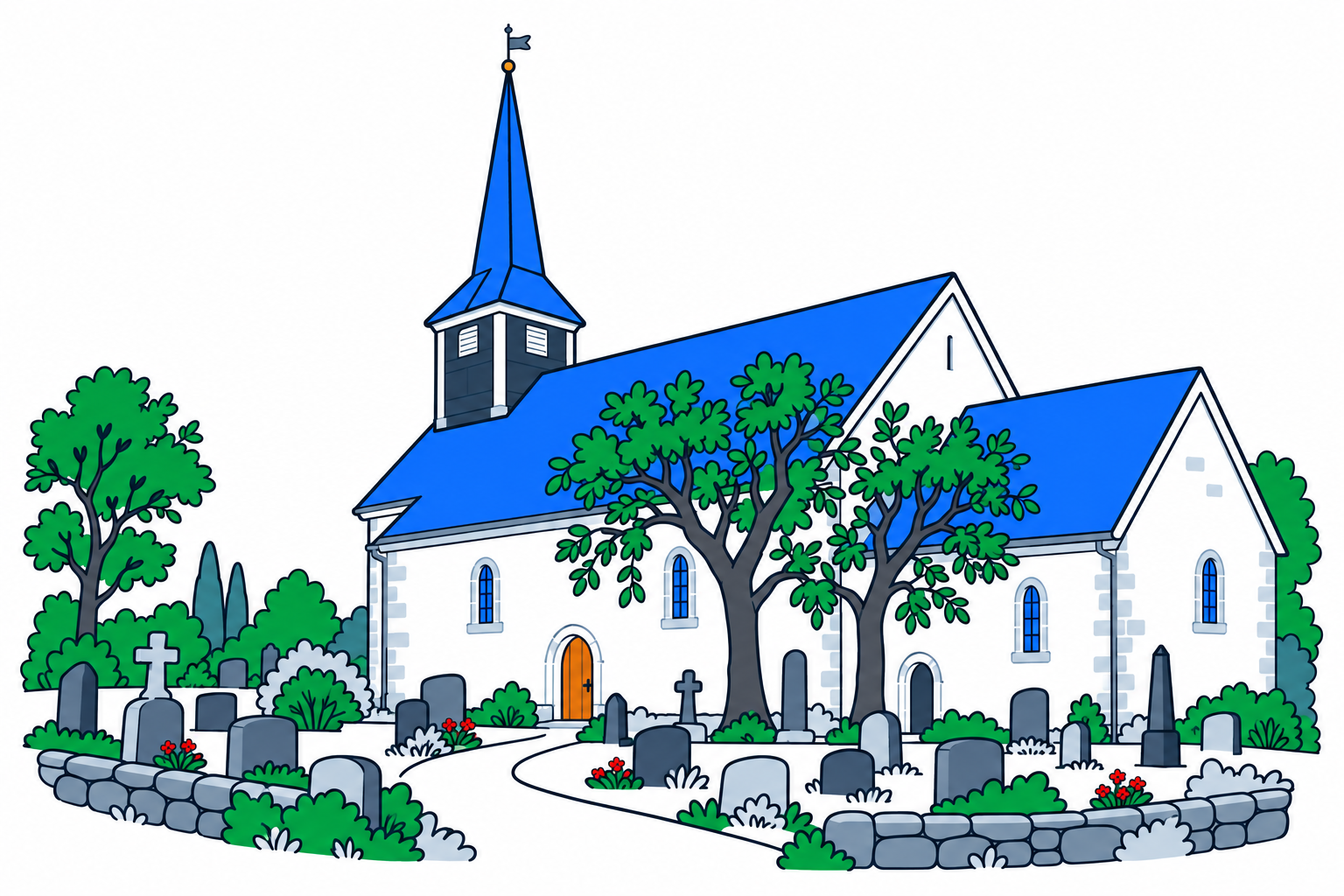
Enebakk kirke preserves an unusually rich sequence of medieval and later church history west of Øyeren. Stone walls, carved furnishings and iron fittings connect this rural parish with the transport routes and artistic traditions of eastern Norway.
About the place1
The church began as a stone nave and chancel in the twelfth century. A west tower was added in the late thirteenth century. Its position near the Glomma waterway helps explain why medieval Enebakk had stronger ecclesiastical connections than its later secluded forest setting might suggest.
History and local connections1
A substantial rebuilding around 1520 altered the tower and roof, unusually late in the medieval period. Later decoration and furnishings added more layers. The Enebakk Madonna now belongs to the museum collection in Oslo, while a medieval crucifix remains above the chancel arch; the precise earlier provenance of these sculptures is uncertain.
What to look for1
Look for the medieval soapstone baptismal font, old door fittings and the surviving iron measuring standard described in the specialist account. These details connect ritual, skilled craft and everyday regulation. They provide a focused way to explore the church instead of treating every visible part as belonging to one date.
Plan your visit12
Contact Enebakk parish for acts of worship and current interior access; it lists the church at Ignaveien 14. Some historical objects are held in Oslo rather than displayed here, so plan around what is actually present. The church remains in parish use, and sightseeing should respect worship, funerals and the surrounding churchyard.
Sources
Last checked:
More places in Akershus


SamfunnPrep
Discover Norway. Prepare for the test.
Practice questions, clear explanations and mock exams.