
Places with a story
Grødeland bygdetun
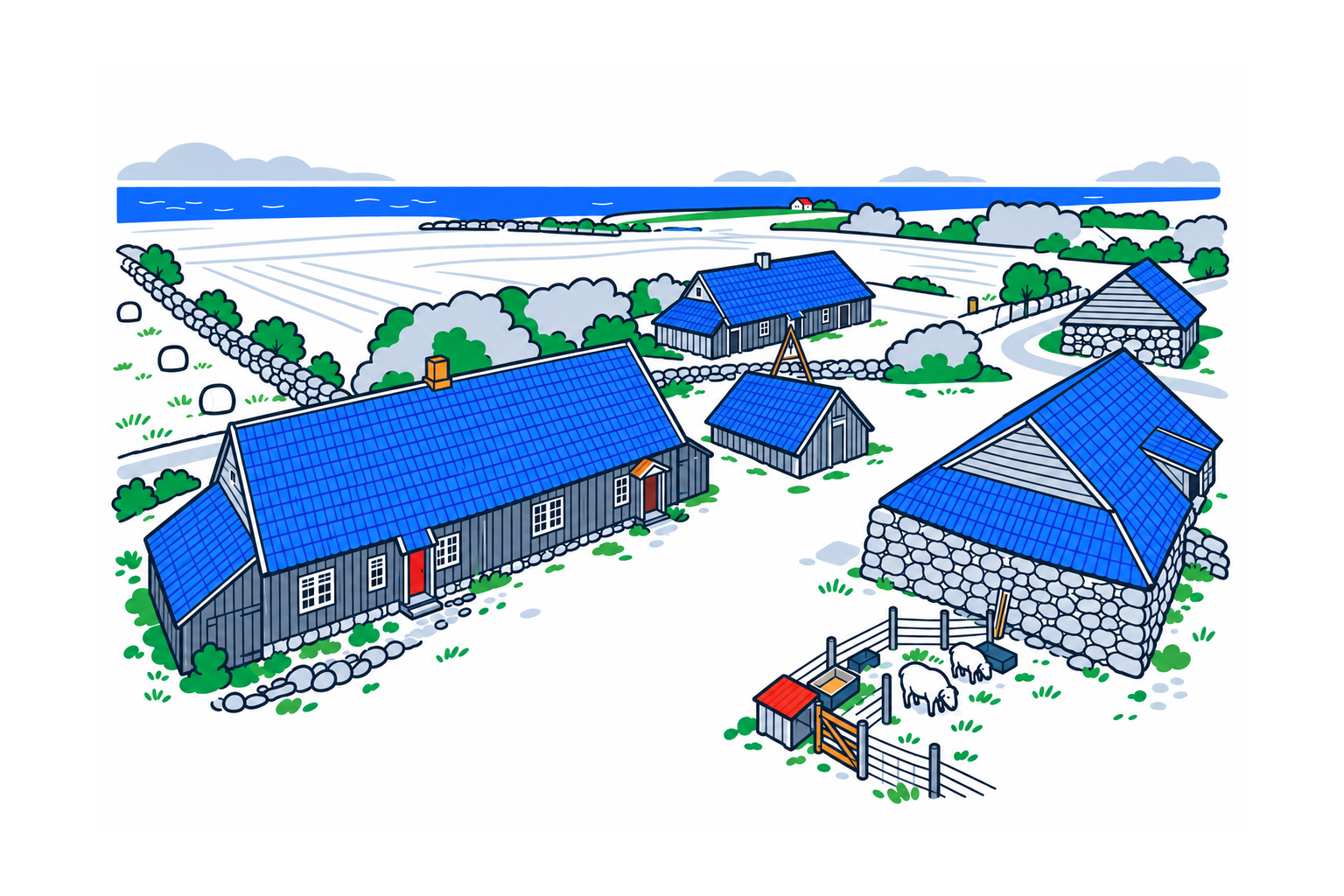
Grødeland bygdetun preserves coastal farm life in Hå through houses standing on their original sites. The museum's two historic farm holdings reveal how Jæren's domestic buildings changed while farming and the sea remained closely connected.

The place1
Jærmuseet presents the place as Grødalandstunet. Its buildings date from the eighteenth and nineteenth centuries, with interiors representing different periods of coastal rural life. This is especially useful for comparing houses within the same farm environment rather than encountering unrelated buildings moved into a park.
History and local connections1
The oldest room in Gamlehuset is thought to date from 1715; the house was altered several times afterwards. Torehuset was built in 1830 when the farm was divided. The museum history also reflects local collecting efforts, with houses and household objects preserved through institutions that later became connected with Hå's museum work.
What to look for1
Look for the reused ship timber that Jærmuseet identifies in the buildings. Gamlehuset's roof reaches further down at the back, a feature called sitoga; Torehuset shows changes to that older house form. Furnishings, kitchens and sleeping arrangements provide another way to compare the two households and their periods.
Planning a visit1
The farm overlooks the sea and is also a starting point for walks on Kongevegen. Check with Jærmuseet about access to historic rooms and scheduled activity days before travelling. The museum's current information distinguishes an outdoor walk through the surrounding landscape from a staffed visit inside the buildings.
Sources
Last checked:
More places in Rogaland


SamfunnPrep
Discover Norway. Prepare for the test.
Practice questions, clear explanations and mock exams.