
Christmas waste must be sorted by what each item is, not by the fact it came from one celebration. Glossy wrapping paper, electric lights and a real Christmas tree have different disposal routes. Check your municipality's rules before clearing up after Christmas 2026–2027.
Where should you start when packing Christmas away?
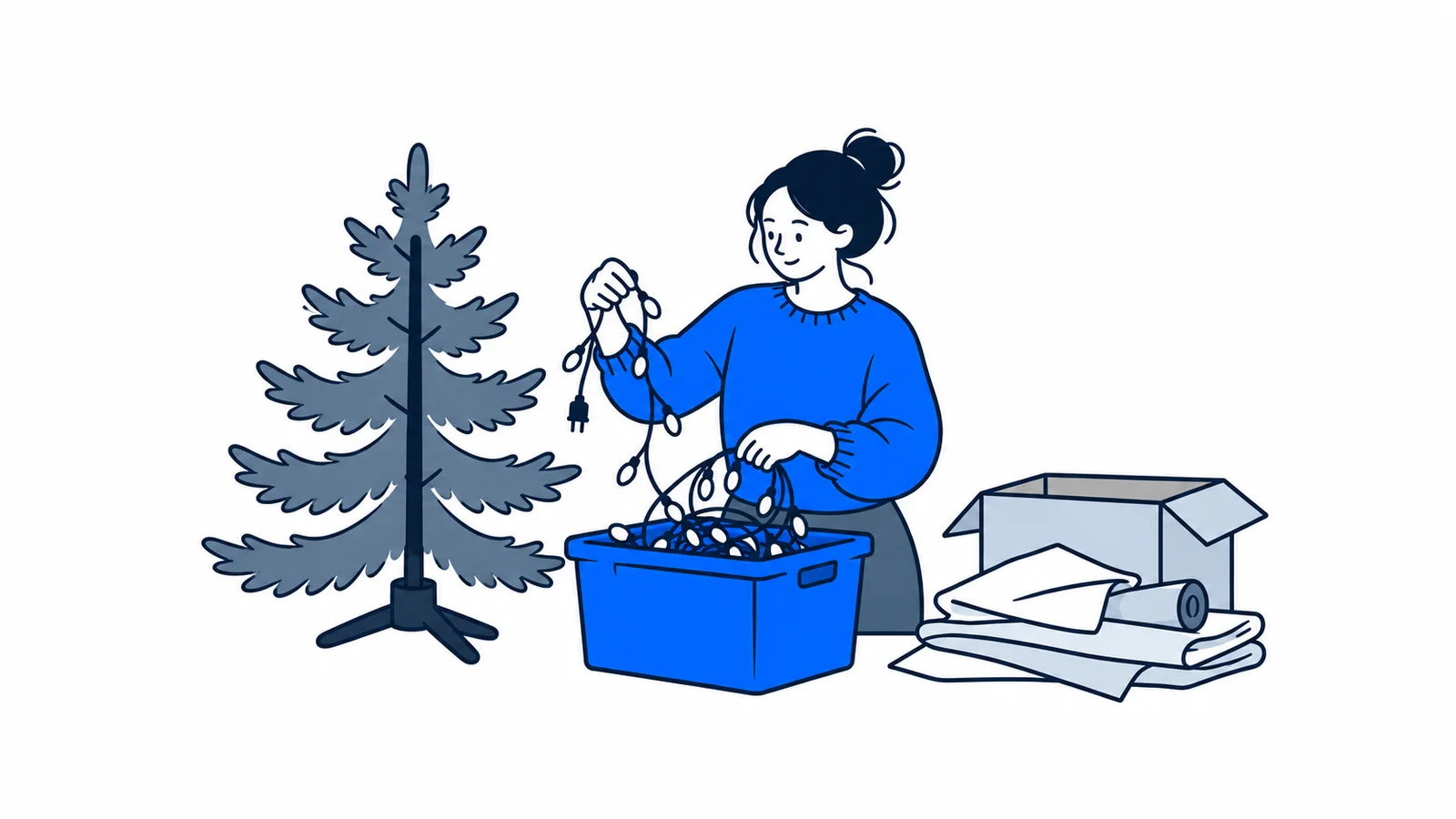
First separate reusable items, ordinary waste and items needing separate collection. This prevents batteries or electric lights ending up in one large mixed bag.
Set up four small areas: reuse, paper and cardboard, residual waste, and separate delivery. Put the real tree aside for local collection or the correct facility. Reuse boxes already in your home.
The information here was checked on 20 October 2026. The specific sorting examples mainly come from Oslo municipality. Local bags, bins, facilities and collection times may differ where you live.
SamfunnPrep has a guide to deposits and waste sorting. Here we resolve typical Christmas uncertainties instead of reviewing every waste category.
Does wrapping paper go with paper recycling?
Not all wrapping paper can be sorted as paper. Oslo distinguishes between glossy wrapping paper and plain brown paper or newspaper.
Oslo municipality's Christmas guidance puts cheap glossy wrapping paper in residual waste. Brown paper and newspaper can go with other paper. Gift ribbon belongs in residual waste.
Keep intact sheets, bags and ribbons if you want to reuse them. Remove name labels if giving paper to someone else. A sheet that can be used again need not be treated as waste on Christmas Eve.
Do not mix electric decorations or batteries into paper collected from presents. Also check for small toy parts left in the packaging before discarding anything.
What about lights, batteries and broken decorations?
Electric lights need electrical-waste collection, while batteries must be delivered separately to an appropriate facility. A broken glass bauble follows different rules from glass packaging.
Waste electrical and electronic equipment, often called EE-avfall in Norway, includes broken strings of lights. Oslo says these products can be delivered to a recycling centre or a shop selling equivalent products.
Oslo's Klimaetaten, the Climate Agency, recommends removing batteries from Christmas decorations. Used batteries go to a shop selling the same type or a recycling centre. They must not go in residual waste. Tape both sides before delivery.
For decorations without electronics, examine the actual item:
| Item | Oslo municipality's guidance, checked 20 October 2026 |
|---|---|
| Broken glass or plastic Christmas decorations | Residual waste; wrap glass fragments so they do not damage the bag |
| Strings of lights or other electric decorations | Electrical and electronic waste |
| Snow and glitter sprays | Hazardous waste to an appropriate facility |
| Gift ribbon | Residual waste |
Do not use this table as a general list for all glass or plastic products. It concerns these Christmas items. If unsure about a decoration, search for the actual product on the municipality's website.
Where do you take the tree in January 2027?
Check this year's municipal or waste-company information before putting the tree outside. Norway has no single national Christmas-tree collection day.
As of 20 October 2026, Oslo municipality's tree-collection page says information for 2027 will come later. We therefore give no January 2027 date or collection point here.
In Oslo, trees delivered must have no decorations or netting and must not be in a bag. If you miss the collection, the municipality directs you to a recycling centre accepting garden waste.
Before taking the tree outside, check:
- Does the information concern January 2027?
- Are trees collected at homes or taken to a special point?
- When can the tree be put out?
- Have all hooks, lights, glitter and netting been removed?
- What happens if you miss collection?
A plastic Christmas tree is not a real tree and must not follow garden-waste collection. Ask the facility how to deliver your artificial tree. Mention any built-in lights when asking.
Can you pour roast fat or cooking oil into the sink?
No. Fat must not go into sinks or toilets. It can solidify in drains and help block pipes.
Bergen municipality explains the fat problem and recommends letting fat cool and solidify. Remove it before washing the pan. Hot water and soap do not solve the problem but can move fat further into the pipes.
For disposal, follow local advice and consider the quantity. Oslo gives different advice for small amounts, a few decilitres and larger quantities. Do not automatically transfer another municipality's packaging or bag arrangements to your own.
When asking the waste company, say roughly how much you have. “A frying pan with a little solid fat” and “several litres of used cooking oil” are different situations.
What if the bin is full or the facility is closed?
Find the next approved delivery option or store waste safely until you can deliver it. Do not rely on ordinary opening hours without checking the Christmas period.
Also check the collection calendar for your address. In a block, the board or caretaker may explain additional routines. Keep cardboard together without mixing in batteries, spray cans or electrical waste.
Make next Christmas easier by labelling boxes for working lights, fragile decorations and items needing repair. Write down what is missing before buying new things. Klimaetaten also recommends reuse and repair rather than discarding usable items.
If you are new to Norway in 2027, SamfunnPrep's first-week checklist can help you find local services, including waste collection where you live.