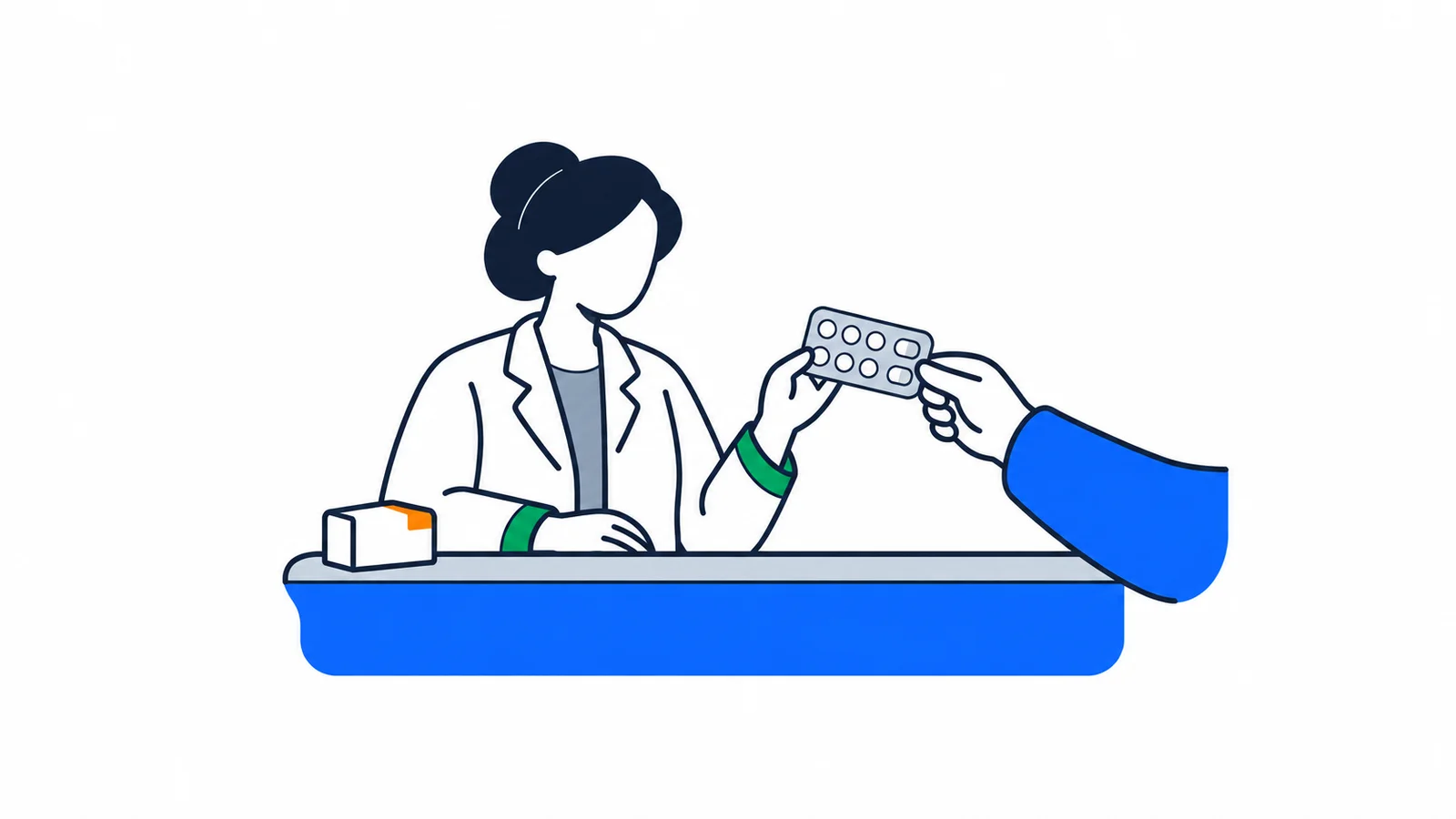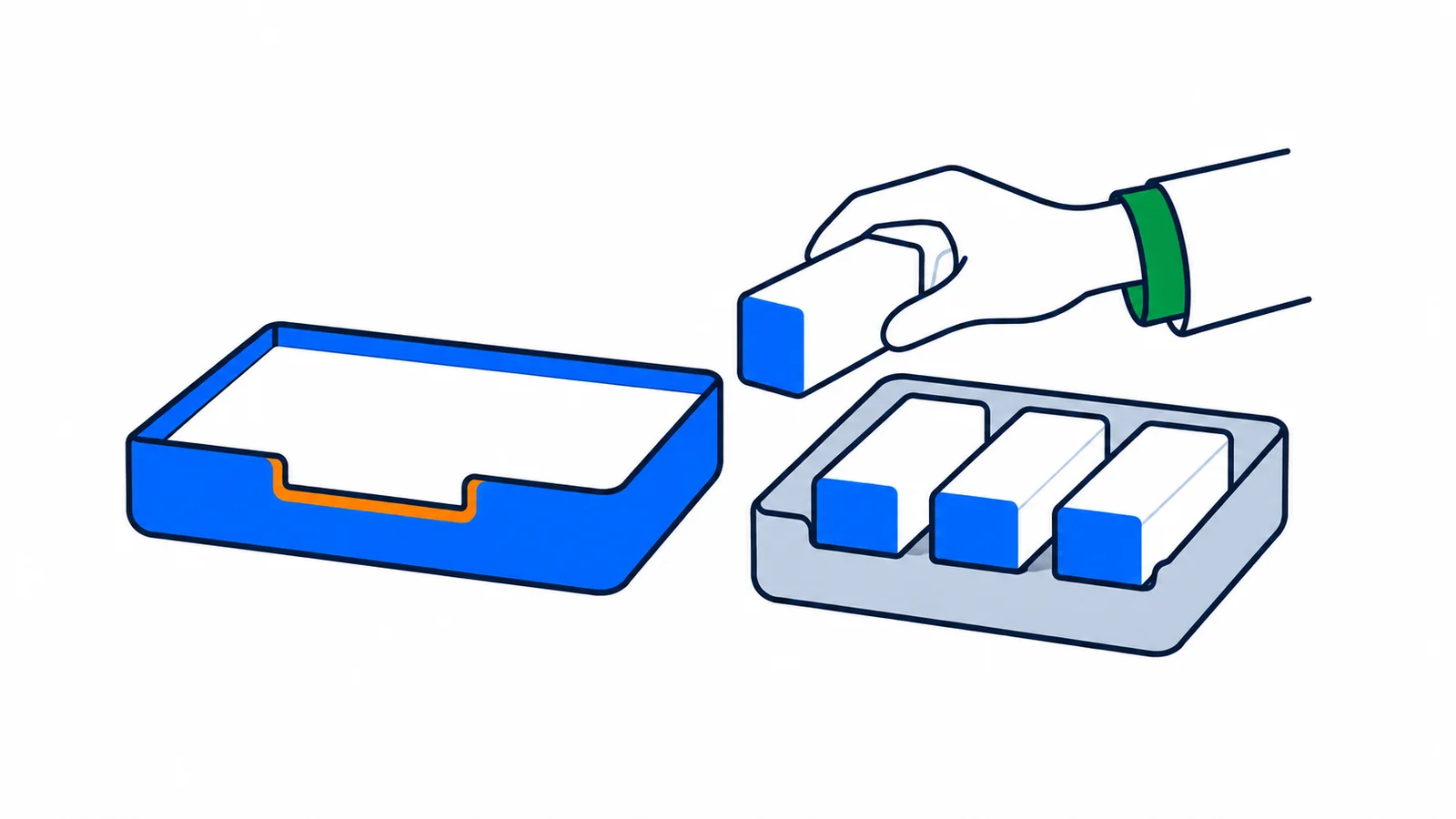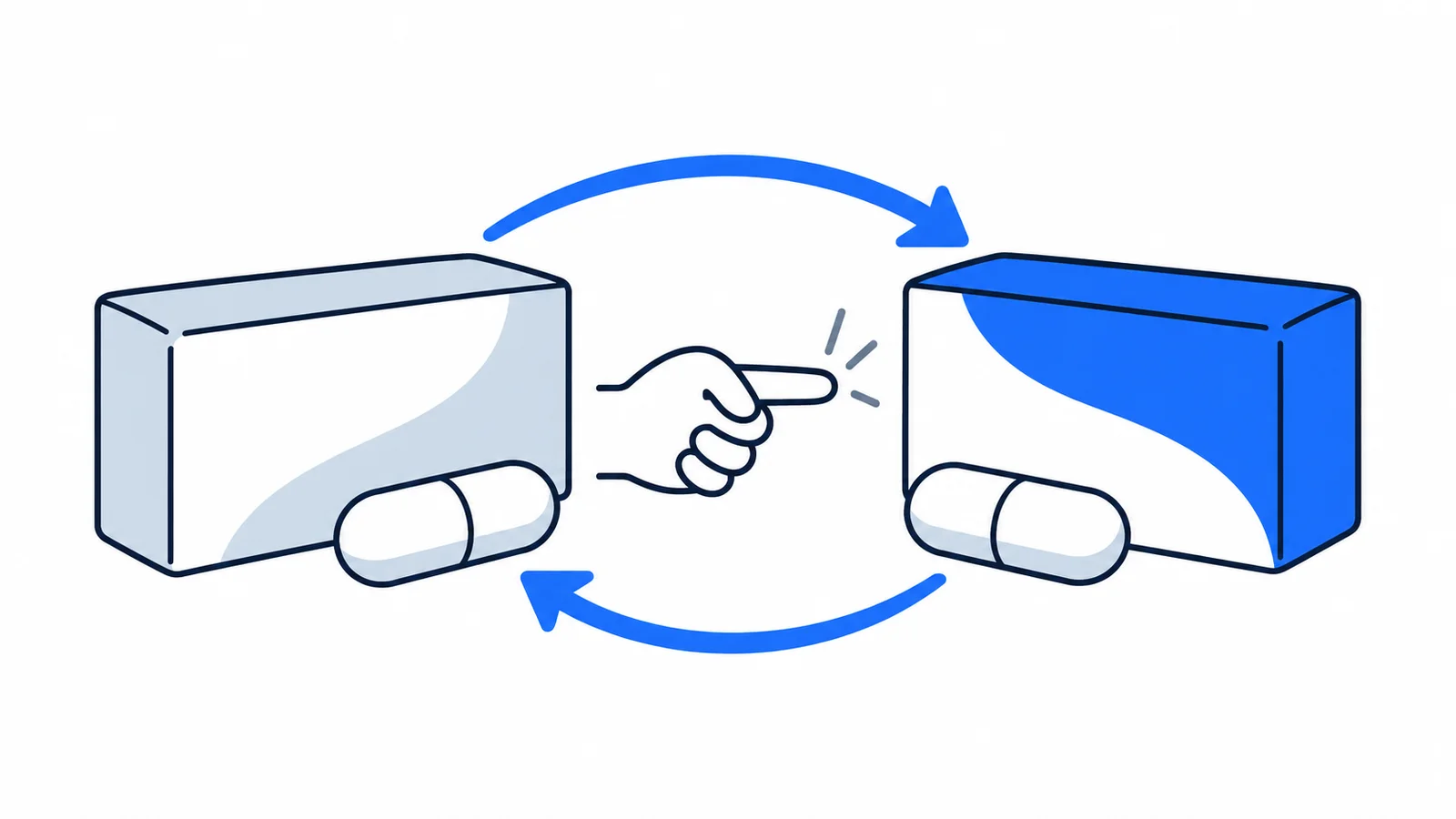

Generic substitution means the pharmacy gives you another brand with the same active substance and effect. The package can look new without your treatment changing. Ask the pharmacy to show which old package the new one replaces.
What does generic substitution mean?
The pharmacy can offer a cheaper brand assessed as safe and equivalent. Medicine substitution does not mean the pharmacy chooses a new treatment for you.
Direktoratet for medisinske produkter, DMP, the Norwegian Medical Products Agency, assesses which medicines pharmacies may substitute. It considers effect, safety and quality, among other factors. A pharmacy cannot freely substitute any medicines used for the same disease.
An active substance is the substance that gives a medicine its effect. One active substance can be sold under several brand names. Names, appearance and prices can therefore differ although the medicines are equivalent. Helsenorge's explanation of medicine substitution describes the scheme.
The doctor can also prescribe the active substance instead of a particular brand. The pharmacy then chooses the cheapest suitable brand. The prescription can still have the same dosage set by the doctor.
For the whole process from prescription to dispensing, use the guide to pharmacies and prescriptions. This article explains what to check when the package or name changes.
How to check the new package
Compare the active substance, strength and dosage with what you should be taking. Do not decide whether a package is correct simply by looking at its colour.
Ask the pharmacist, the pharmacy's medicines professional, to explain the connection between old and new names. Bring the old package or an updated medication list if possible. The pharmacy can then show you the difference directly.
Check four details before leaving:
- Active substance: which substance does the medicine contain?
- Strength: how much active substance is in each unit?
- Use: how much should you take, and how often?
- Replacement: which previous package is this an alternative to?
Ask if the tablet, packaging or equipment looks different. Another brand may have different excipients, ingredients without the same therapeutic effect. Mention known allergies and difficulties using the medicine.
Do not change the number of tablets based on your own comparison of size. A large tablet is not necessarily stronger than a small one. Follow the agreed dosage and request an explanation if the label is unclear.
How do you avoid taking both brand names?
Treat the old and new brands as the same medicine when the pharmacy has confirmed the substitution. Do not add the new package as an extra medicine.
Example: Mari has tablets left from her previous collection and receives a new brand. She asks the pharmacy to show which packages are alternatives to each other. At home, she keeps them together with a clear note rather than treating both as separate regular medicines.
Ask your GP to keep your medication list up to date. The list should show what you take now, with active substance, strength and dosage. An old list containing only brand names can make a new collection harder to recognise.
| What you see | What you should do |
|---|---|
| New brand name, same confirmed substitution | Clarify which previous package it replaces |
| Different strength from what you expected | Ask the pharmacy before use |
| Several packages with an unclear connection | Bring packages and medication list to the pharmacy |
If you use a pill organiser or receive help at home, inform the person preparing your medicines. Do not expect a helper to know every brand name. Have your medication list available when visiting a doctor or pharmacy.
Do not discard necessary treatment simply because the packaging changes. Ask for a plan for which packages to continue using. Unused or old medicines can be returned to the pharmacy for safe disposal.
Can you decline substitution?
Yes, you can request a particular brand. However, your own brand preference can mean paying the price difference yourself.
As of 3 October 2026, Helsenorge describes this distinction: you may choose the brand, while a doctor's medical reservation follows different payment rules. Ask the pharmacy for the actual price before deciding.
Ask the pharmacy to distinguish ordinary patient payment from an extra cost for the brand choice. Do not assume the receipt total is caused solely by substitution. Prescription type, packaging and other payment rules can also affect it.
The pharmacy must be able to order brands available on the Norwegian market, even if they are not in its regular stock. Ask about delivery time if you choose another brand. Plan before you run out rather than waiting until your last dose.
When can the doctor prevent substitution?
The doctor can prevent substitution when there are compelling medical reasons. The doctor must assess the prescription individually and document the reason in the patient record.
DMP mentions severe allergy to excipients and significant difficulties using medicines correctly, among other reasons. Major problems with new injection equipment can also be relevant. General distrust of cheaper brands is not alone a medical reason.
Explain the problem specifically: what happened, which brand did you use, and how did it affect treatment? The doctor assesses whether a reservation is justified. A previous doctor's reservation does not mean every future prescription must automatically be reserved.
As of 3 October 2026, Helsenorge states that you do not pay the price difference when the doctor makes a medical reservation. See also DMP's guidance on the doctor's role.
If you experience problems after substitution, contact the pharmacy or doctor for assessment. Do not try to resolve uncertainty by taking both old and new medicine. For a serious acute reaction, use emergency healthcare.
What if your medicine is delivered?
You must receive enough information to accept or refuse substitution, even when medicine is delivered or collected for you. You should not first discover a substitution as an unexplained name at home.
Ask the person collecting it to check which old package is being replaced. Give them an updated medication list and clarify any brand preference. Dispensing itself must follow the pharmacy's identity and authorisation requirements.
For online-pharmacy delivery, read the label and enclosed information before use. Contact the pharmacy if something does not match the order or agreed treatment. A photo of the packaging and label can help explain the problem through a secure channel.
Checklist before leaving the pharmacy
Know what the medicine is called, what it replaces and how to use it. Clarify the price too if you want a particular brand.
Ask for a simple explanation you can repeat at home. Check that any helpers use the same medication list. When several brands are at home, active substance and dosage matter more for keeping track than package colours.
The SamfunnPrep practical tools page supports other tasks in Norway. For medicine substitution, the pharmacy's explanation and an updated medication list are the most important next steps.