
Recreational sea fishing is possible without a Norwegian passport when you are resident in Norway. Ordinary sea fishing is free, but you must follow the rules for species, areas and gear. Check local bans and minimum sizes before your trip, and distinguish fishing for personal use from sales and export.
Can you fish in the sea without Norwegian citizenship?
Yes. A foreign citizen resident in Norway is treated on an equal basis with a Norwegian citizen under the relevant recreational fishing rules. Your passport alone therefore does not determine which gear you may use.
This guide covers recreational fishing around mainland Norway for people who live in Norway. The rules were checked on 7 October 2026. Ordinary recreational sea fishing has no fishing fee. You normally do not need a fishing permit of the kind often required in freshwater.
The connection between residence and gear is set out in Lov om forvaltning av viltlevande marine ressursar (havressurslova), the Marine Resources Act § 22 and Lov om retten til å delta i fiske og fangst (deltakerloven), the Participation Act § 5. Foreign visitors who do not receive equal treatment may only use handheld gear and may not sell their catch. A short work stay does not, by itself, establish whether you are resident. Ask Fiskeridirektoratet, the fisheries authority, to clarify your status if you are unsure.
Where can you fish from shore or a boat?
You can fish from a boat or from shore where access is permitted, but fishing bans may apply at the location. From shore, you may use beaches on uncultivated land and areas open to public access. This does not give access to private gardens or a closed quay. SamfunnPrep explains more about uncultivated land and the right of public access.
Check the map for the specific fishing spot. The rules for Oslofjorden show why this matters. In designated no-fishing areas, fishing and harvesting fish and shellfish are prohibited. There are specific exceptions for children fishing for crabs with a line and for removing Pacific oysters. Such an exception does not open the area to other fishing.
Fishing for cod in Oslofjorden is prohibited throughout the year. Viable cod caught while fishing for other species must be released. Unavoidable bycatch that is not viable may be kept under the specific rule. See Forskrift om regulering av fiske i Oslofjorden, the regulations governing fishing in Oslofjorden §§ 4–10.
Salmon, sea trout and sea-run Arctic char have separate rules. Miljødirektoratet, the state environmental authority, is responsible for these species. Statsforvalteren, the state's representative in the county, may set local rules, including at river mouths. Check the rules on salmon fishing in the sea before choosing a spot.
What equipment may you use?
As a resident recreational fisher, you may use several types of gear, but there are limits. Havressurslova § 22 specifies the permitted types and quantities. Stricter rules may apply to the species or location.
| Gear | What must you check? |
|---|---|
| Rod and handline | Whether fishing for the species and at the spot is open. |
| Mechanically powered jigging or trolling gear | Restrictions on equipment and hooks. |
| Nets and longlines | Length, number of hooks, depth, marking and local bans. |
| Pots and fyke nets | Number, design, marking, season and any registration requirement. |
A pot or fyke net is a trap placed in the sea that holds the catch inside. Jigging and trolling are ways of fishing with a line. Consider starting with a rod. This makes it easier to control your catch and avoid leaving gear behind.
The limits also apply when several people share a boat or the same people use several boats. In Oslofjorden, recreational fishing for fish is only permitted with a handline, rod or similar handheld gear. Check the current gear rules before buying or setting out other equipment.
How do you mark and look after gear?
Gear left in the sea must be marked and attended to according to the rules. In recreational fishing, buoys and other floating markers must carry the owner's name and address. Pots and fyke nets must also be marked on the gear itself. Each pot in a string must be marked.
Lobster fishing has additional requirements, including a participant number on the buoy or floating marker. Also check requirements for the trap's design and how often it must be checked. Fiskeridirektoratet's marking rules explain what you must mark.
Do not set out more than you can look after. Avoid damaging other people's gear or obstructing their fishing. You may not use live fish or other live animals as bait. Retrieve the equipment when you are finished. If you lose gear, you can report it in Fritidsfiskeappen, Fiskeridirektoratet's app for rules and lost or found gear.
Which catch may you keep?
You must check the species, size and rules for the location before keeping a catch. Minimum size is the smallest lawful size. It can vary between species and areas. Certain exceptions also depend on whether the fish will be sold.
Use Fiskeridirektoratet's minimum size overview and read the relevant species rule. A fish with no minimum size can still be protected or subject to a local ban. There are also separate seasons and requirements for species including lobster and king crab.
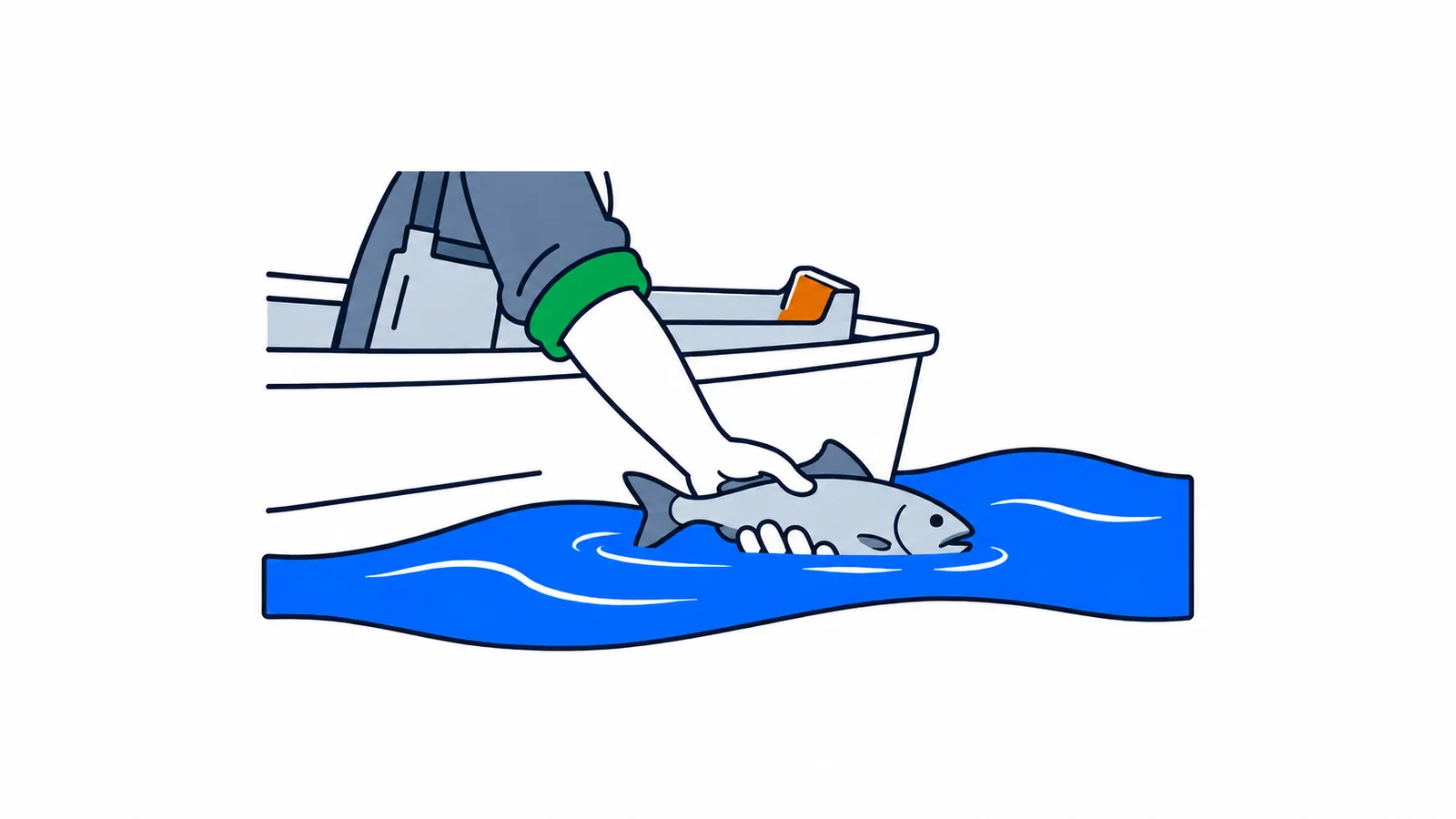
Viable catch taken in breach of the rules must immediately be released back into the sea. Unhook fish carefully and avoid unnecessary injury. If the catch is dead or not viable, follow the rule for the species. There is no single rule requiring all such catch to be eaten or discarded. Høstingsforskriften, the harvesting regulations § 51 contains rules on landing catches and specific exceptions.
If you keep catching undersized fish, try another spot or a larger hook. Take only the lawful catch you need.
Can you sell fish you have caught?
Sales may be permitted for a resident recreational fisher, but you must follow separate rules. You cannot simply offer your catch for sale because it was caught lawfully.
As of 7 October 2026, the ordinary sales limit is 50,000 kroner per calendar year, under havressurslova § 23. The limit applies per person or business and collectively to catches from the same boat. Two people in one boat therefore do not each get a separate boat allowance.
Sales must take place through a fish sales organisation or an approved buyer. A fish sales organisation organises the first sale of the catch. Direct sales to consumers require specific permission. Cod for sale has additional requirements, including boat registration and catch quantities. There are also restrictions for owners of commercial fishing vessels with quotas. Check the conditions for selling recreational catches before planning sales.
What applies if you take fish out of Norway?
Export is different from catching fish for personal use. Tolletaten, which checks goods at the border, describes the tourist export allowance for people without a permanent place of residence in Norway. It is not a catch limit for residents.
If you will travel with your own catch, clarify the rules and necessary documentation with Tolletaten. Also check the import rules in your destination country. Residence alone does not permit unlimited export without other conditions.
As of 7 October 2026, Tolletaten states that goods worth more than 5,000 kroner per person must be declared when leaving the country. This also applies to fish. See the information on fish when leaving Norway.
What should you check before your first fishing trip?
Start with a simple trip and check the rules before fishing. Use current maps and species rules, rather than relying only on an old minimum size list.
- Clarify your residence status if you are unsure which gear rules apply.
- Find the fishing spot on the authorities' maps and check bans and seasons.
- Read the rules for the species and gear you want to use.
- Bring equipment for measuring the catch and plan safe handling.
- Clarify the separate rules before selling fish or travelling across a border with them.
You can read about more simple outdoor activities in SamfunnPrep's guide to outdoor life in Norway. For other practical everyday questions, find useful tools in SamfunnPrep's tools overview.