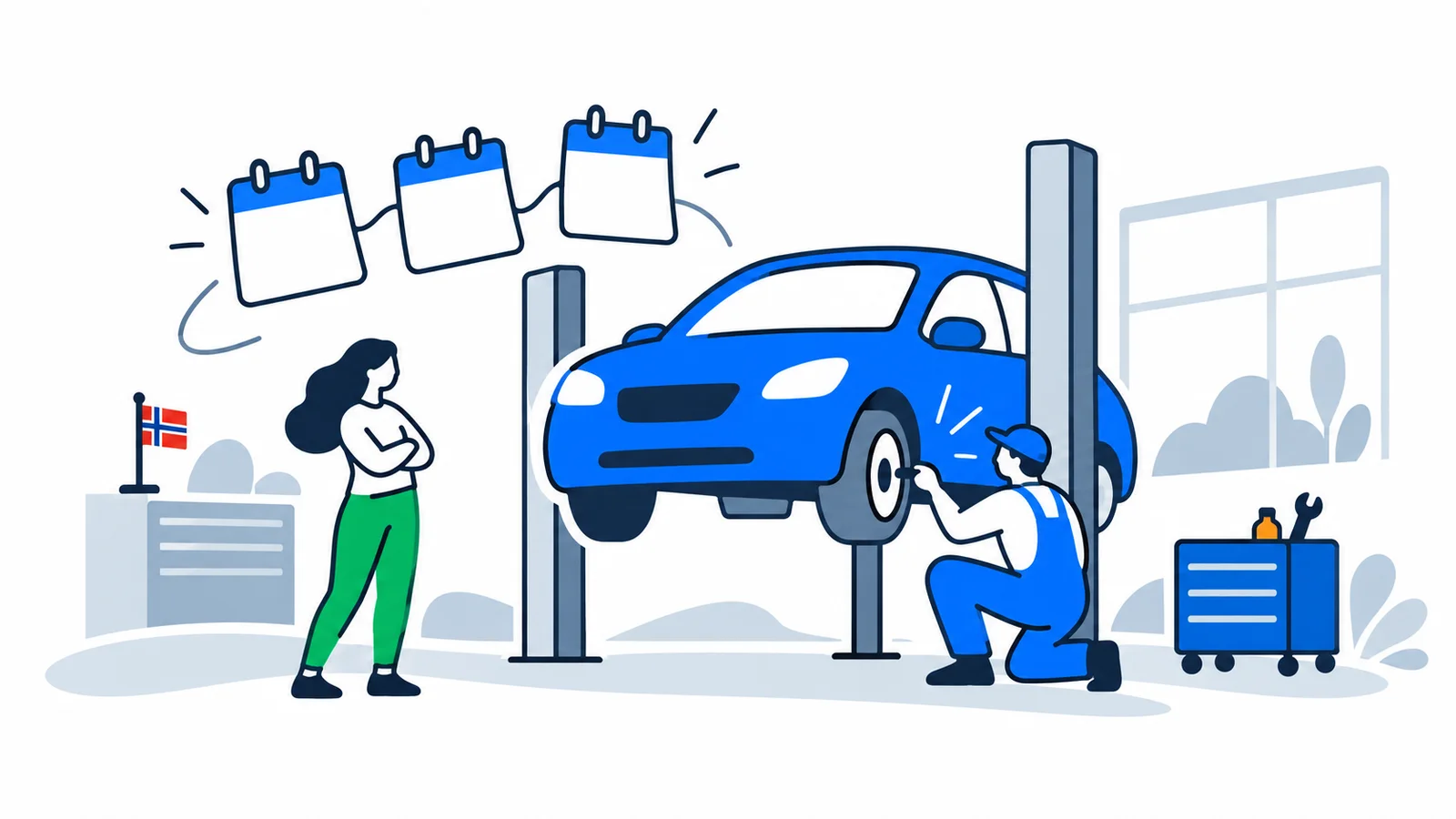

EU-kontroll (also called periodic vehicle inspection, PKK) is a legally required check that your car is safe to drive and does not pollute too much. A regular passenger car or van (up to 3500 kg) must have its first inspection no later than 4 år after it was first registered, and after that no later than every 2 years. You can find your own deadline by searching for your car's registration number (kjennemerke) at vegvesen.no. The inspection is carried out at an approved workshop (godkjent verksted), at a price the workshop sets itself. If you miss the deadline, the car gets a usage ban (bruksforbud), and it then becomes illegal to drive it.
When must your car have an EU-kontroll?
The deadline depends on what type of vehicle you have. The rules are set out in forskrift om periodisk kontroll av kjøretøy (the regulation on periodic vehicle inspection), § 5.
For light vehicles — passenger cars (M1) and vans (N1) up to 3500 kg, as well as motorcycles and mopeds — the following applies:
- First inspection: no later than 4 år after first registration.
- After that: no later than every 2 years.
A car that was first registered in 2022 must therefore have an approved EU-kontroll by 2026, and then every second year after that. Note that there is no separate annual inspection just because the car gets older; a passenger car must be inspected every 2 years regardless of its age.
Heavy vehicles over 3500 kg, buses and heavy trailers have stricter requirements: first inspection no later than 12 måneder after registration, and then every year.
How to find your own deadline
You don't need to calculate it yourself — Statens vegvesen (the Norwegian Public Roads Administration) has the deadline registered on your car. Go to vegvesen.no/kontrollfrist (the "Sjekk kjøretøy" service) and look up your car. You can search using:
- kjennemerke (the registration number on the plate),
- VIN (the chassis number), or
- a personalized plate (personlig kjennemerke).
This will show you the date by which your car must have an approved inspection at the latest. Statens vegvesen usually also sends a reminder 2–3 måneder before the deadline. But remember: as the owner, you are responsible for making sure the car is inspected and approved in time, even if the reminder never arrives. If you own a car, this is one of several duties you should keep track of — see the overview in buying and owning a car in Norway.
You can have the inspection done at any time before the deadline. But pay attention to timing: if you have the inspection done more than 2 måneder before the deadline, your next deadline moves forward to the inspection date. If you have it done within 2 måneder of the deadline, the original deadline stays as the basis for next time.
Where do you get the inspection done, and what does it cost?
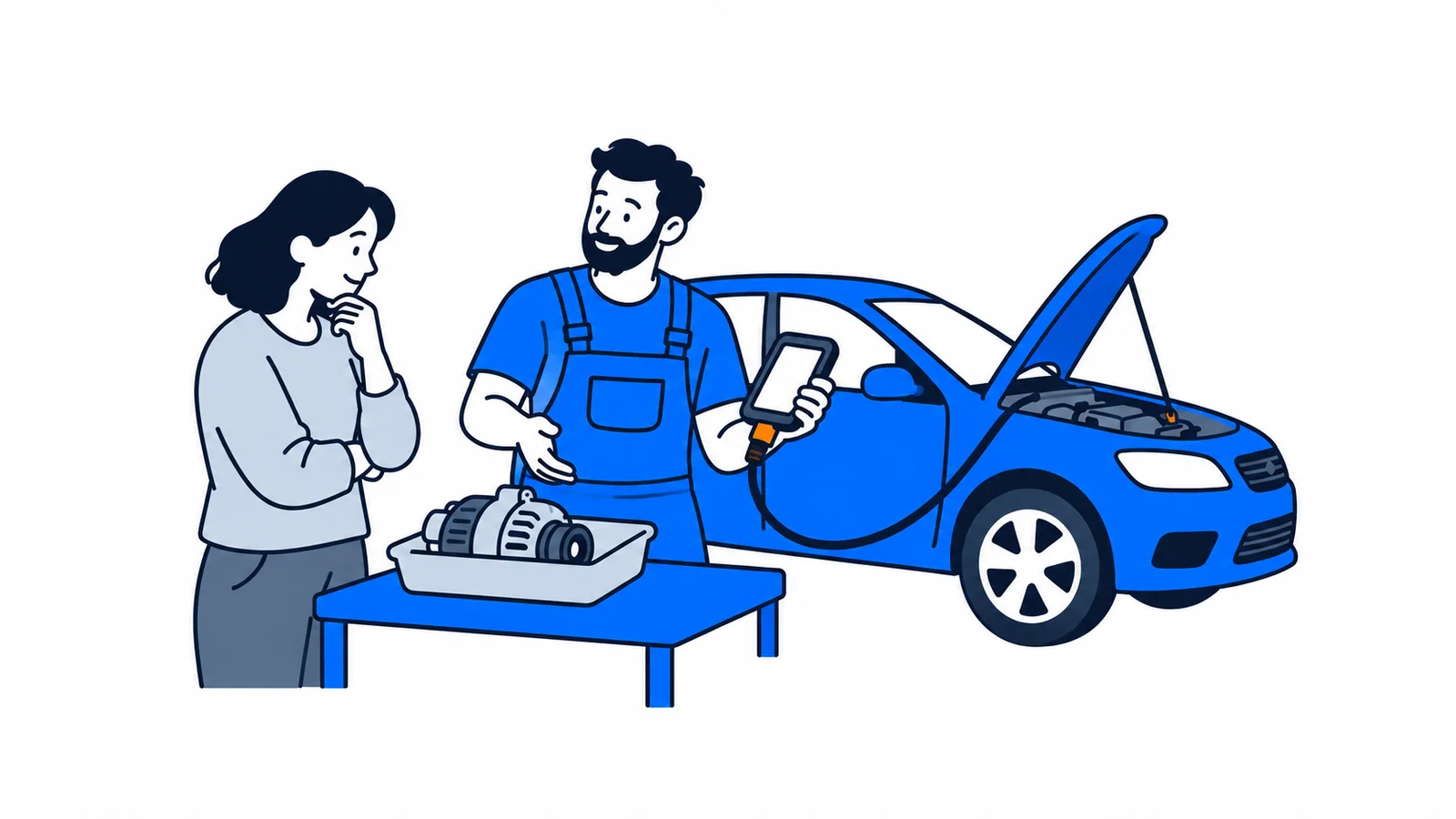
The EU-kontroll is carried out at an approved inspection body (godkjent kontrollorgan) — a workshop that Statens vegvesen has approved to perform this type of inspection. Vegvesenet does not carry out the inspection itself, but approves and supervises the workshops. You can find an approved workshop near you through the search service at vegvesen.no and book an appointment there.
There is no fixed government price for EU-kontroll. Each workshop sets its own price, so it pays to compare. You can often have the inspection done at the same place where your car gets serviced.
What gets checked during the inspection?
The inspection has two main parts: traffic safety and the environment.
- Traffic safety: lights, visibility and windscreen, wheels and tires, seat belts, brakes and steering.
- Environment: measurement of noise and exhaust emissions.
If you have an electric car, you must bring the loose charging cable — it is checked too. After the inspection, you receive a control slip (kontrollseddel) showing the mileage, the next deadline, and any faults or deficiencies that were found.
Having winter tires in good condition is an advantage beyond just the inspection too; see the rules in winter tires in Norway.
If the car is not approved
If deficiencies are found, the car is marked "not approved" (ikke godkjent), and you are given a deadline to fix the faults and attend a follow-up inspection (etterkontroll). The follow-up inspection must take place before the original inspection deadline, or within 2 måneder of the inspection date — whichever comes first.
How serious the fault is determines what you can do in the meantime:
- Minor deficiencies (code 2): you must judge for yourself whether it is safe to drive until the fault is fixed.
- Serious deficiencies (code 3): for example faults with the brakes or steering. In this case, the car gets an immediate usage ban (bruksforbud), and you cannot drive it until it has been repaired and approved.
If you don't want to repair the car, you can deregister it, scrap it, or sell it. A new owner must then have it approved before use — good to know if you are in the middle of a change of ownership re-registration.
What happens if you miss the deadline?
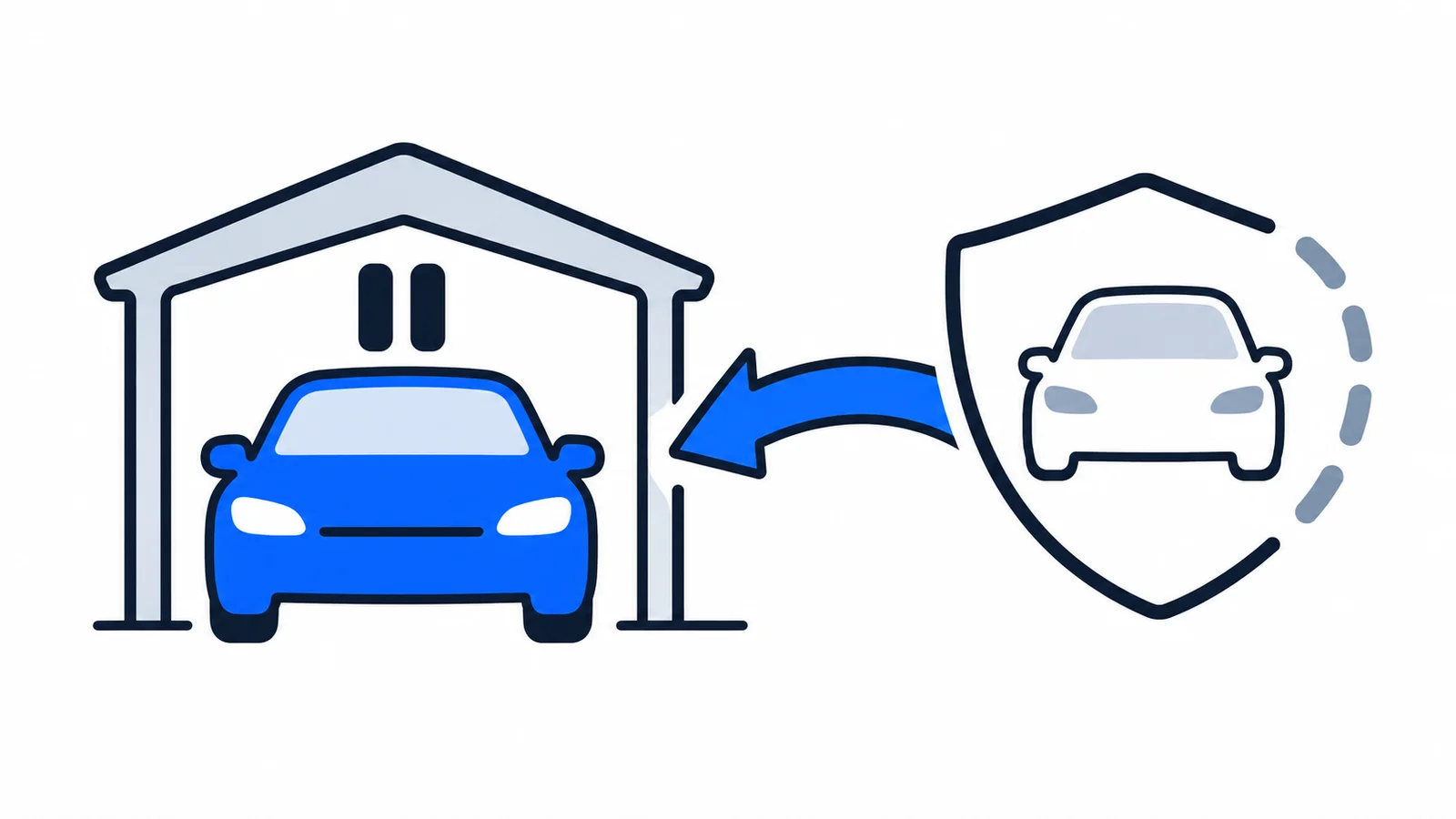
When the inspection deadline expires without an approved inspection, the car automatically gets a usage ban (bruksforbud). This means it is illegal to use the car on the road. If you are stopped by the police, they can remove the license plates (avskilting) on the spot.
You can still book an EU-kontroll after the deadline has passed. But because the car has a usage ban, you will normally need to deregister it and order temporary trade plates (prøvekjennemerker) to legally drive it to the workshop. Whether the car gets a usage ban or is left standing, this does not affect your duty to have valid car insurance as long as the car is registered.
As a general rule, a deadline extension is only granted in cases of newly arisen serious illness, and you must document it. The safest solution is therefore simple: check your deadline at vegvesen.no well in advance, and book an appointment a few weeks before it expires, so you have time for a follow-up inspection if needed.