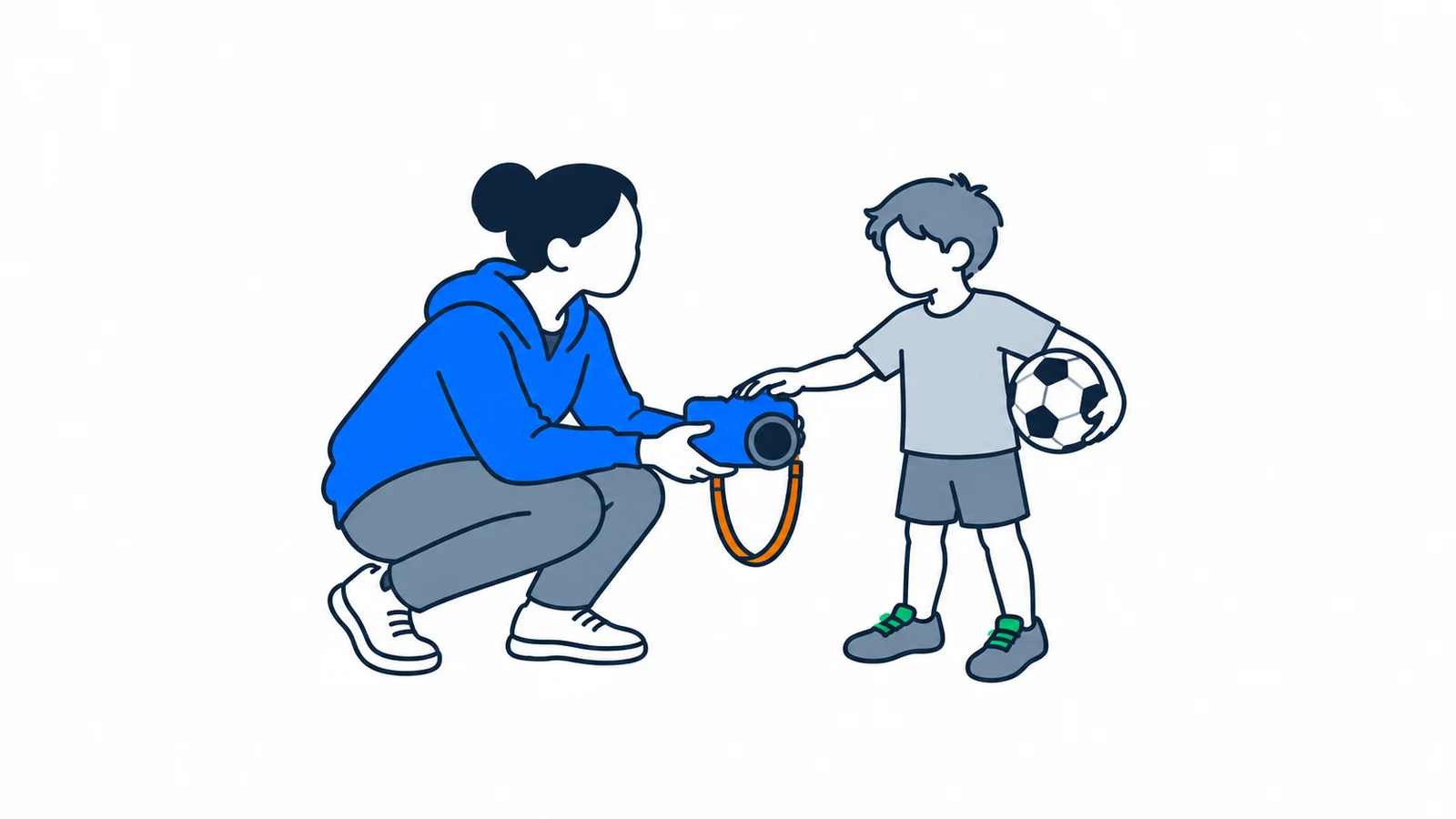

Photos of children require clear consent when a school or sports club will use them. Clarify both taking and publishing photos, and which channels are covered. A closed group does not allow unrestricted sharing. Take the child’s own refusal seriously.
What are you agreeing to in a consent form?
You should be able to understand which photos or videos will be taken, what they will be used for and who can see them. A general yes to “photos” provides little information about their actual use.
Datatilsynet is the authority supervising data protection. Its guidance on consent for photos of children recommends clearly defining the different uses. The guidance was checked on 7 October 2026.
For example, a school might use photos internally, in a school directory or on a public website. A sports club might want team photos for a members’ group or advertising new activities. These involve different purposes and audiences.
Read what the form says about:
- taking photos and filming
- internal storage and use
- sharing in a closed group or learning platform
- publishing on an open website and social media
- school directories or printed materials
- any external photographer and contact details.
You can ask to choose between the different uses. Agreeing to photos on a closed school platform does not have to mean agreeing to Instagram. SamfunnPrep’s guide to privacy and personal data explains why an identifiable photograph is personal data.
Must you agree for your child to take part?
Consent must be voluntary, informed and clear. You should be able to refuse publication without pressure from the school, team or other parents.
Datatilsynet’s explanation of the rules for photos of children advises against collecting consent through a show of hands at a parents’ meeting. Others should not pressure you into saying yes.
Ask how your child can participate without appearing in published photos. This might involve positioning during photography, an activity without a photo or other practical solutions. The aim is to agree on arrangements before the camera comes out.
If an external photographer will contact families, you should also understand which information is shared. Datatilsynet says the school cannot give permission on parents’ behalf. A refusal of photography must be followed up in contact with the photographer.
Consent to photos is also not general consent to every kind of data processing. The school may have other duties and grounds for necessary information. This guide concerns photos and publication, not all pupil records.
Does a closed group allow sharing without consent?
No. A closed group does not remove the need to clarify publication of identifiable children. The photo can also be copied and shared outside the group.
A members’ Facebook group can have many participants. The family may not know everyone. “Parents only” also does not say how long the photo will be stored or who will gain access later.
Therefore, ask about the group’s members, purpose and procedures. A photo intended for a school platform should not move to a new channel without reassessing permission. Permission to use it should relate to the actual channel.
Example: you agree to photos on the school’s closed platform. Later, the school wants to publish the same photo on its public Facebook page. Your original choice should not simply be interpreted as permission for the new use.
SamfunnPrep’s guide to digital judgment also explains how sharing can have consequences beyond the first group of recipients.
What does the child’s own refusal mean?
Listen to your child and take a refusal of photos seriously. Norges idrettsforbund’s guidance says that a child who does not want publication must be respected even if the parents have agreed.
Norges idrettsforbund is the umbrella organisation for organised sports in Norway. Its consent form for photos and videos offers a practical procedure for sports clubs.
Datatilsynet and sports consent forms also give advice about age and who should sign. Read this advice in context. Do not use one age limit as a general rule for all photography and publication.
Explain the use in words your child understands: “This photo will be on the team’s public website. Others can save it.” Ask before taking and sharing the photo. A child may like a team photo but dislike having their name next to it.
Your child’s answer can change over time. A photo they accepted last year may feel different now. Discuss new wishes with the person responsible rather than relying only on an old form.
Can you share photos from an end-of-school celebration?
Normally, ask permission before publishing photos in which other children can be identified. Being a parent and taking the photo yourself does not automatically give you the right to post it.
Datatilsynet also distinguishes between different photos. Harmless activity photos with a distant crowd, such as from a parade or concert, may require a different assessment from a close-up. This does not mean that all photos from school celebrations can be shared freely.
Look at the subject and context. A class photo or a clear close-up of a few children differs from a large stage seen from a distance. The school’s information about photography and local procedures may also be relevant.
You can choose a photo showing only your own child, or ask the other families before sharing. If cropping or blurring is your solution, it must actually prevent identification. Names, uniforms or other details can still reveal who the child is.
Do not publish a list of families who have refused. You also do not need to know why a family wants to limit sharing. Respect the choice without asking for private explanations.
How do you withdraw consent?
Contact whoever uses the photo and clearly say you are withdrawing consent for that use. Ask for removal of photos processed on the basis of your consent.
Give the link, date and the photo concerned. You can write: “I withdraw consent to publication of the photo of my child on the team’s Facebook page. The photo was posted on [date]. Please remove it and confirm when this has been done.”
Datatilsynet states that consent can be withdrawn. This concerns further use on that basis. A photo already copied by others can be harder to control. Report unwanted sharing when you discover it.
The school or club should have a clear contact person and an up-to-date record of permissions. Procedures need reassessment for new channels or purposes. You can clarify this when enrolling your child in a sports club.
SamfunnPrep’s practical tools for life in Norway support more everyday tasks for families. With photos, a useful habit is to clarify the purpose, channel and child’s wishes before sharing.