
Opposition to gender equality in the Nordic region has made working life tougher for those who work on gender equality and the rights of LGBTI people. A new Nordic report from 2026 shows that half have experienced threats or harassment at work, and that nearly half believe the opposition is harming their health.
Half experience threats and harassment
The report "Opposition to gender equality in the Nordic countries" was written by researcher Julian Honkasalo at the University of Helsinki and funded by the Nordic Council of Ministers. It was published in the TemaNord series (2026:522) and is based on an online survey carried out in May and June 2025.
The respondents work day to day on gender equality and rights – in voluntary and non-profit organisations, in academia and in the public sector. All the Nordic countries are represented, and the topics range from classic gender equality between women and men to the rights of LGBTI people. The survey does not measure public attitudes, but the everyday working life of those whose professional field is gender equality.
The picture it paints is bleak. Half of the participants report that they have experienced threats or harassment at work. Nearly half say the opposition affects both their mental and physical health. Many describe stress, exhaustion and sick leave – and that they withdraw from tasks that make them visible in public. That may be the most serious consequence: the opposition makes people fall silent, and important voices then disappear from public debate.
What "opposition to gender equality" means
Opposition to gender equality is rarely open violence. More often it is a steady stream of online hate, hate messages, threats and attempts to frighten individuals into silence. Researchers describe this as an organised "anti-gender" movement: a political and cultural backlash directed both at women's rights and at the rights of LGBTI people.
In concrete terms it can mean hateful messages by email and on social media, private information being spread, or pressure on employers and partners. What they have in common is that they target individuals – not just causes – and that both those who work on gender equality and those who work on LGBTI rights are exposed.
What is new is that the Nordics – long regarded as a showcase for gender equality – are no longer shielded. In several countries, rights that were long established are now being challenged again. The Nordic gender equality ministers themselves have expressed "deep concern" about a growing backlash against gender equality and the rights of LGBTI people, "both globally and within the Nordic region". The new report puts numbers on how this backlash hits those on the front line.
Gender equality is a core value in Norway
For you who live in Norway, this is not a distant debate. Gender equality is one of the values Norwegian society is built on, and the topic is a fixed part of the social studies test (samfunnskunnskapsprøven). Norway is among the most gender-equal countries in the world: in the World Economic Forum's gender gap index for 2025, Norway ranks third, behind Iceland and Finland. The country has a long tradition of gender equality policy, from women entering the workforce to parental leave shared between mother and father – which is precisely why it is noticed when the pressure rises. On the social studies test you are expected to know that women and men have equal rights, and that discrimination on the basis of gender or sexual orientation is prohibited in Norway.
Gender equality is also written into law. The Equality and Anti-Discrimination Act, which entered into force on 1 January 2018, prohibits discrimination on grounds including gender, sexual orientation, gender identity and gender expression. The Equality and Anti-Discrimination Ombud (LDO) provides guidance, while the Anti-Discrimination Tribunal handles complaints. If you want to understand what actually applies, you can read more about gender equality in Norway and about the rights of LGBTI people in Norway.
A working-environment problem, not just a values debate
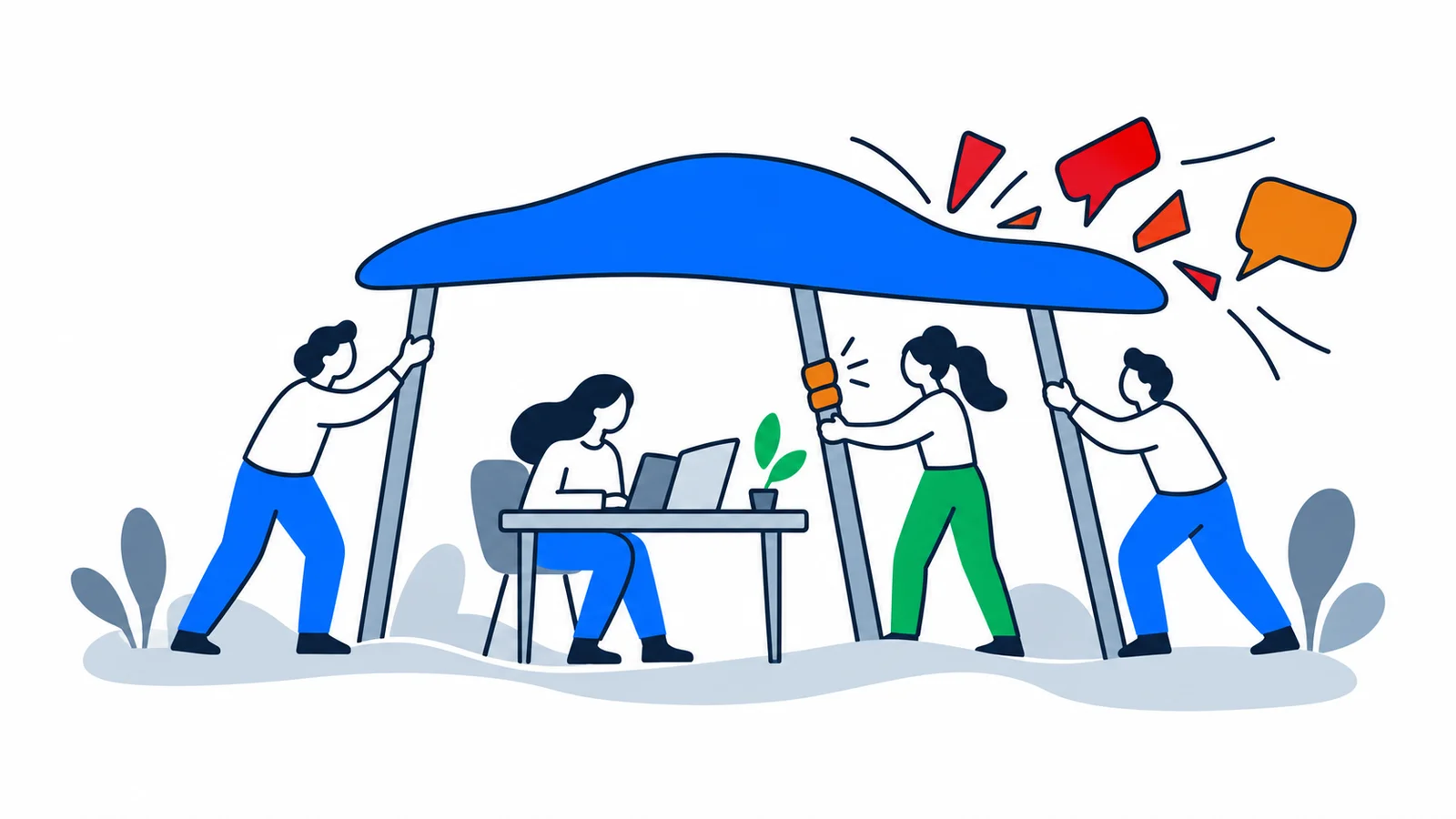
An important point in the report is that threats and harassment are not only a political debate about values – they are also a working-environment problem. When half of an occupational group experience threats at work, and many become ill or withdraw, the responsibility lies with the employer and society, not only with the individual.
In Norway, the Working Environment Act requires a fully sound working environment, and employees are to be protected against harassment and improper conduct. This applies regardless of what kind of work you do. Harassment aimed at those who work on gender equality is therefore not "part of the job", but something the employer has a duty to address. You can read more about which employee rights apply in Norwegian working life.
When fear becomes a democratic problem
The consequences do not stop with the individual worker. When professionals, researchers and volunteers withdraw from public discussion because they fear hate, the debate becomes poorer. Decisions about gender equality, family life, health and rights risk being taken without the voices that know the field best. The report points to exactly this: when the opposition works as intended, it is not only a personal problem, but a loss for the whole of society. Safe working conditions for this group are therefore also a question of what kind of public conversation we want.
What the report recommends
Honkasalo also asked participants what actually helps. Three measures stand out:
- Stronger legal protection. Clearer legal protection against threats, hate and harassment aimed at those who work on gender equality.
- Public support. That leaders, politicians and institutions publicly stand behind those who are targeted, so that the individual does not stand alone.
- Mental health support and training. Access to mental health care combined with supervised training in handling threats and harassment.
What the measures have in common is that they shift responsibility away from the individual and onto employers, authorities and society as a whole.
The Nordics: "We vow to never go back"
The report comes at the same time as the Nordic countries have strengthened political cooperation on gender equality. In November 2024, the Nordic ministers for gender equality and LGBTI adopted a joint declaration with the message "We vow to never go back". Through the initiative "Pushing for progress 2025–2027", the Nordic Council of Ministers, together with the Bill & Melinda Gates Foundation, has set aside 20 million Danish kroner to defend and further develop gender equality in the region.
The idea behind it is that gender equality is not a victory you win once and for all, but something that must be defended continuously. A living democracy depends on people being able to take part in public debate without being frightened into silence – something you can read more about in our review of how democracy in Norway works.
The report is a reminder that the good Nordic results are not a given. They rest on people who, every day, do a job that has now become noticeably tougher – and who need both employers and wider society to step up.