
Places with a story
Tennes
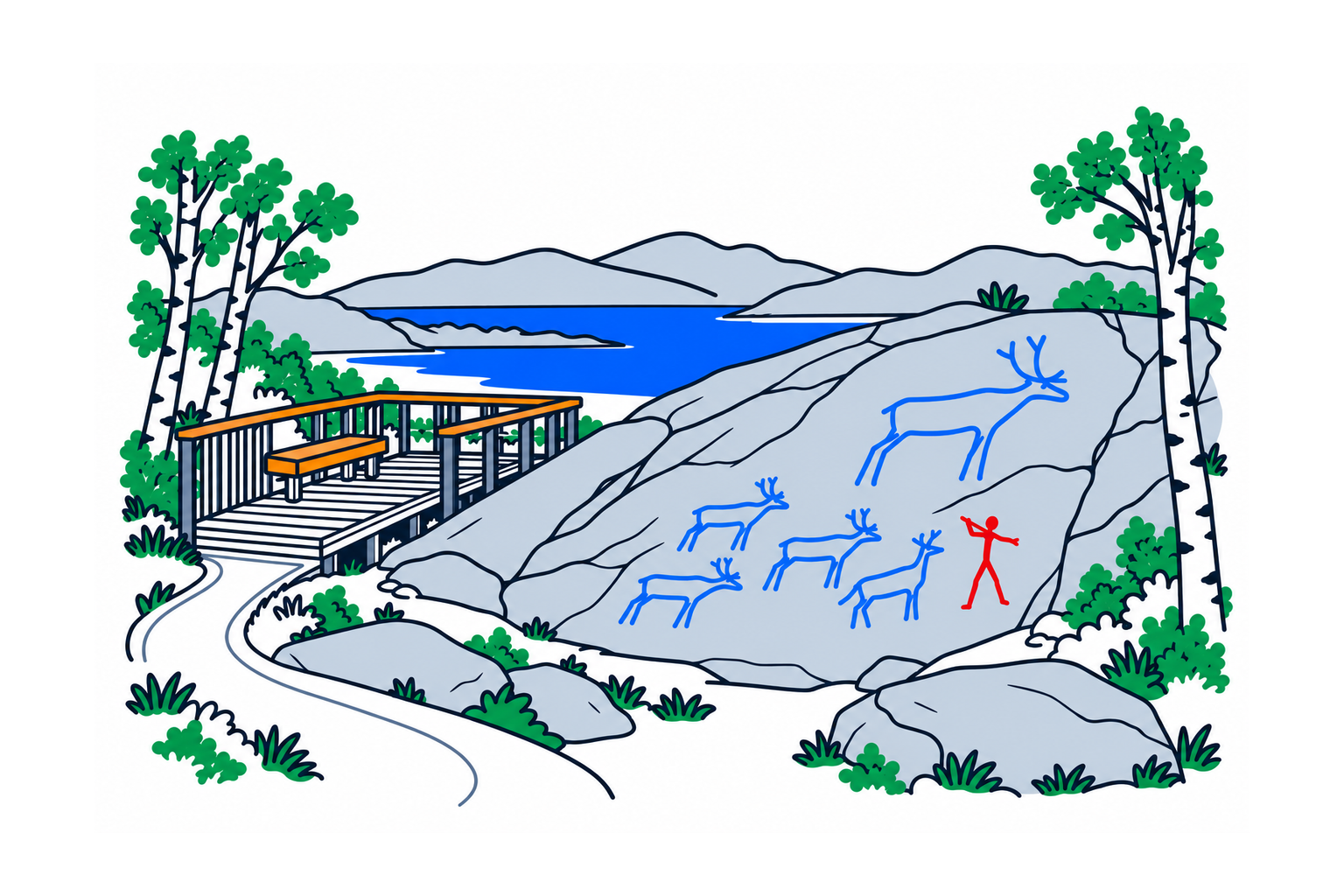
Tennes brings Stone Age rock art into the landscape above Balsfjorden. Three groups of carvings and a carefully designed trail make this a place to explore both prehistoric imagery and the history of archaeological discovery.

The place1
The rock-art areas are named Kirkely, Gråberget and Bukkhammaren. Kirkely is near the church; the other two lie farther south near the old rectory. They stand above today's settled shoreline. A path links the areas, with timber walkways, viewing platforms and seating introduced as part of an inclusive landscape project.
History and local connections3
Botanist Martin Vahl recognised a small deer figure at Tennes in 1787. UiT archaeologist Ingrid Sommerseth identifies this as Norway's first known rock-art discovery. Recognition by archaeologists came much later, and further carvings were found during the twentieth century. The figures themselves belong to the Stone Age, long before this modern research history.
What to look for123
Look for animal figures in the sloping rock surfaces and compare their outlines with the shapes of the surrounding stone. Light and surface conditions affect how easily the carvings can be seen. The walkways frame the viewing areas without turning the rocks into museum replicas. The carvings are fragile; observe them from the designated positions and avoid touching them.
Planning a visit2
UiT's visitor and conservation information describes signs and parking near the old rectory, and access adaptations in parts of the area. Check the current route and surface conditions rather than assuming every section has the same accessibility. Stay on the prepared trail. Cleaning and conservation are specialist work organised by the museum; visitors should not alter the rock surfaces.
Sources
Last checked:
More places in Troms


SamfunnPrep
Discover Norway. Prepare for the test.
Practice questions, clear explanations and mock exams.