
Places with a story
Herdla fort
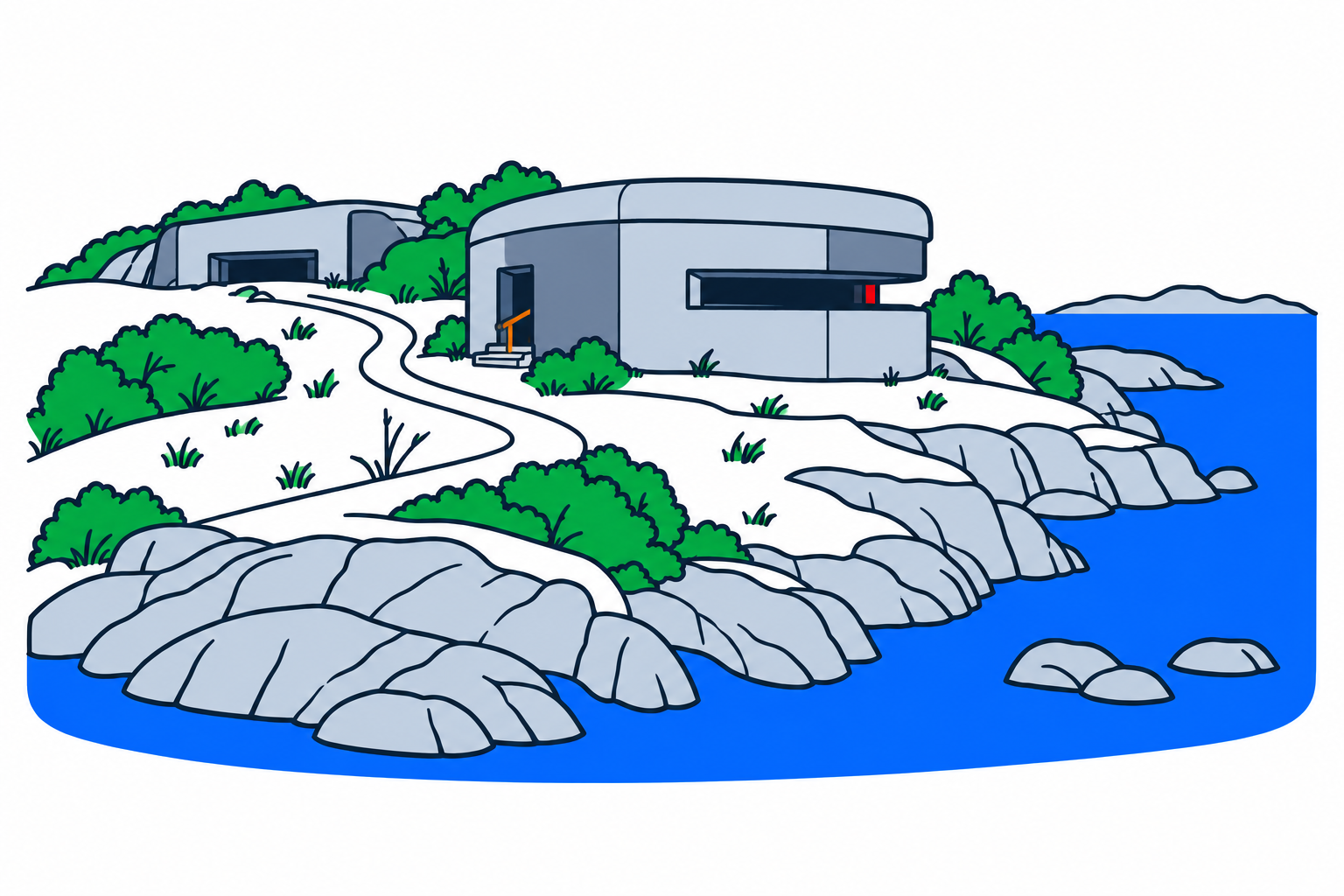
Herdla fort preserves coastal defence history at the northern end of Askøy. Its surviving torpedo battery gives visitors access to a once-secret military installation, where equipment, underground spaces and the shoreline explain how the fort operated during the Cold War.

The place1
The torpedo battery is a particularly complete part of the former fort. Museum Vest presents the installation with its equipment retained, making it possible to understand connections between observation, command and weapons. This is a military environment built around the sea, rather than an exhibition of detached objects alone.
History and local connections1
German occupying forces established the battery, and the Norwegian military took it over after the war. Several modernisations followed, including work associated with the fort's major refurbishment in 1987–1995. The battery and the rest of the coastal fort closed in 2001. It was then selected as one of four installations intended to represent coastal military history during the Cold War.
What to look for1
A guided visit follows the route towards the sea, entering support bunkers for radar and an electro-optical sensor before continuing to the command station in a rock chamber. Interpretation covers both mine and torpedo weapons. The sequence makes the installation's organisation clearer: identifying a target, making decisions and operating weapons required separate but connected spaces.
Planning a visit1
The museum's tour begins at Herdla Museum, where tickets are purchased. It takes approximately one hour and fifteen minutes and includes a substantial outdoor section, so choose clothing for the weather. Tours can be booked and dates are published by the museum; confirm a guided departure rather than expecting unrestricted access to the protected battery.
Sources
Last checked:
More places in Vestland


SamfunnPrep
Discover Norway. Prepare for the test.
Practice questions, clear explanations and mock exams.