
Places with a story
Årskog museum
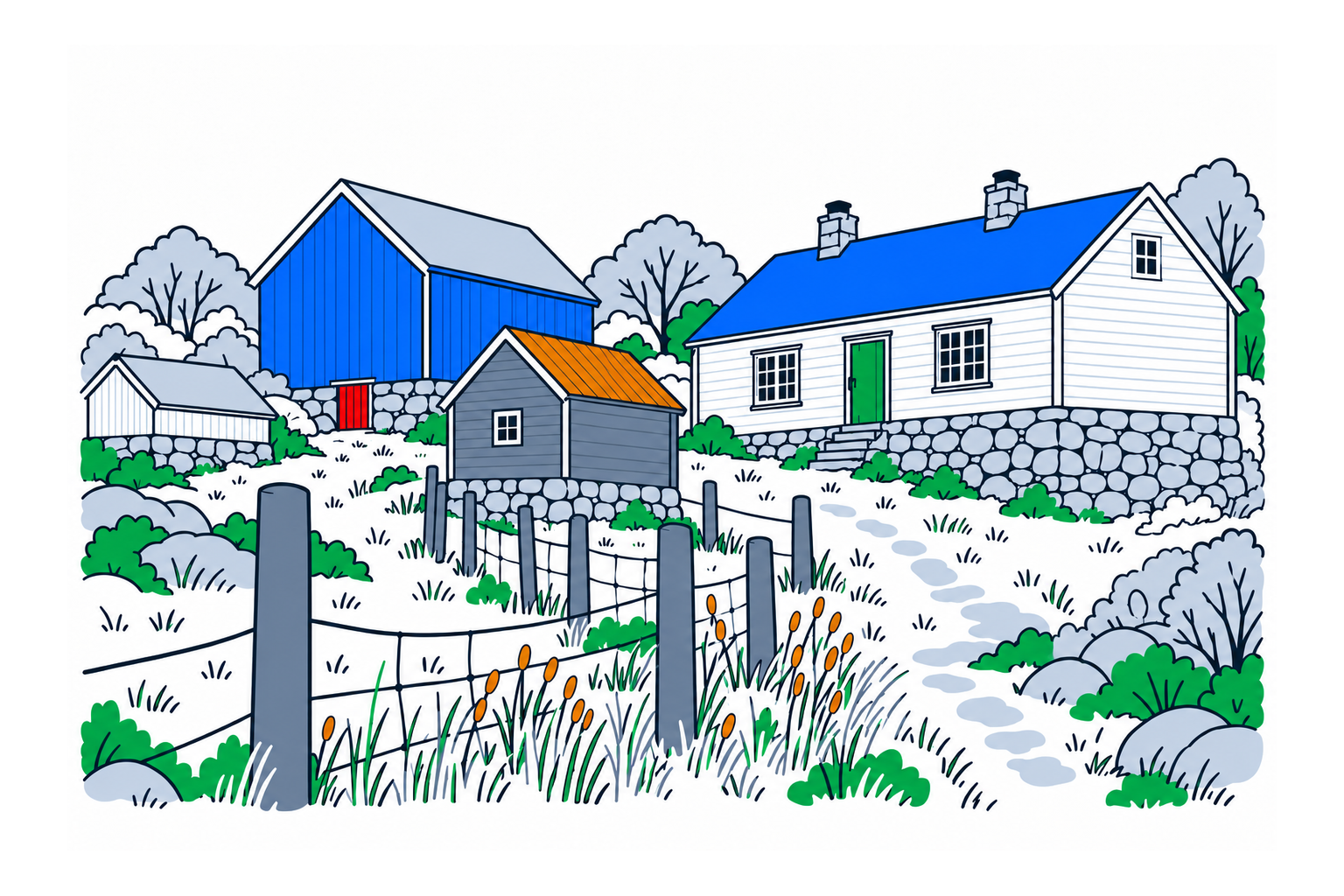
Årskog museum in Fitjar preserves a coastal farm with its household contents, tools and surrounding cultivated landscape. It shows how farming and fishing belonged together, with the buildings and shore forming parts of the same working environment.
The place12
The farm lies in a small hollow by the river, with terrain descending from heathland towards the fjord. Stone clearance heaps, field boundaries, meadows and boathouses add context to the courtyard. These features help explain both cultivation and access to the sea, rather than treating the farmhouse as an isolated historic object.
History and local connections1
Lars and Olai Årskog donated the farm and its contents for museum purposes in 1980. It had remained within the same family for several centuries. The museum opened in 1988, preserving a courtyard environment characteristic of the nineteenth century and the material evidence of a long-established coastal household.
What to look for12
The regional heritage account highlights a rich textile collection, alongside tools and furnishings. Looking at the contents together with the buildings reveals domestic work as well as food production. The connection between cultivated ground and boathouses is especially useful for understanding the mixed livelihoods common on Norway's western coast.
Planning a visit2
The regional visitor guide asks prospective visitors to contact Fitjar municipality's cultural department. Make that arrangement before travelling if seeing interiors or collections is important. Check current access to the individual buildings and grounds, and treat the preserved farm landscape carefully rather than assuming that every structure operates with daily museum opening.
Sources
Last checked:
More places in Vestland


SamfunnPrep
Discover Norway. Prepare for the test.
Practice questions, clear explanations and mock exams.