
Places with a story
Næs Jernverksmuseum
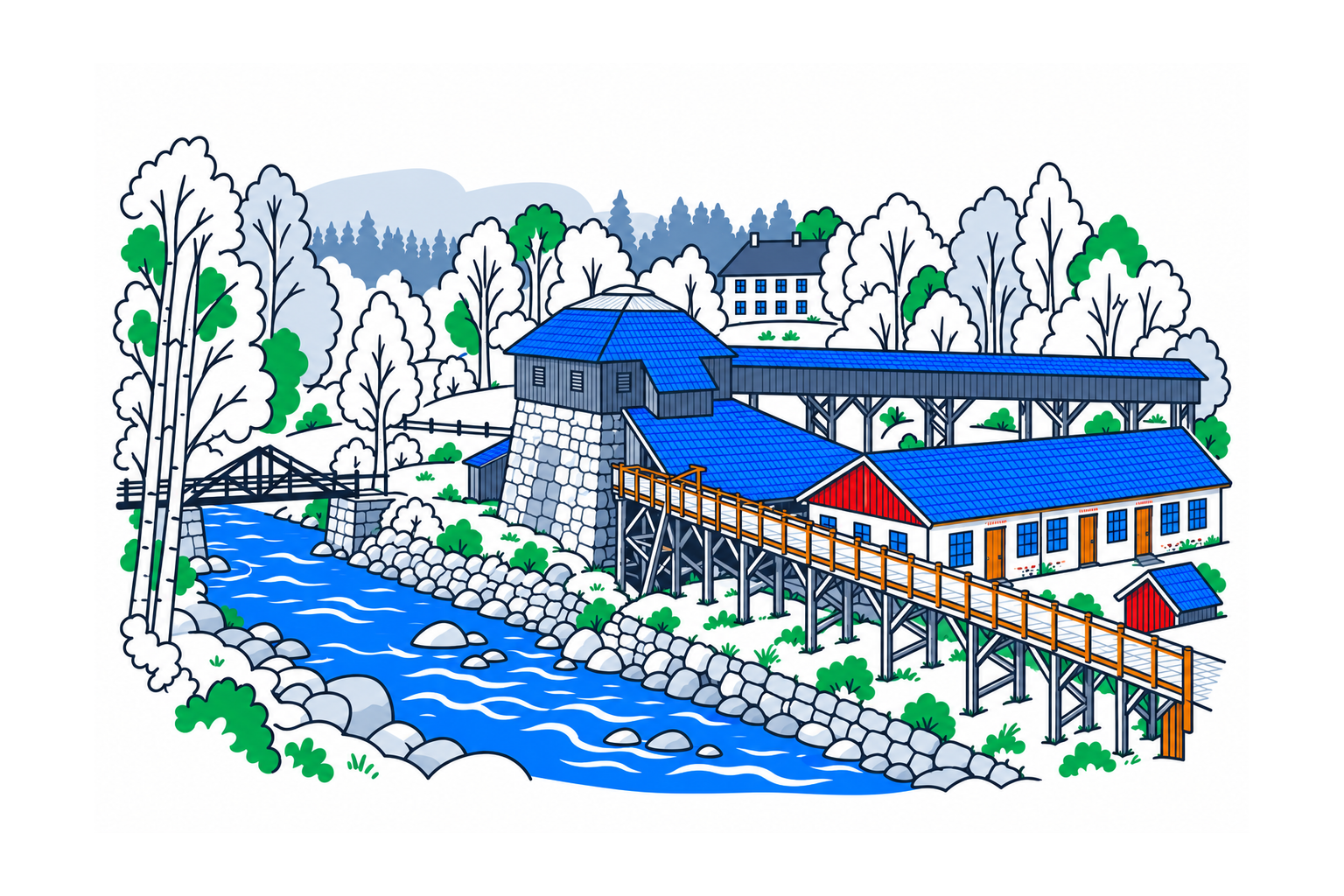
Næs Jernverksmuseum in Tvedestrand explains how river power, charcoal and skilled labour turned ore into iron and steel. Preserved buildings and reconstructed machinery make the industrial process visible within the landscape that supplied its energy.

The place1
The works stand beside Storelva, which powered bellows, hammers, turbines and other machines. In the blast furnace, ore and charcoal produced liquid iron; in the building containing the water-powered hammer, workers converted it into workable iron and shaped steel into bars. The museum connects these stages rather than presenting machinery without its purpose.
History and local connections1
The building containing the water-powered hammer dates from 1665. The blast furnace operated from 1738 to 1909 and was the last of its kind in Norway, according to the museum. Water-powered hammers could still be heard until 1959. This long chronology helps explain why the place includes technologies from different phases of industrial development.
What to look for1
A normal museum visit begins with an introductory film and continues through the buildings with a guide. Reconstructed elements include the furnace building, dam, water channel, wheel and blowing machine. Demonstrations help visitors understand the movement and energy required, while displays also consider the people whose working days sustained production.
Planning a visit1
Consult the museum for current opening, guided departures, tickets and accessibility information. Its seasonal programme includes craft events, family activities and mine visits, which should be checked separately before travel. Allow time to follow the guided production sequence, and use the operator's directions for arrival at the historic works.
Sources
Last checked:
More places in Agder


SamfunnPrep
Discover Norway. Prepare for the test.
Practice questions, clear explanations and mock exams.