
Places with a story
Lindesnes fyr
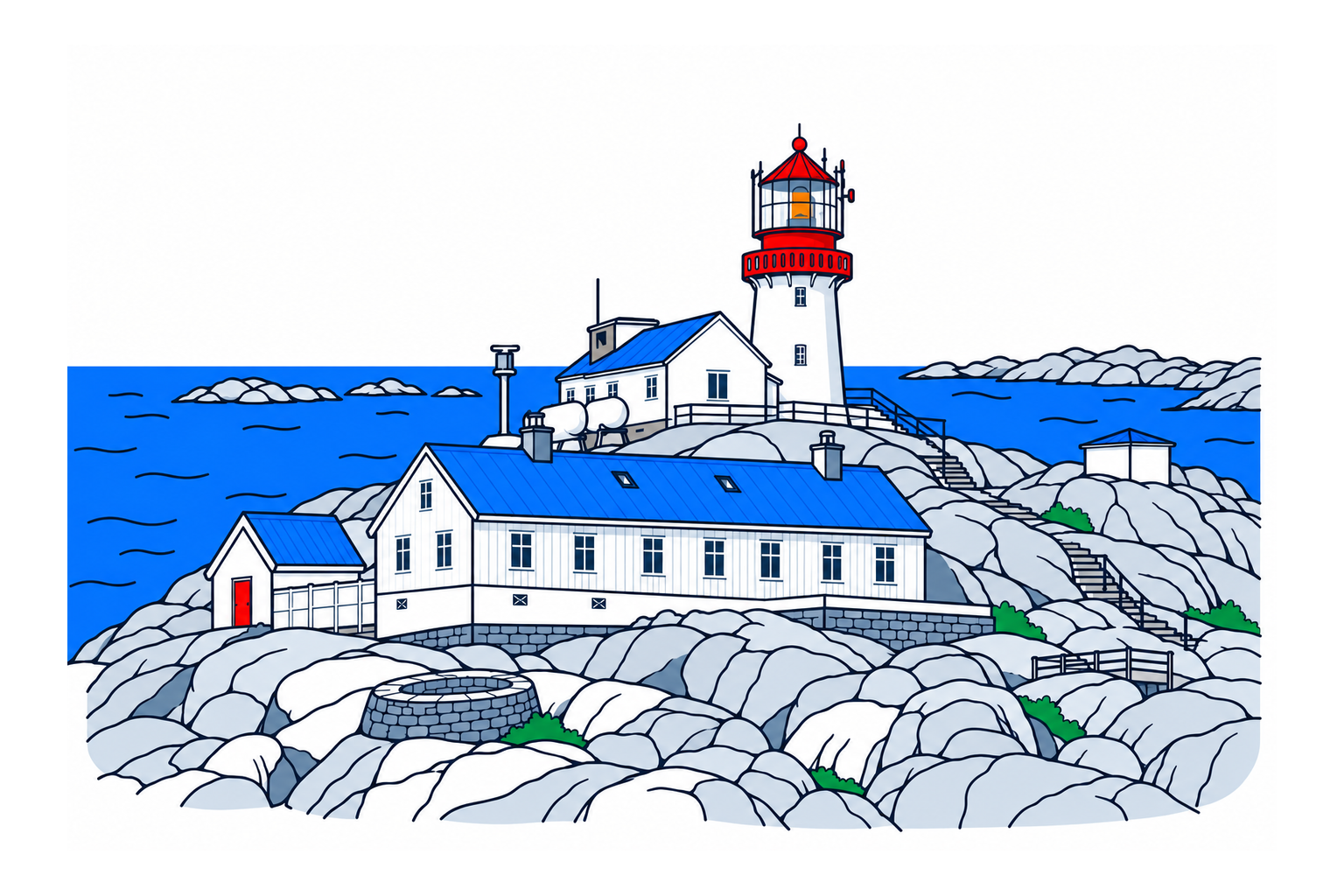
Lindesnes fyr marks Norway's southernmost mainland point and the beginning of the country's lighthouse history. The exposed headland, navigational equipment and museum make it a place to consider how people have helped ships find their way along the coast.

The place1
The lighthouse station is a protected cultural monument, while its museum interprets lighthouse history and coastal life. The location on the headland is part of the experience: sea, weather and the light's position explain the station's purpose more directly than a display of equipment alone.
History and local connections1
The first light at Lindesnes was lit in 1656, the first lighthouse light in Norway. Audible warnings later supplemented the visible signal. A foghorn operated from 1920 to 1987; the station used a siren before changing to a diaphone in 1954. These successive systems show how navigation responded to poor visibility as well as darkness.
What to look for1
Explore the station's relationship with the surrounding rock and sea, and use the museum to connect the structures with lighthouse keepers and maritime work. The museum foundation was established in 1992. The millennium project development opened in 2004, adding another chapter to the preservation and interpretation of the historic location.
Planning a visit1
Use Lindesnes fyrmuseum's own website for current opening hours, tickets, exhibitions and organised demonstrations. The operator publishes a weather report and practical visitor information. Prepare for conditions on the exposed coast and follow local instructions. Check any advertised foghorn demonstration or other event against the current programme before travelling.
Sources
Last checked:
More places in Agder


SamfunnPrep
Discover Norway. Prepare for the test.
Practice questions, clear explanations and mock exams.