
Places with a story
Øyer kyrkje
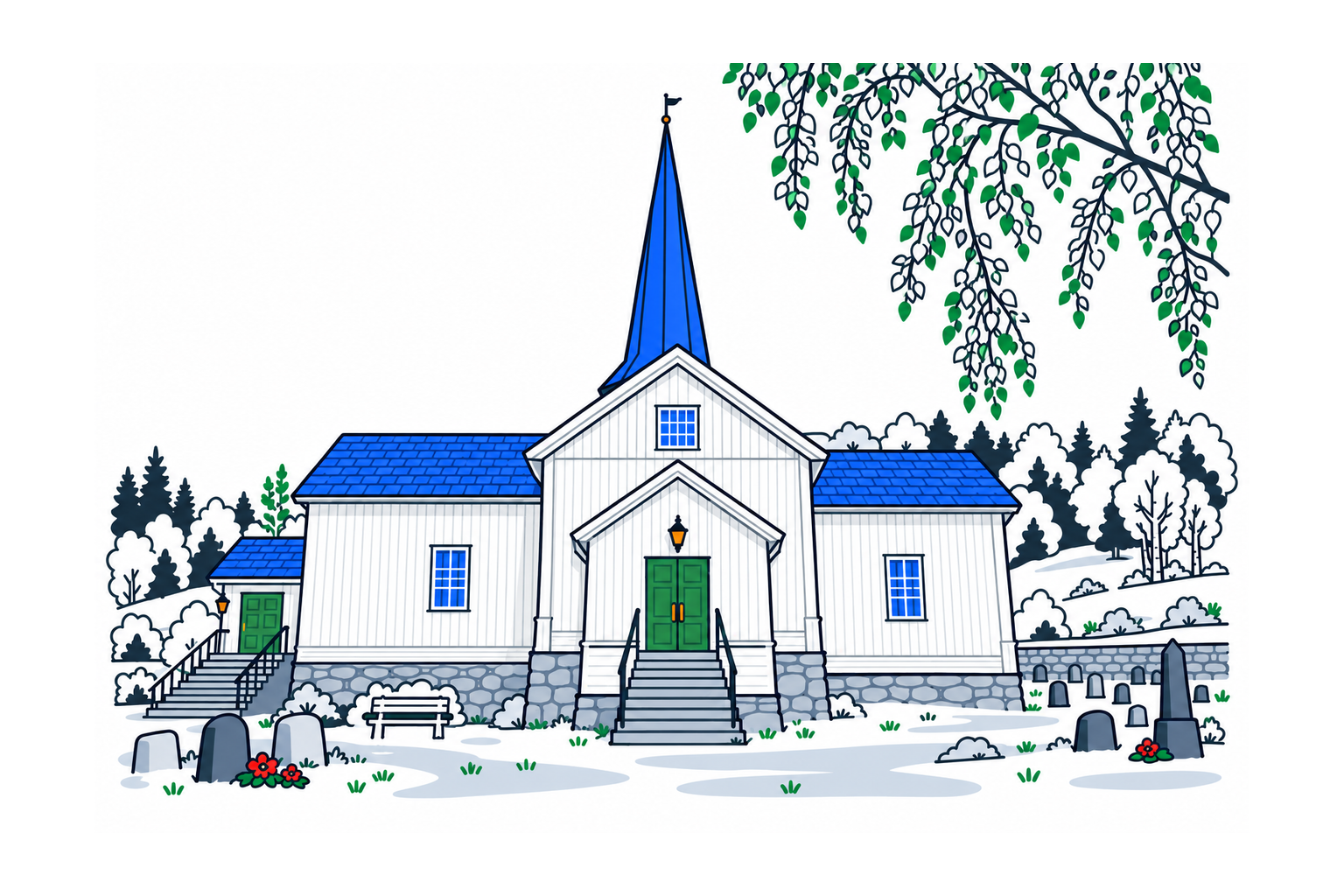
Øyer kyrkje is an eighteenth-century timber church with a history of collective rebuilding after disaster. Its cross-shaped form, later tower and churchyard memorials connect the parish's everyday religious life with a wider story of support between Norwegian communities.

About the place1
The church was consecrated on 2 July 1725 and named for the Holy Trinity. It replaced the older stave church at Orrestad, which had burned after lightning three years earlier. The new cruciform building began without outer boarding or a tower, so its present silhouette reflects later improvements.
History and local connections1
A royal order required contributions from churches across the country to help finance rebuilding. Øyer's parish subsequently supported other church projects through the same arrangement. The tower and spire were added later in the eighteenth century, and the bells moved from a separate bell structure into the tower in 1866.
What to look for1
Compare the main cross-shaped body with the later tower, then look at the memorial stones on the church forecourt. One commemorates local people involved in the early nineteenth-century defence of the country, and another recalls the Second World War. These features show how the churchyard setting also became a place for shared civic memory.
Plan your visit1
Consult Øyer and Tretten parish's current calendar and contact details for access to Øyer church. The parish page discusses both churches, so check the destination carefully when planning travel. Respect ceremonies and the churchyard, and allow time to view the building and memorials rather than expecting a museum display with fixed daily admission.
Sources
Last checked:
More places in Innlandet


SamfunnPrep
Discover Norway. Prepare for the test.
Practice questions, clear explanations and mock exams.