
Places with a story
Vågå kyrkje
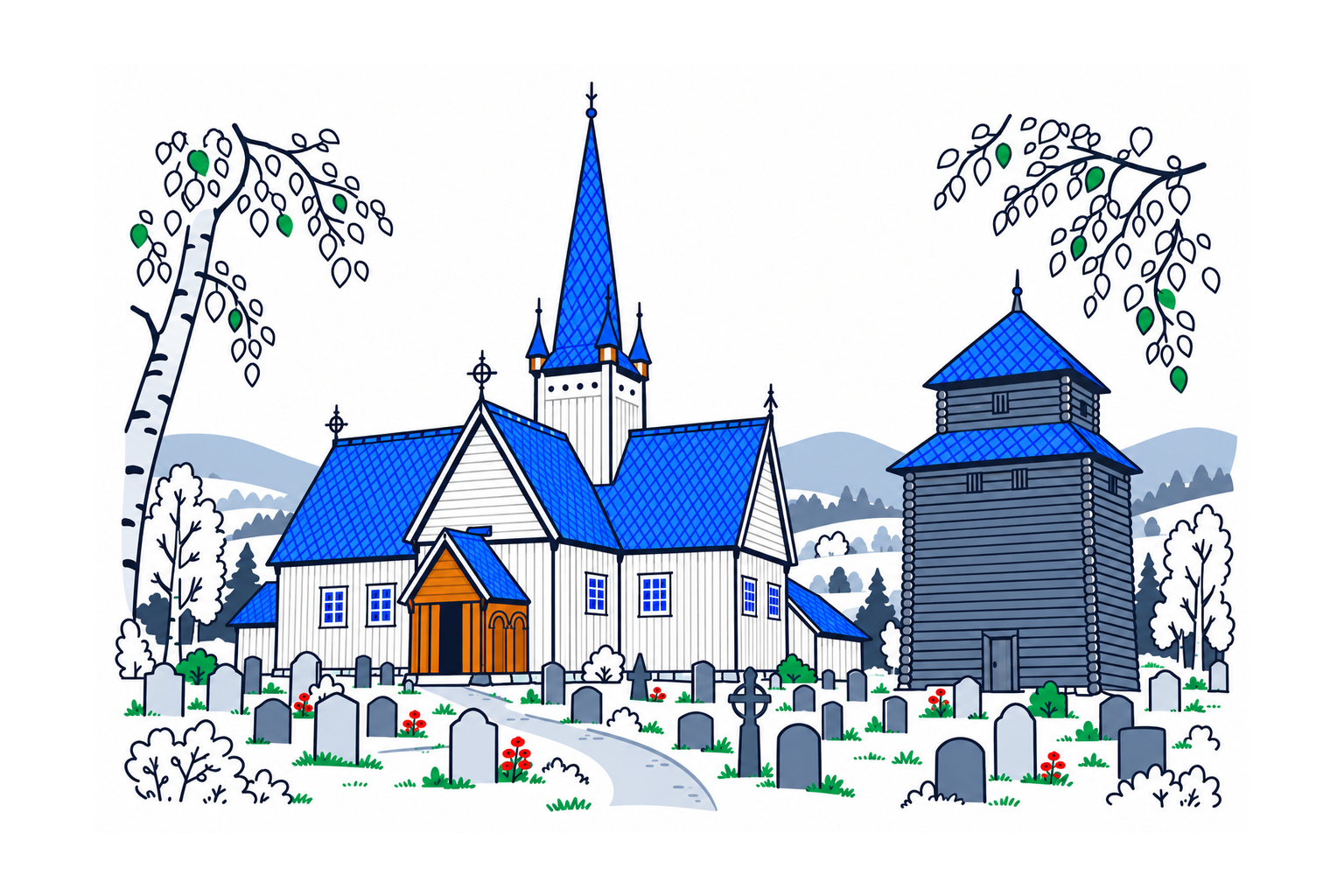
Vågå kyrkje combines seventeenth-century rebuilding with reused medieval timber. Its dark wooden exterior and cross-shaped form give Vågåmo a distinctive landmark, while the surviving older materials connect the present church with an earlier place of worship.
About the place12
The present form was created in 1625–1630 under Werner Olsen. It is a framed timber church with a cruciform plan, using material from the older stave church. The parish's management plan identifies wall boards near the main entrance as twelfth-century work, making reuse a central part of the building's historical value.
History and local connections1
Later changes added a timber sacristy, and a major restoration in 1914 reshaped parts of the interior. Ragnvald Einbu carved and painted most of the bench ends now seen in the room. The church therefore contains several periods of work rather than an entirely untouched medieval or seventeenth-century interior.
What to look for12
Compare the old boards and exterior form with the restored benches inside. This is a useful place to understand the difference between a medieval building component and the date of the church's present arrangement. The preserved structure and later furnishing also show how conservation decisions have shaped what visitors experience today.
Plan your visit2
Use Vågå's parish information to confirm acts of worship, guiding and access to the interior. The church stands in Vågåmo at Vågåvegen, making it a central heritage stop rather than a remote mountain excursion. Respect religious use and the churchyard, and check current arrangements instead of relying on a general tourism description for opening hours.
Sources
Last checked:
More places in Innlandet


SamfunnPrep
Discover Norway. Prepare for the test.
Practice questions, clear explanations and mock exams.