
Places with a story
Skjåk kirke
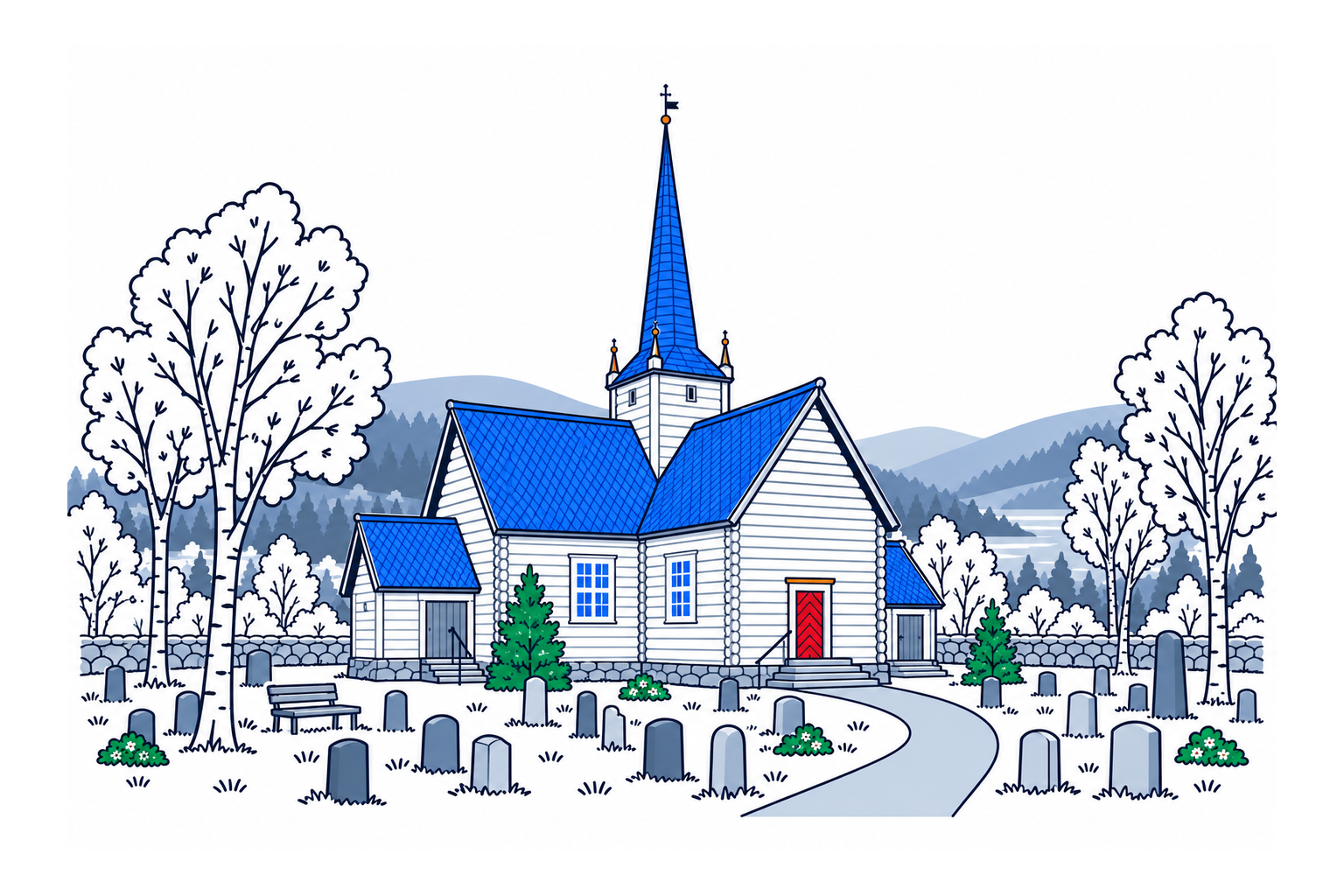
Skjåk kirke preserves an eighteenth-century timber church shaped by local builders and woodcarvers. Its cruciform room, carved furnishings and churchyard setting show how a valley community combined practical construction with an ambitious decorative programme.
About the place1
The church was completed in 1752 under Ola Rasmussen Hole. Its roughly equal cross arms and central tower follow established regional timber-building traditions. Galleries and the division toward the chancel organise the room, while the building's scale reflects a community growing during the eighteenth century.
History and local connections1
Villagers had bought their older churches during the 1723 church sale. Their poor condition led to a decision to concentrate resources on one new church at Skjåk. Work began in 1748, and local craftsmanship became important both to the structure and the furnishings that gave the new room its character.
What to look for1
Look for the altarpiece and pulpit carved by Jakob Klukstad with Sylfest Nilsen Skrinde. The altarpiece belongs to an early stage of Klukstad's career and combines narrative painting with controlled acanthus decoration. Other paintings and carved details allow the visitor to compare different kinds of religious storytelling within one room.
Plan your visit2
Use Skjåk's parish website to confirm acts of worship and access rather than assuming continuous visitor opening. The carved interior rewards an indoor visit, while the exterior and churchyard provide a quieter introduction to the setting. The parish also offers online views of its churches, useful when visiting arrangements do not allow immediate access.
Sources
Last checked:
More places in Innlandet


SamfunnPrep
Discover Norway. Prepare for the test.
Practice questions, clear explanations and mock exams.