
Places with a story
Folldal gruver
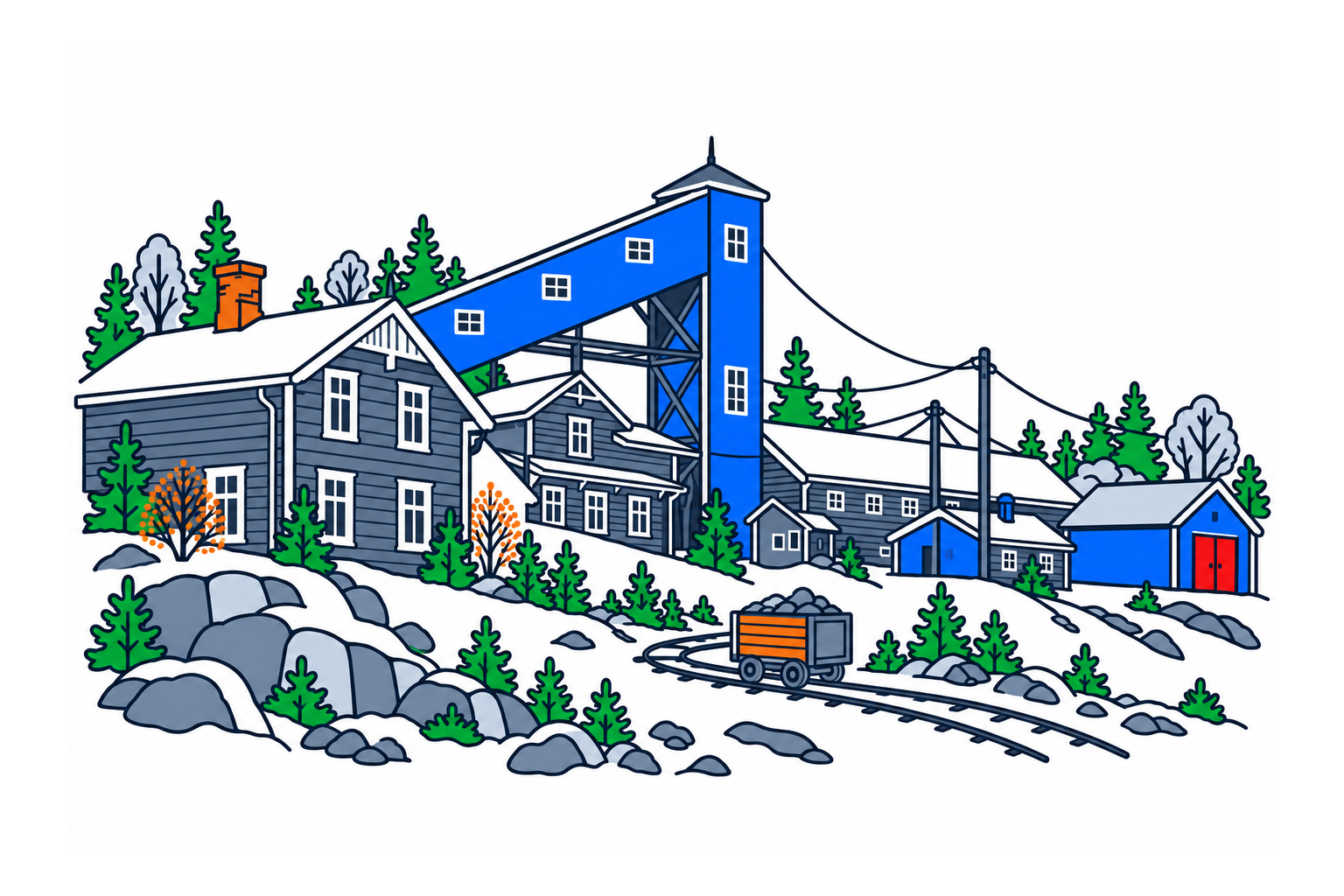
Folldal gruver preserves a mining settlement as well as mine workings. Buildings, waste heaps and transport remains make the connection between ore extraction, workers' lives and the development of Folldal visible across a distinctive industrial landscape.
About the place23
The protected environment includes roughly seventy buildings together with mine passages and heaps. Production structures stand alongside administrative rooms, managers' houses and workers' homes. Schools, theatre and washing facilities show that mining created a society with everyday needs, not simply an isolated workplace underground.
History and local connections1
Ore was discovered in 1745 and mining began in 1748. A new industrial phase developed in the early twentieth century with electricity, cableways and British investment. Labour disputes also shaped the settlement. Main-mine extraction ended in 1941, while later operations moved to other deposits and ultimately ended in 1993.
What to look for23
Explore marked paths and the museum's exhibitions to compare the different parts of the settlement. A mine visit adds the underground perspective, while the buildings explain housing and social organisation above ground. The relationship between industrial infrastructure and the surrounding mountains is central to understanding why the community developed here.
Plan your visit2
Use Folldal Gruver's official programme for mine tours, exhibitions and seasonal services. The café and accommodation occupy historic buildings but have their own booking arrangements. Plan underground access through the operator rather than treating historical passages as ordinary walking routes. Allow time for the marked outdoor paths as well as a guided attraction.
Sources
Last checked:
More places in Innlandet


SamfunnPrep
Discover Norway. Prepare for the test.
Practice questions, clear explanations and mock exams.