
Places with a story
Atnbrufossen vannbruksmuseum
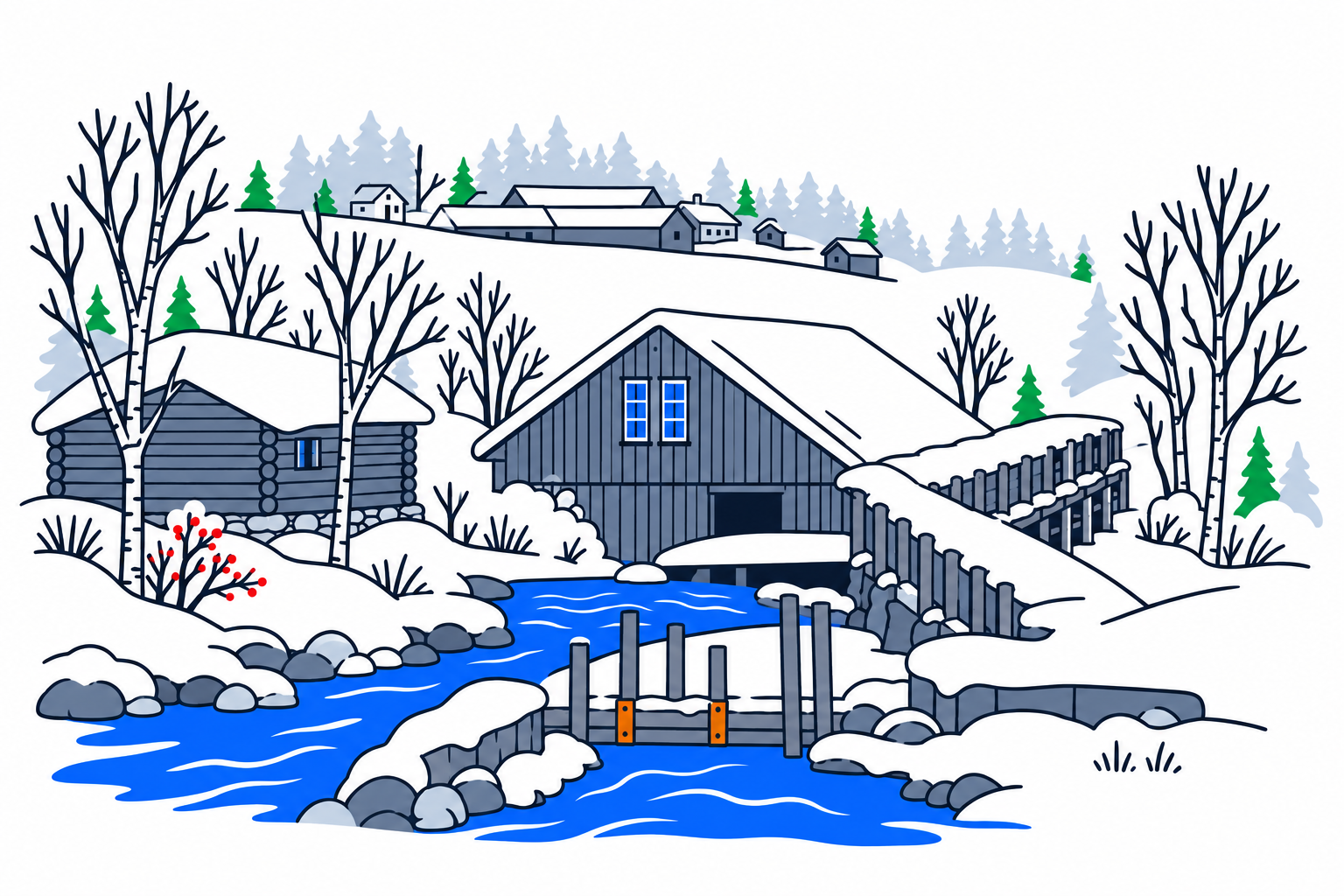
Atnbrufossen vannbruksmuseum explains how one waterfall supported several kinds of work in Stor-Elvdal. The dam, sawmill and small power facilities connect the striking Atna landscape with timber floating, production and the community's use of water.
About the place12
The preserved complex records more than a scenic waterfall. Water powered a sawmill and mill, supported timber transport and later supplied a small electricity plant. Fossehuset adds exhibitions and concerts beside the older structures, making the site both an industrial heritage stop and a contemporary cultural venue.
History and local connections1
The dam was strengthened and enlarged in 1917. Restoration in the early 1990s brought several buildings back into use, and the museum foundation was established in 1994. The surviving needle-dam arrangements show how people controlled water for timber floating instead of relying only on the river's natural flow.
What to look for12
Look at the dam, buildings and river together to understand their working relationship. NVE records one hundred and ninety removable needles used in the dam's two channels during demonstrations. Comparing these practical devices with the modern exhibition building makes the different uses of the waterfall easier to recognise.
Plan your visit2
The site is beside the Rondane scenic route at Atnbru. The roads authority describes partial wheelchair accessibility and seasonal toilet arrangements, which can also be interrupted by maintenance. Check its current notice and local event information before expecting services or open exhibitions. The historic water facilities should be experienced from the established visitor areas.
Sources
Last checked:
More places in Innlandet


SamfunnPrep
Discover Norway. Prepare for the test.
Practice questions, clear explanations and mock exams.