
Places with a story
Kvikne kyrkje
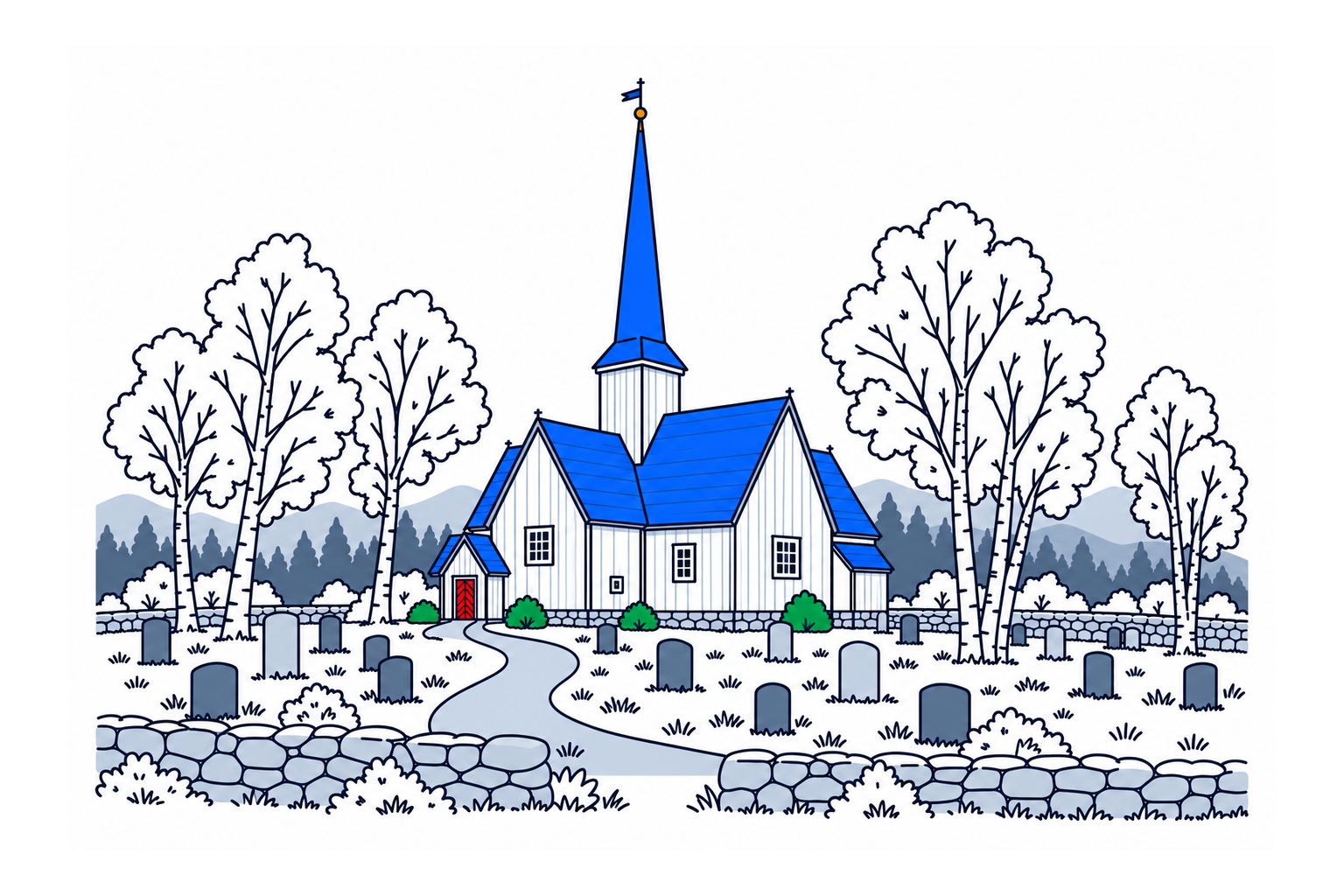
Kvikne kyrkje links Tynset's church heritage with the copper-mining community that grew at Kvikne. Its tarred timber exterior and richly decorated room preserve a strong impression of the seventeenth-century church and later eighteenth-century painting.
About the place12
Built in 1654, the church has a cruciform timber plan with short side arms and a roof turret over the centre. Tarred vertical boarding covers the exterior. The local history presentation describes it as unusually well preserved, with most later changes concentrated in the porch, sacristy and painted wall ornament.
History and local connections1
A copperworks established in 1632 brought growth that made the earlier stave church too small. Mine overseer Knud Mortensen served as builder of the larger church. The connection shows how industrial activity changed community institutions, while the surviving structure keeps that period visible in the modern village.
What to look for1
Look for the three-storey altarpiece from 1663, with the Last Supper, Crucifixion and a figure of Christ arranged vertically. The carved pulpit and decorated benches add detail, while vine ornament painted on the log walls in the 1730s introduces a later layer. These elements reward a slow interior visit.
Plan your visit12
Check Kvikne's current guiding notice and Tynset parish's calendar before visiting. The published 2026 guiding season ended in early August, so later access should be confirmed rather than assumed. Worship continues in the church, and tours must fit around acts of worship. Use the parish contact for visits outside the ordinary summer programme.
Sources
Last checked:
More places in Innlandet


SamfunnPrep
Discover Norway. Prepare for the test.
Practice questions, clear explanations and mock exams.