
Places with a story
Eidsvollsbygningen
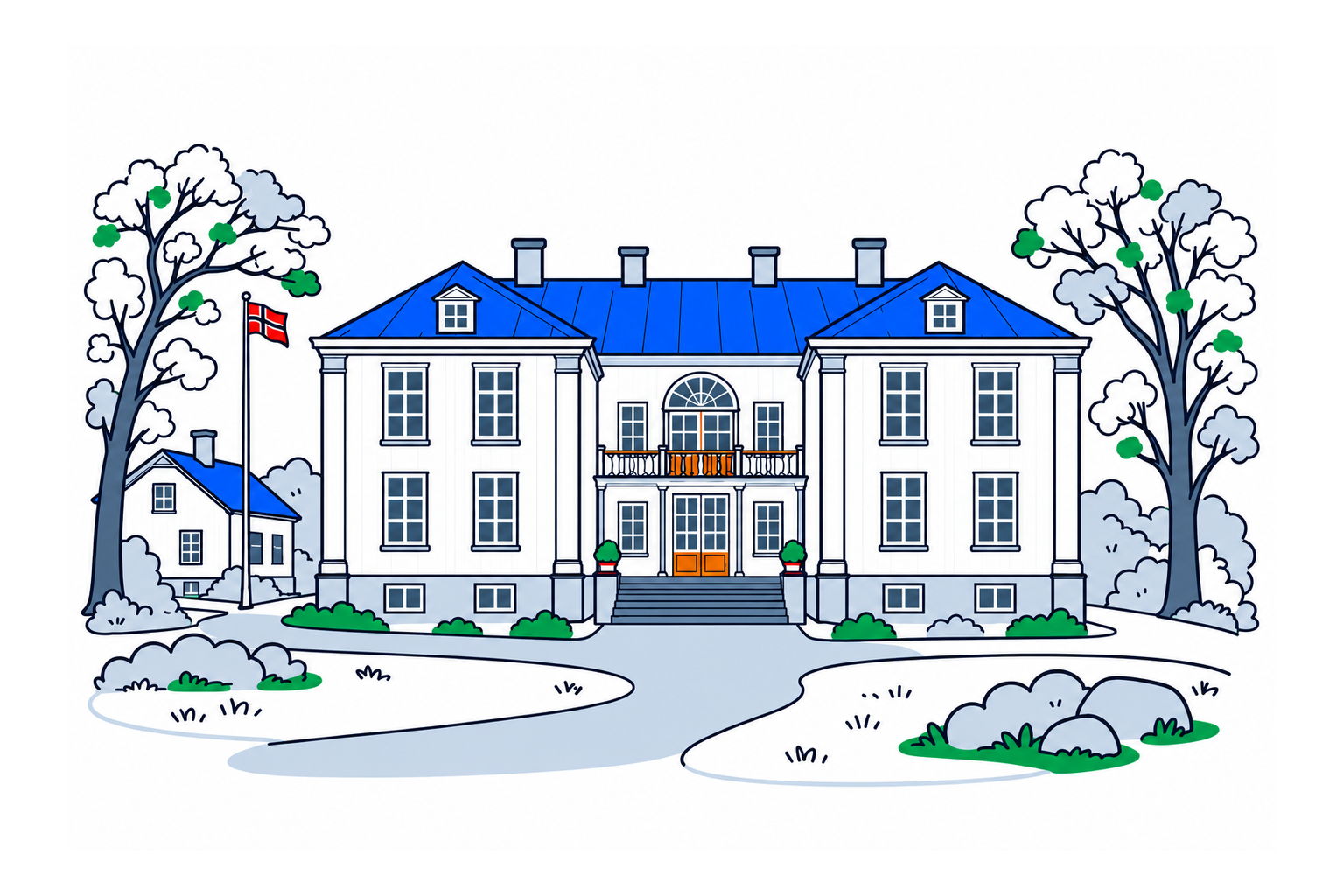
Eidsvollsbygningen was a private industrialist's home before it became the meeting place where Norway's constitution was written and adopted in 1814. Its preserved and reconstructed rooms connect national politics with the household and ironworks that made the assembly possible.
About the place12
The large timber house belonged to Carsten Anker and formed part of Eidsvoll ironworks. Formal reception rooms, family spaces and service rooms show the organisation of an early nineteenth-century elite home. Understanding this domestic and industrial setting gives the constitutional story a more concrete place.
History and local connections1
The building was completed around 1770 and later modernised. In 1814, its unfinished grand hall became the assembly room now known as Rikssalen. The state took over in 1851, and successive constitutional anniversaries brought restoration. The 2014 project reconstructed colours, textiles and the lost basement rooms to interpret Anker's household.
What to look for1
Look beyond Rikssalen to the rooms where family members, guests and servants lived and worked. The reconstructed basement includes spaces necessary to run a large house. Comparing those practical rooms with the formal interiors helps explain how national deliberations took place within an existing working estate.
Plan your visit12
Use Eidsvoll 1814's current programme to book or plan a guided visit to the building. The furnished interiors and basement are experienced through the museum's visiting arrangements, while the wider protected site also includes parkland and pavilions. Check availability before travelling for a particular tour or exhibition.
Sources
Last checked:
More places in Akershus


SamfunnPrep
Discover Norway. Prepare for the test.
Practice questions, clear explanations and mock exams.