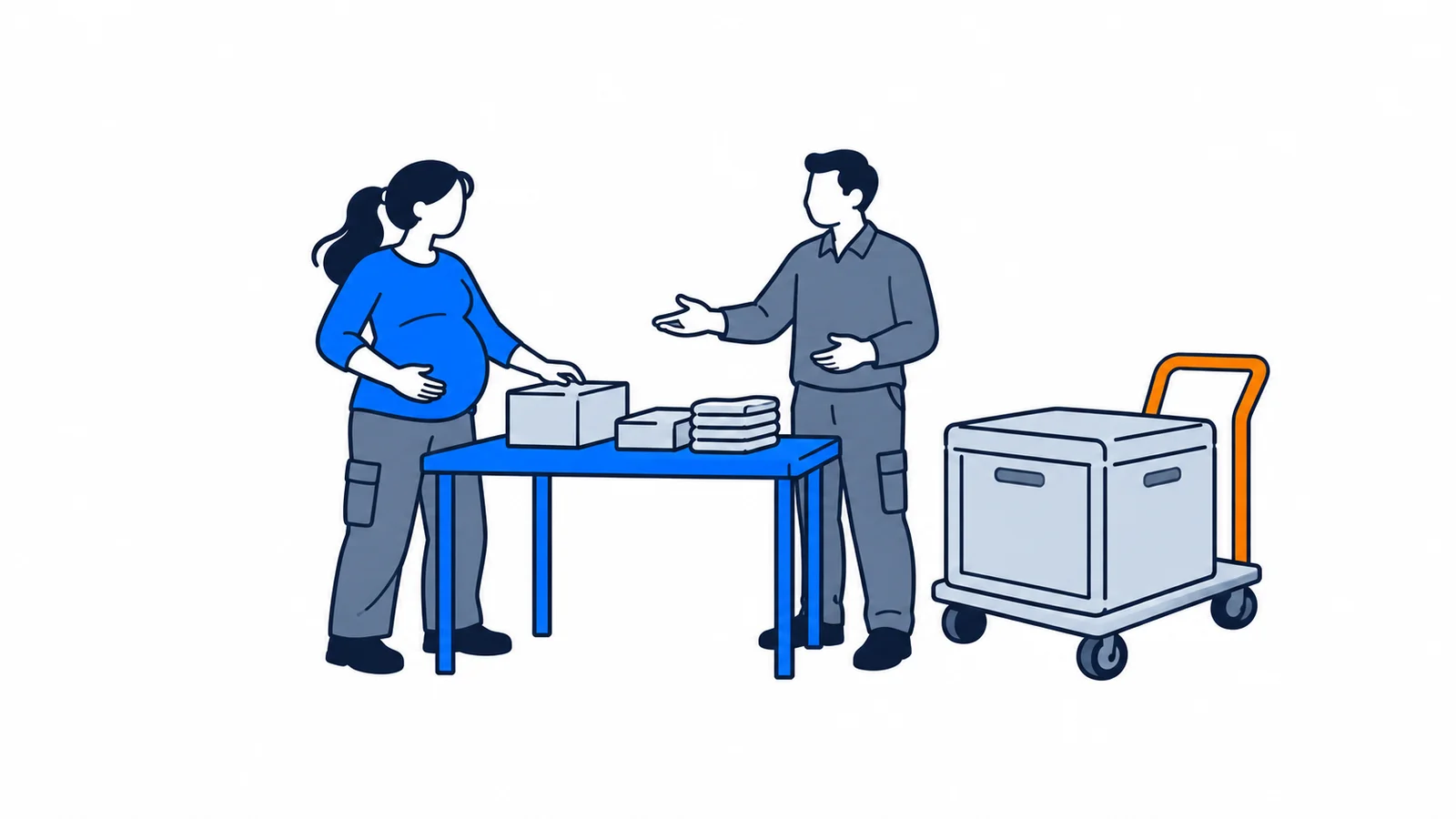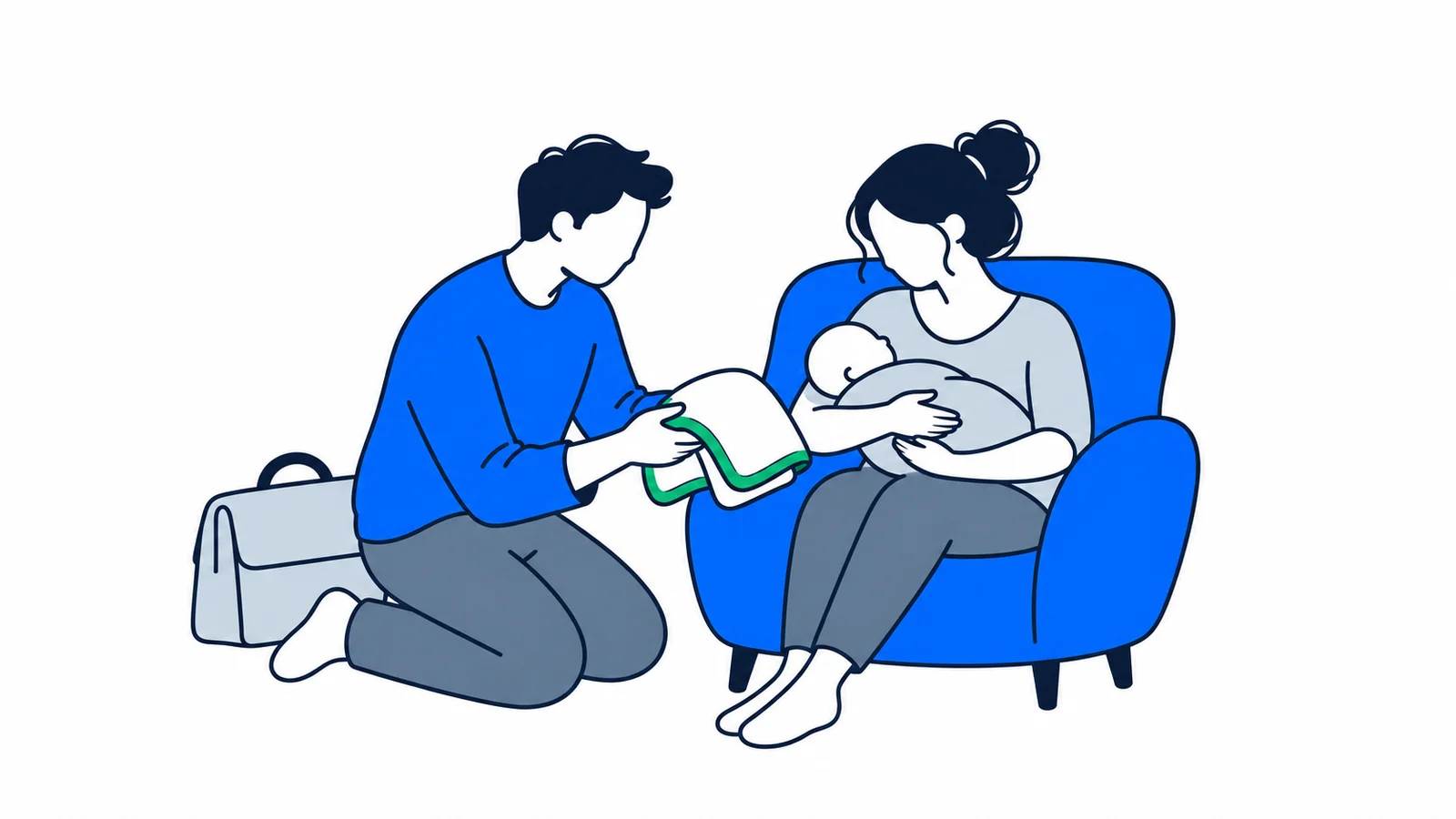

Omsorgspermisjon gives a father or co-parent the right to two weeks off around childbirth. The law does not automatically provide pay. Check whether your employer pays or you can use parental benefit from Nav. This can affect how much of your quota remains for later.
Who is entitled to the two weeks?
As an employee who is becoming a father or co-parent, you are entitled to two weeks of omsorgspermisjon in connection with the birth. Its purpose is to help the mother. Your right to time off does not depend on Nav approving parental benefit.
This guide concerns leave from work around childbirth, with rules checked on 2 November 2026. Arbeidstilsynet, which provides guidance on the Working Environment Act, explains the right to omsorgspermisjon. If the parents do not live together, another person helping the mother can exercise the right to leave. This does not automatically entitle that person to parental benefit.
Leave is a temporary absence from work. You remain employed. Self-employed people do not have an employer to take leave from, but may have entitlements through Nav under separate conditions.
Is omsorgspermisjon paid?
The starting point is unpaid leave. You may be entitled to pay through your agreement with your employer or a collective agreement on employment conditions.
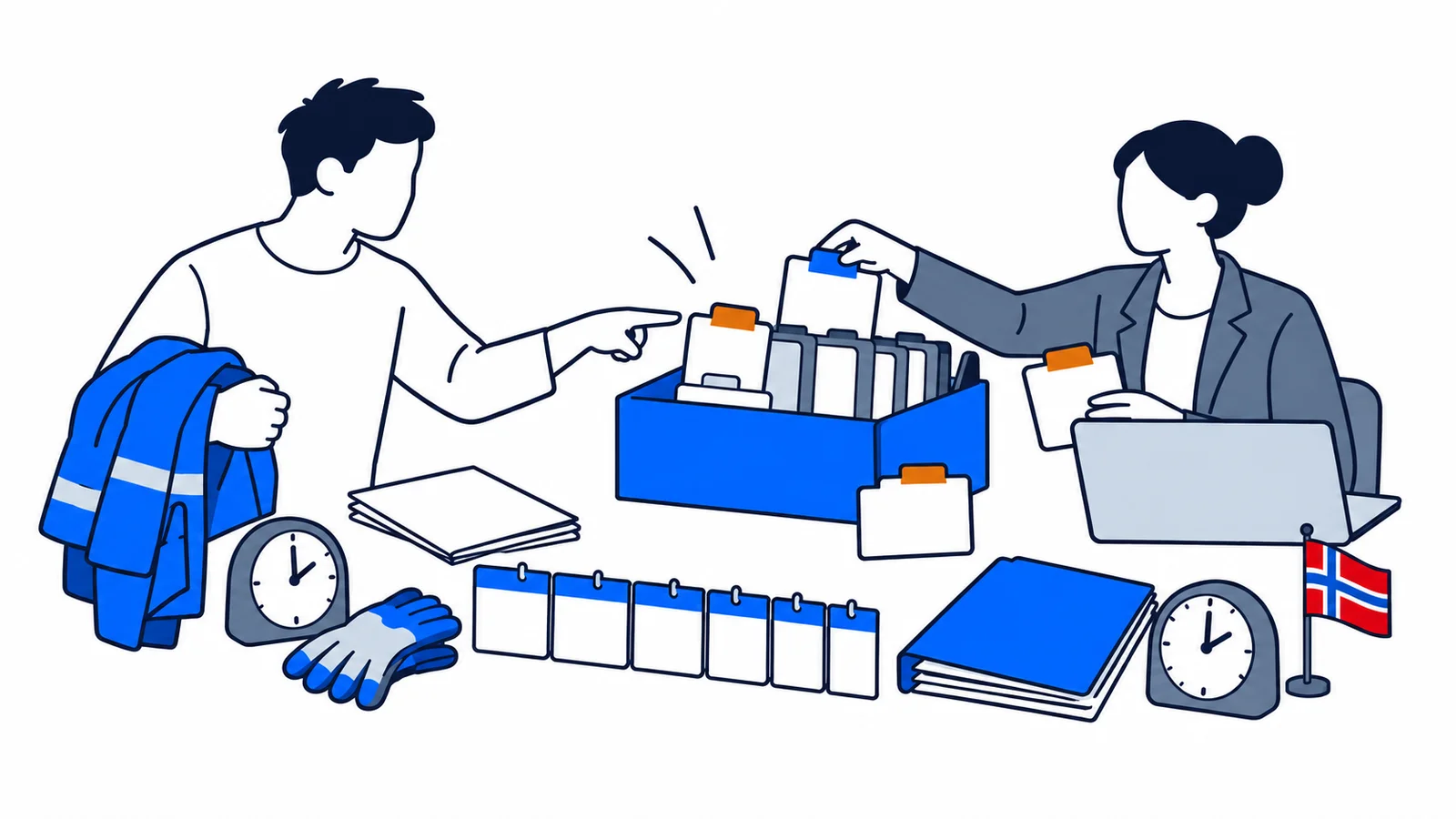
Find your employment contract and any workplace leave rules. Ask HR, your manager or a union representative which provision applies. SamfunnPrep's employment contract checklist includes where to look for paid absence and collective agreements.
Distinguish between three possibilities:
- Your employer provides paid omsorgspermisjon under its own arrangement. Clarify what it covers and whether it is independent of parental benefit.
- You apply for parental benefit from Nav. You must meet the conditions. Taking benefit may use days you would otherwise have later.
- You receive neither agreed pay nor parental benefit. You may still have the right to leave, but the absence will be unpaid.
Receiving wages from your employer does not, on its own, tell you which arrangement is being used. An employer can also pay wages while you take parental benefit and claim reimbursement from Nav. This still involves taking parental benefit. Ask for a specific explanation, rather than simply being told “you will be paid”.
When can you take omsorgspermisjon?
Arbeidstilsynet states that the two weeks can be taken within the period from two weeks before the birth until two weeks after the mother has returned home. They are linked to the birth and the help the mother needs around that time.
Discuss your preferred start and end dates with your employer early. Since the birth can occur before or after the due date, it helps to agree how you will notify them once the dates are certain.
Do not use the parental benefit time window as the definitive rule for this particular leave. Nav has a separate window for taking two weeks of your quota at the same time as the mother. These are two different rules that must fit your plan.
Can Nav pay for the weeks around childbirth?
Yes, if you are entitled to parental benefit. Nav, Arbeids- og velferdsetaten (the Norwegian Labour and Welfare Administration), assesses the conditions for the benefit. Your employer confirming time off is not the same as a decision awarding money.
When both parents are entitled to parental benefit, the father or co-mother can take two weeks of their quota at the same time as the mother around childbirth. Nav specifies the window from two weeks before the due date until six weeks after the birth. These weeks are deducted from the father's or co-mother's quota; they are not additional to it.
If your employer provides paid omsorgspermisjon independently of Nav, you can instead save your quota for later. Check this before submitting your application. If only one of you qualifies for parental benefit, different allocation rules apply. Select the correct situation in Nav's parental benefit guidance.
An example: Both parents qualify for parental benefit. The father wants two weeks at home after the birth. If he uses two weeks from the father's quota, he has two fewer quota weeks for later. If the employer provides separate paid omsorgspermisjon without parental benefit being taken, those days do not use the quota. This example does not establish which pay arrangement your workplace offers.
When must you notify your employer?
You must give notice as soon as possible. For an absence of exactly two weeks, the law does not say you must always give at least one week's notice. The one-week deadline applies to absences lasting more than two weeks.
This follows from section 12-7 of the Working Environment Act. Other notice periods also apply to longer leave. If you plan further absence immediately after omsorgspermisjon, you therefore need to review the whole plan with your employer.
Consider giving notice in writing so you both have the dates and assumptions. For example, you could write:
“I would like to take two weeks of omsorgspermisjon in connection with the birth. The due date is 18 December. I would like to start when the baby is born and will notify you as soon as I know the date. Could you confirm how the absence will be recorded and which pay arrangement applies?”
This is a suggested message, not a legally required form. Also agree whom to contact if labour starts outside normal working hours.
What should be clear before the absence starts?
Have a plan for both time off and payment. An application to Nav does not replace notice to your employer, and speaking to your manager does not replace a required Nav application.
A practical sequence is:
- Notify your employer about the leave and provisional dates.
- Ask for written clarification of pay and any use of parental benefit.
- If you will use parental benefit, check the conditions and apply to Nav for the correct period.
- Ask your employer to follow up the income statement, and update each other if the dates change.
Nav's information for employers explains that an income statement is necessary for an employee to receive parental benefit. Processing starts only when Nav has received all documentation. Do not assume payment will arrive on a particular date simply because you have notified your employer of the leave.
Who can help if you disagree?
Arbeidstilsynet can provide guidance on the right to time off. Disputes about leave rights under the Working Environment Act can be considered by Tvisteløsningsnemnda, the Dispute Resolution Board. Get in touch promptly if your employer refuses, so you can clarify the next steps and deadlines.
If the question concerns pay under your workplace agreement, ask your employer or union representative to explain the provision. For parental benefit, ask Nav. Keep messages, dates and replies so the subject of the disagreement is clear.
You can also use practical tools on SamfunnPrep to keep track of other tasks in Norway.