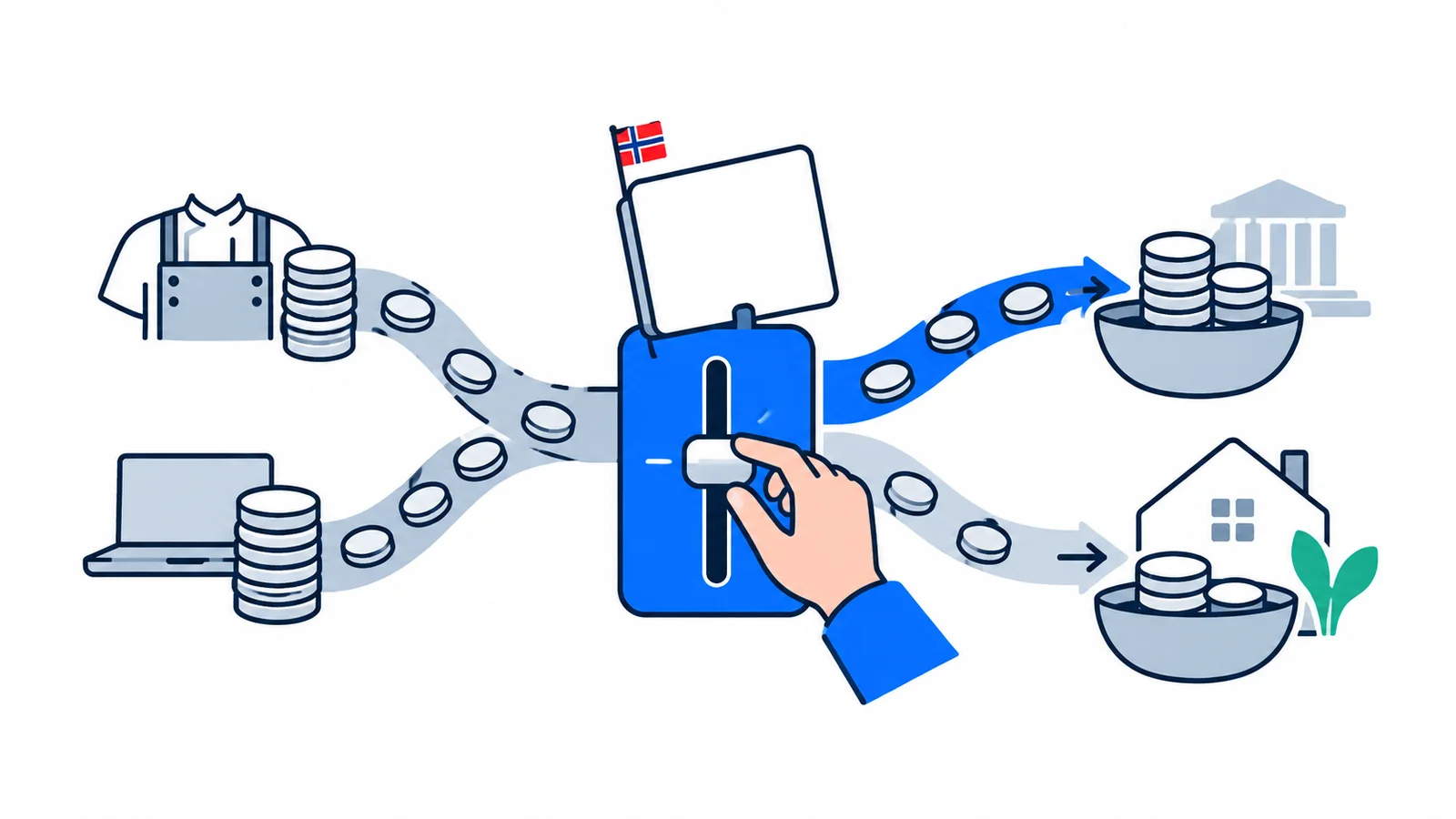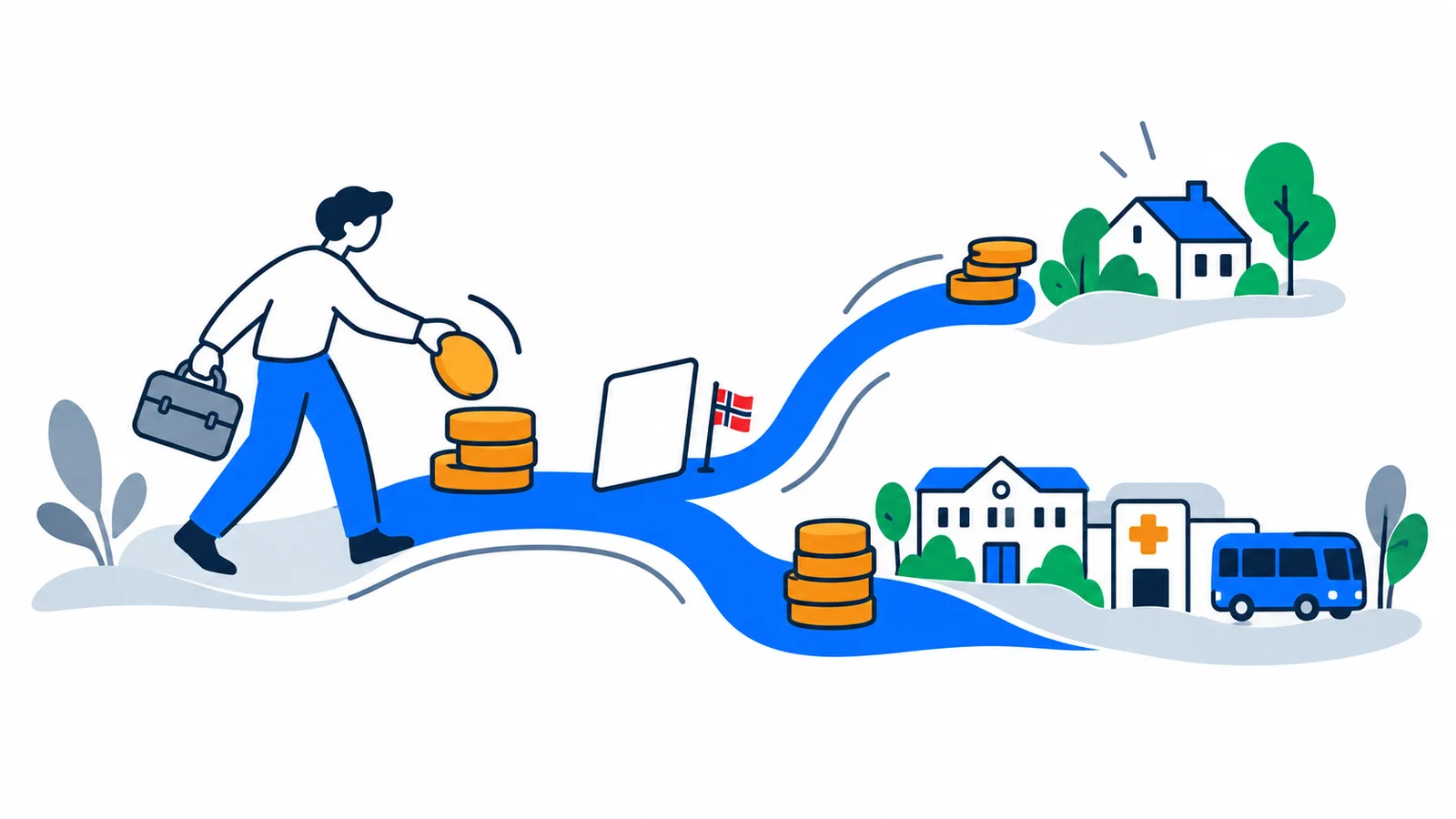


Half tax in December is a common phenomenon: many receive higher payment than usual because only half of the normal tax withholding is deducted from their salary that month. It's not extra money—it's your tax being distributed differently throughout the year.
What does half tax in December mean?
Half tax in December means your employer withholds approximately half of the normal tax withholding from your salary in November or December. The result is that the amount deposited into your account becomes higher than in a regular month.
Many employers choose November instead of December, but the phenomenon is often called "half tax in December" because it was historically associated with the Christmas month. Regardless of which month it applies to, the mechanism is the same.
This happens every year, and it is completely normal. If you are new to Norway, it may still come as a surprise the first time you see an unexpectedly high salary deposit shortly before Christmas. In that case, it's useful to know what is actually happening, rather than assuming your employer has made an error.
Is half tax in December extra money?
No. Half tax is not a bonus, a benefit, or money you receive in addition to your regular salary. It is only a temporary change in how much tax is withheld that month—your total tax for the entire year remains exactly the same.
The money you receive as extra payment in December is simply the salary you would have earned anyway. The tax on that amount is just deferred to another time of year. Think of it as a kind of balancing act: you pay slightly more tax than you "need" in ten months, and slightly less in the remaining two.
If you're unsure how your tax year fits together, it may be helpful to learn more about your tax return and how it summarizes everything you have paid and earned during the year. Your tax return is the document that ultimately shows whether you have paid the correct total tax, regardless of how the withholding has been distributed month by month.
Why does tax withholding work this way?
The reason is that your tax card is set up to withhold tax over approximately 10.5 months per year, not twelve. The Norwegian Tax Authority uses this model to create room for two special periods each year.
- From January through October, slightly more tax than a simple average is withheld each month.
- In June, your vacation pay is typically completely tax-free, meaning no tax withholding.
- In November or December, only half of the normal tax is withheld.
The sum of all these periods equals exactly the tax you must actually pay for the entire year. The system balances itself over time—it is not random, and it is not an error on your payslip.
This way of organizing tax withholding makes life easier for most employees. You don't have to think about taxes every single month, because your employer has already done the calculation for you through your tax card.
Why is vacation pay in June tax-free?
Vacation pay is money you have earned over the previous year, and it is meant to cover living expenses while you are on holiday. Because you have already paid slightly extra tax through the other months, your employer does not need to withhold tax on your vacation pay when it is paid out in June.
This is closely connected to half tax in December: both arrangements are part of the same system, just at different times of the year. If you want to understand your vacation pay better, you can read our guide to vacation and vacation pay in Norway.
Who gets half tax, and who does not?
Half tax applies primarily to you if you receive monthly salary throughout the year and have a standard tax card. If your tax card is set up differently—for example, because you recently started working in Norway or have a temporary arrangement—your withholding may look different.
It is your employer who decides whether to use this arrangement in your company, and whether it applies to November or December. Some industries with many hourly workers or variable income use it less frequently, simply because pay already varies considerably from month to month.
How do I know if I get half tax this year?
You'll find the answer on your payslip, which your employer sends out each month. Look for the line showing tax withholding, and compare the amount to a regular month earlier in the year.
Not all employers practice half tax in December—some choose November instead, and a few withhold regular tax both months. If you're unsure, it's perfectly fine to ask your payroll department or your manager directly. You can also log in with the Norwegian Tax Authority to see how your tax card is set up for the rest of the year.
What should you do with the extra money?
Because half tax is only a temporary change and not a gift, it can be wise to plan ahead. Many people use the extra amount for Christmas gifts or bills, but it can also be a good opportunity to set aside a little for January, which is often an expensive month after the holidays.
If you want to become more confident about your personal finances throughout the year, we have gathered helpful and practical tips in the article about personal economy in Norway. There you'll find advice on budgeting and how you can plan for months with higher or lower income than usual.
Half tax, civic knowledge, and SamfunnPrep
Understanding how tax, salary, and welfare schemes are connected is part of the practical civic knowledge that most newcomers to Norway eventually need to master. Topics like tax, work, and rights also appear on the civic knowledge exam.
With SamfunnPrep, you can practice precisely these topics, along with everything else on the exam curriculum. Try for free and see how SamfunnPrep makes it easier to understand the Norwegian system—from tax cards to citizenship.