
Places with a story
Hegra festning
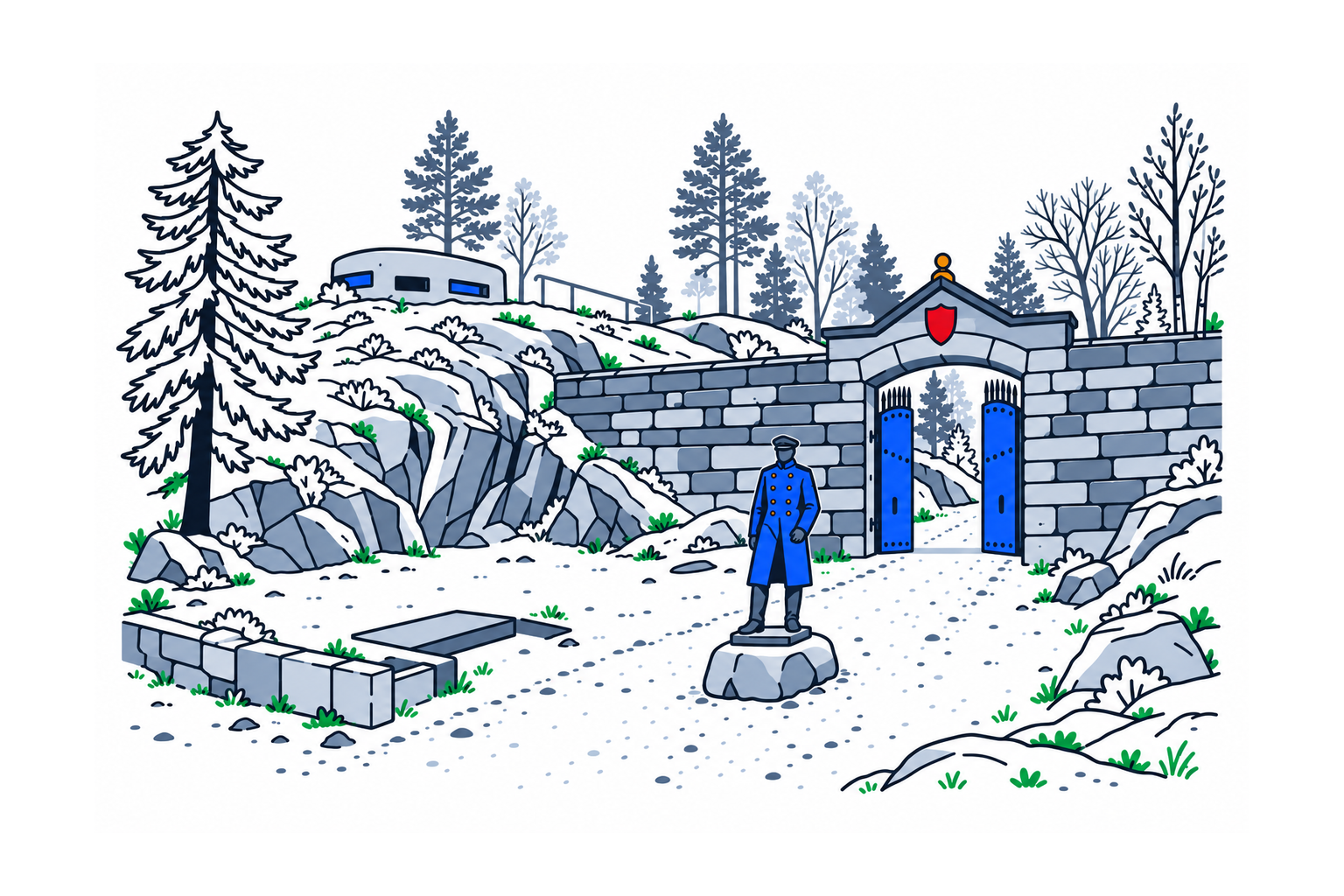
Hegra festning is a fortified hillside above the Stjørdal valley. Built after Norway's separation from Sweden, its tunnels, trenches and gun positions became the setting for sustained Norwegian resistance during the invasion of 1940.
The place1
Originally called Ingstadkleiva fort, the installation was built in 1908–1910 to defend approaches from the east. Rock-cut passages link concrete defensive positions to the terrain. The fortress was taken out of ordinary active service in 1926, but remained available as a reserve installation when war reached Norway.
History and local connections12
In 1940, Major Hans Reidar Holtermann led approximately 250 volunteers, including one woman, in a defence lasting twenty-five days. The surviving site includes traces of German attacks as well as the earlier fortifications. Heritage protection covers the military landscape and associated positions, recognising that the story extends beyond the main gate.
What to look for1
Explore the relationship between the hill, firing positions and underground spaces. The site museum occupies a reconstructed depot building; the earlier depot was destroyed during the war. Museum displays and the outdoor remains help explain both the fort's original defensive purpose and the circumstances of the resistance, rather than presenting the landscape simply as a viewpoint.
Planning a visit1
Forsvarsbygg publishes practical information for the fortress. The access road can close in winter, and tunnels, the museum and café have seasonal arrangements. Check these separately before travelling, especially if an underground visit is essential. Guided visits can provide context for the different positions. Follow closures and marked routes around old military structures and uneven ground.
Sources
Last checked:
More places in Trøndelag


SamfunnPrep
Discover Norway. Prepare for the test.
Practice questions, clear explanations and mock exams.