
Places with a story
Ulefos Jernværk
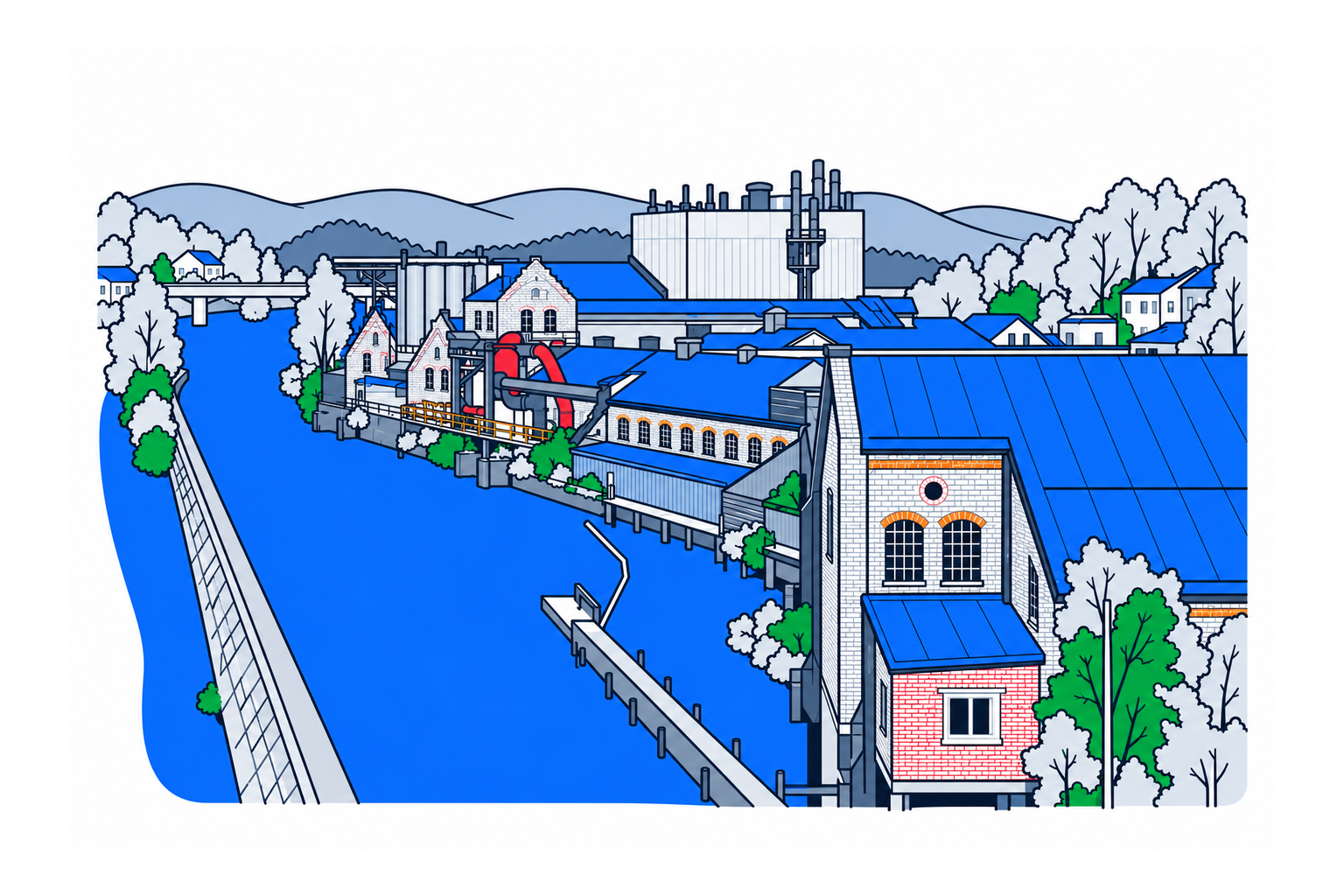
Ulefos Jernværk is a continuing industrial workplace with roots in the seventeenth century. At Ulefoss in Nome, its history connects iron ore, river power, forest labour and the cast products used in Norwegian homes and streets.

About the place13
The works helped shape both employment and the settlement around it. Earlier production required large quantities of charcoal from the surrounding forests, and housing and services developed for workers and skilled staff. This local industrial landscape remains an important part of understanding Ulefoss, alongside the canal and nearby estate buildings.
History and local connections1
The company dates its foundation to 8 August 1657. The Cappelen family acquired the works in 1835. Stove production became a major part of its identity, with artists and designers contributing to their appearance. Production of street castings began in 1952 and later became the dominant business, linking the historical foundry to modern urban infrastructure.
What to look for12
The company describes today's works as a modern iron foundry using automated technology. Its historical products show that industrial manufacture could also involve design and decorative art. Looking at cast covers, grilles and older stoves offers a way to recognise the factory's wider influence, even when the production buildings are not available for a public visit.
Plan your visit23
Ulefos Jernværk is an operating factory, so use the company's contact information to enquire about any arranged visit. The site should not be treated as an open museum or a public route through production areas. For an independent historical outing, consult Nome's cultural heritage information and use public streets and clearly indicated visitor places around Ulefoss.
Sources
Last checked:
More places in Telemark


SamfunnPrep
Discover Norway. Prepare for the test.
Practice questions, clear explanations and mock exams.