
Places with a story
Slottsfjellet
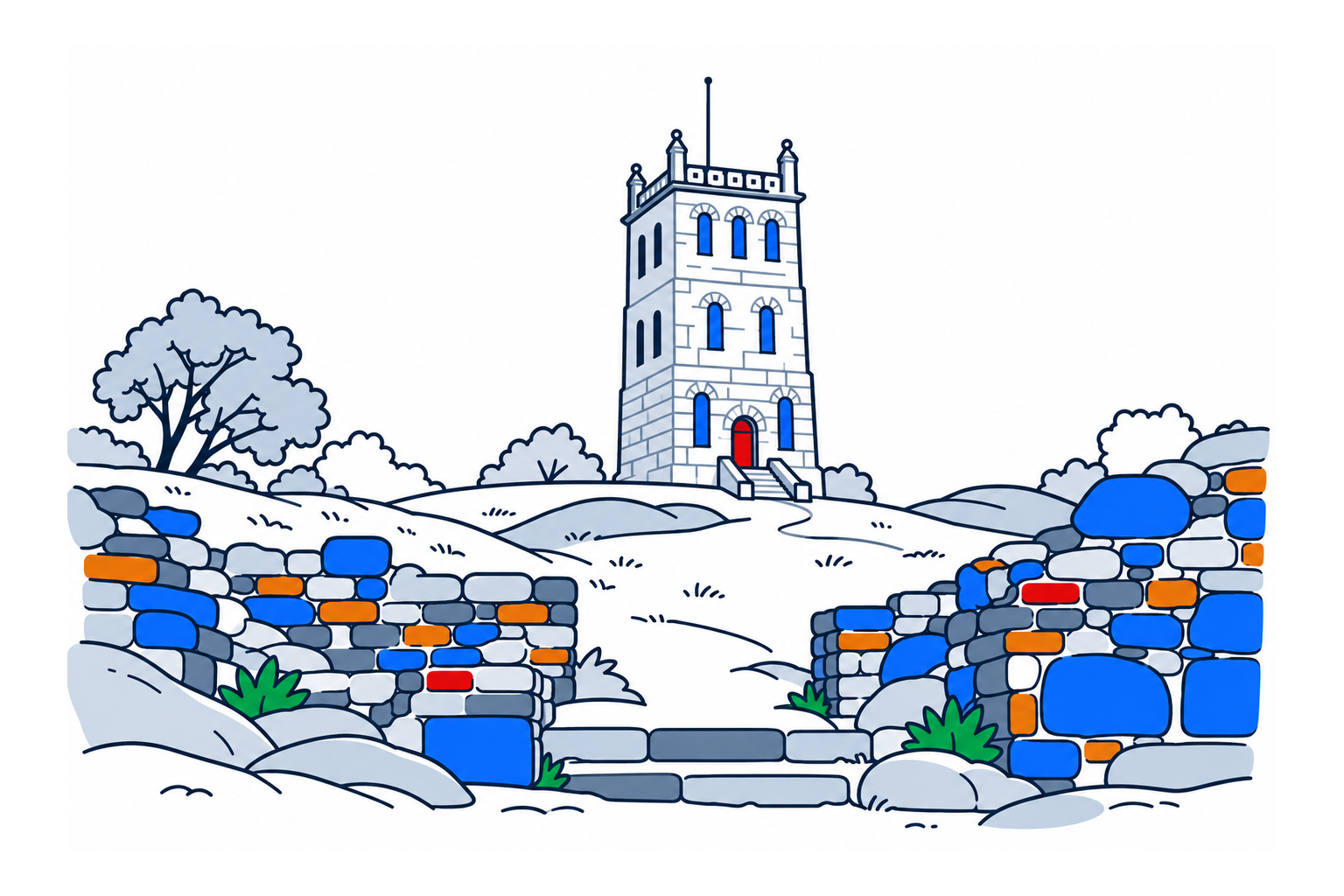
Slottsfjellet rises above Tønsberg with the ruins of Tunsberghus and the familiar stone tower. The hill connects today's townscape to a medieval centre of royal power, siege warfare and administration.

About the place1
The visible tower is a monument from 1888, rather than a surviving medieval keep. Around it, the ruin park preserves traces of the much larger fortress that once occupied the hill. Distinguishing the later tower from the older castle remains makes the place easier to understand and avoids confusing a town symbol with an intact medieval building.
History and local connections1
The fortified hill appears in written history in 1165. During the medieval civil wars, defenders endured a long siege by King Sverre's forces. Subsequent rulers strengthened the walls and built halls and towers. An attack in 1503 brought destruction, and the fortress was never rebuilt. Its surviving remains are therefore archaeological evidence of a lost complex.
What to look for123
Walk the ruin landscape and compare the footprint of the medieval structures with the modern tower. Views over the town help explain the fortress's strategic position. Nearby Slottsfjellsmuseet adds Viking, medieval and later maritime history. NIKU's research programme announced in 2026 investigates castle life as well as construction, including questions about food and resource use.
Plan your visit32
Check the museum's current visitor page before planning a tower climb: at the research check, the tower and outdoor museum buildings were marked closed for the season. Older historical pages still display different schedules. Museum admission, tower opening and organised visits to archaeological work are separate arrangements. Follow any barriers or local instructions around ruins and research areas.
Sources
Last checked:
More places in Vestfold


SamfunnPrep
Discover Norway. Prepare for the test.
Practice questions, clear explanations and mock exams.