
Places with a story
Lunde bru
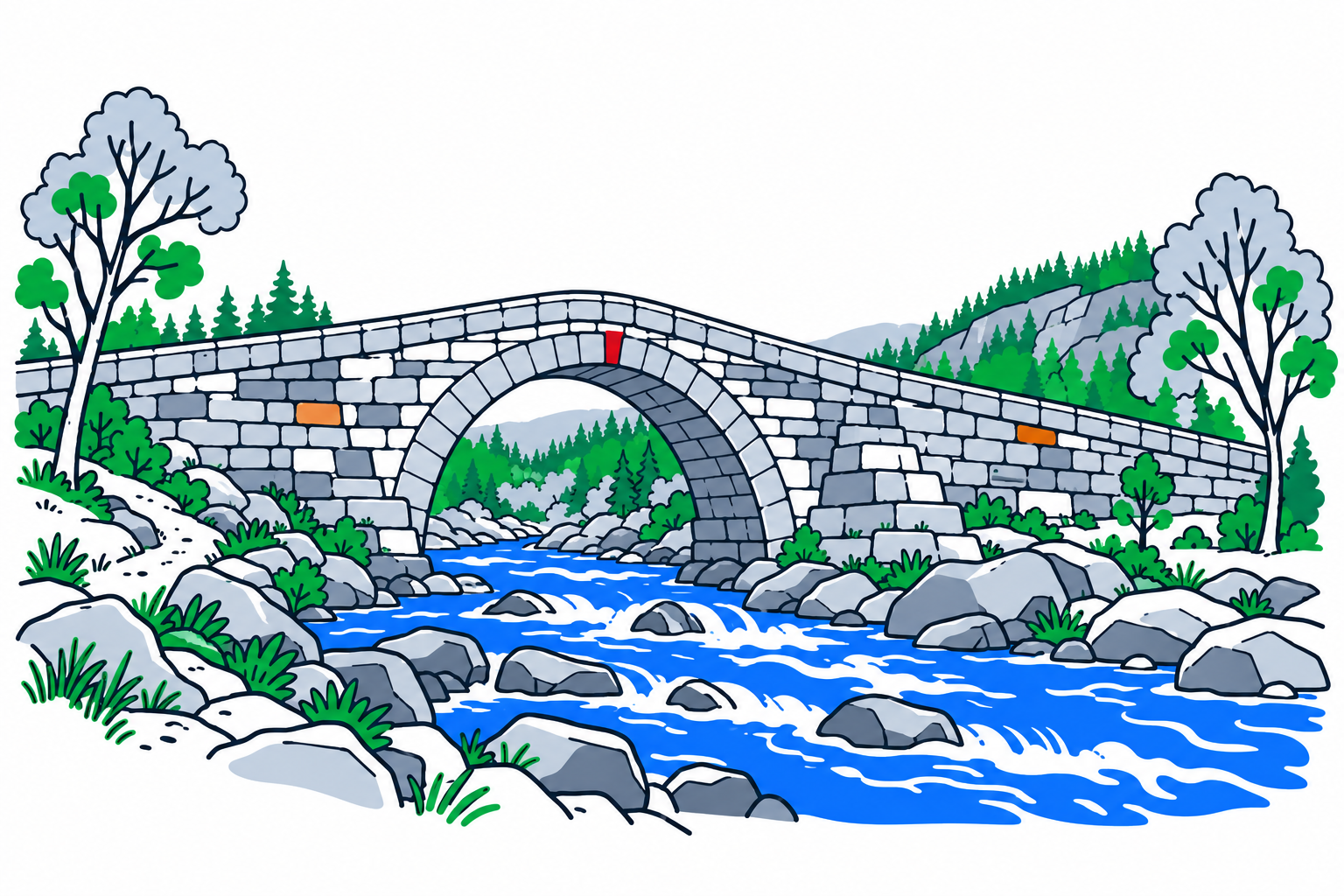
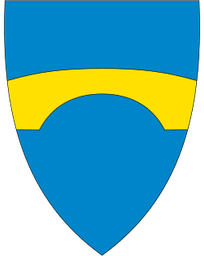
Lunde bru carries the history of travel through Etnedal in a monumental stone arch over the Etna. Its silhouette is so closely tied to the municipality that a stylised bridge appears in the local coat of arms.
About the place1
The bridge belongs to the historical route connecting eastern Norway with Bergen. Built from natural stone, it illustrates how a major river crossing could be achieved with masonry and a long approach rather than modern concrete or steel. Its total length is 132 metres, making the whole structure larger than the central arch alone suggests.
History and local connections12
Work began around 1827 and the bridge opened in 1829. It became an important link along the old royal road through the valley. Much later, Etnedal debated how to represent the recognisable local bridge within the rules of heraldic design. A simplified bridge emblem was adopted in 1989, linking the crossing to the municipality's role between Valdres and Land.
What to look for12
From a suitable public viewpoint, compare the curve of the arch, its individual stones and the long masonry approaches. The river landscape explains why the crossing mattered. The coat of arms offers another way of looking at the same landmark: a living piece of transport history translated into a shared local symbol.
Plan your visit3
The regional visitor information places the bridge close to road 251, south of Bruflat. Plan a short stop around the bridge rather than treating old descriptions as current driving instructions. Check local signs for access and parking, and choose a safe viewpoint beside the river. Detailed dimensions and protection dates vary between sources, so this guide avoids disputed superlatives and exact arch measurements.
Sources
Last checked:
More places in Innlandet


SamfunnPrep
Discover Norway. Prepare for the test.
Practice questions, clear explanations and mock exams.