
Places with a story
Norsk Fiskeværsmuseum
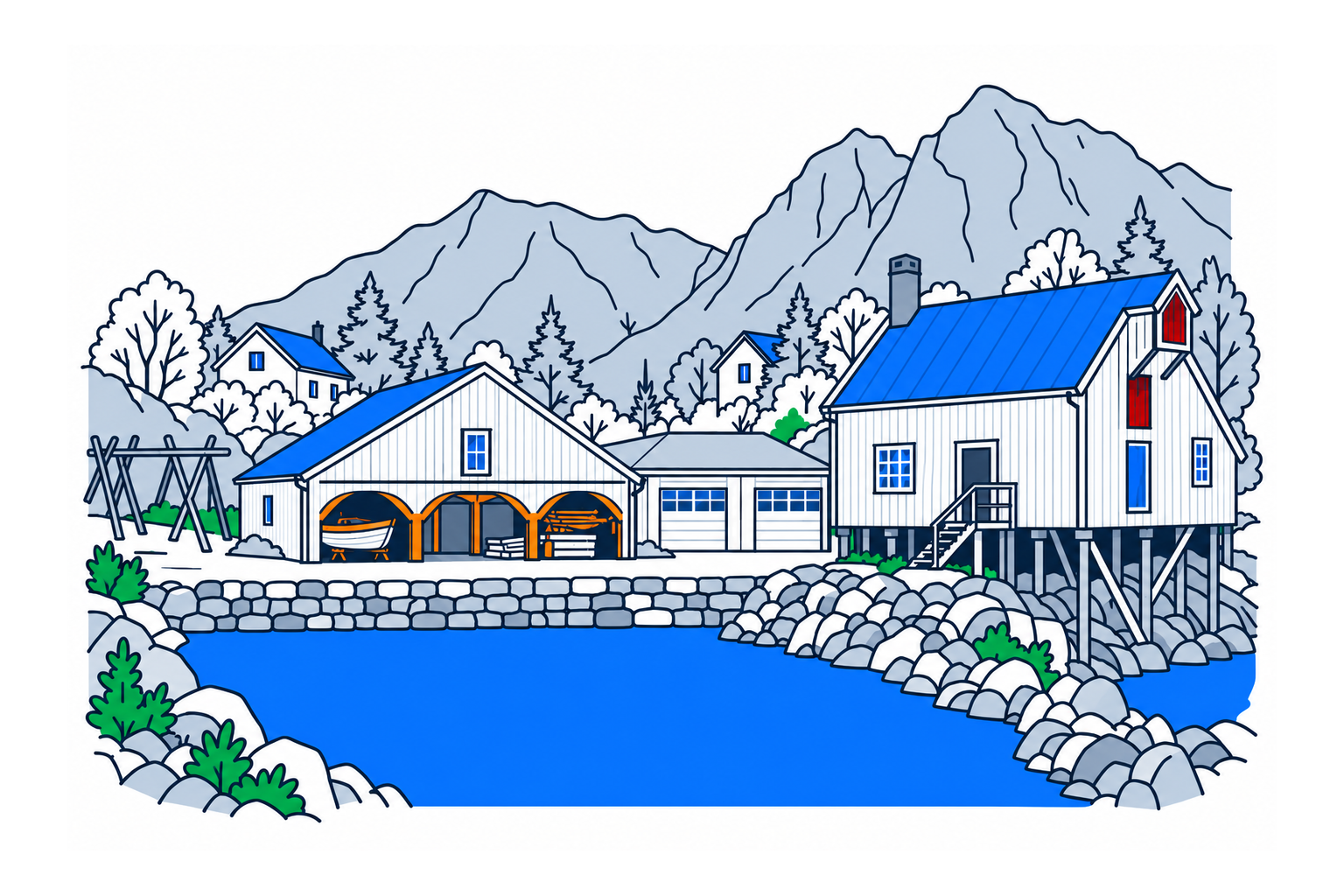
Norsk Fiskeværsmuseum at Å preserves the buildings of a working Lofoten fishing village. It explores the different lives of travelling fishermen, local households and the village owner through spaces where people lived, processed fish and supplied the seasonal fishery.

The place1
The museum is at Å near the end of the E10. Its authentic buildings include a boathouse, cod-liver-oil works, a crofter’s house, smithy, post office, fishermen’s cabin and nineteenth-century bakery. Together they show the network of tasks that supported a fishing village beyond the boats and catches themselves.
History and local connections1
Museum Nord’s interpretation follows the village owner’s influence from around 1840 to 1960, alongside the work of resident families and visiting fishermen. The seasonal Lofoten fishery brought people into temporary accommodation, while the community also had an everyday life outside that busy period. Both rhythms are part of the museum’s story.
What to look for1
Compare the fisherman's cabin with the houses and industrial buildings to see their different roles in the fishery. The cod-liver-oil factory and smithy explain processing and maintenance, while the bakery and post office show services used by the fishing community. A museum guide can explain how the rooms and objects relate to the village's wider economy.
Planning a visit1
Museum Nord gives current admission, opening periods and tour availability. It directs motorists to parking beyond the tunnel at Å, with tickets and practical services available through the museum facilities. Confirm which buildings and demonstrations are included on your date. A walk through the settlement and admission to the museum’s indoor spaces are related but distinct parts of a visit.
Sources
Last checked:
More places in Nordland


SamfunnPrep
Discover Norway. Prepare for the test.
Practice questions, clear explanations and mock exams.