
Places with a story
Røst kirke
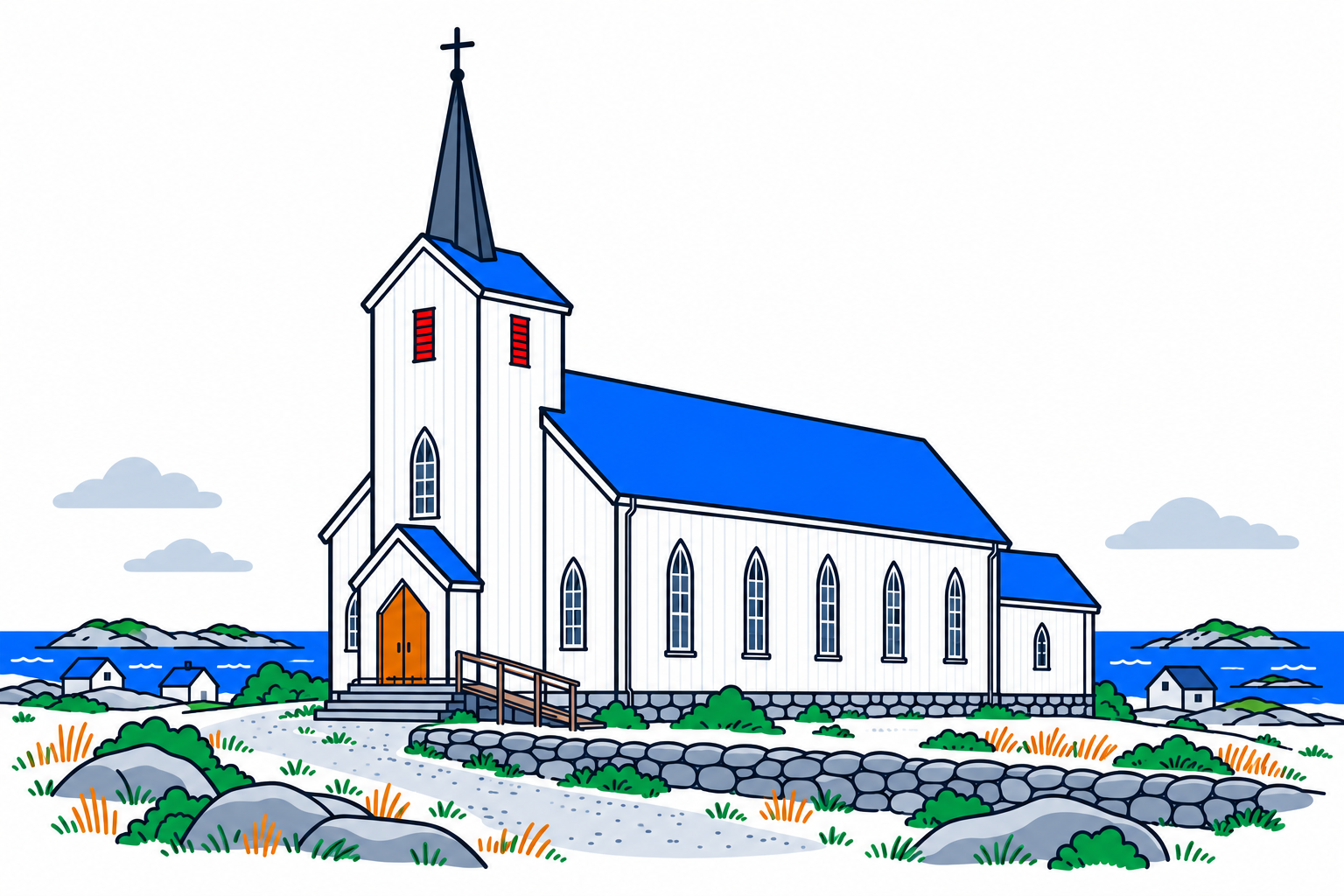
Røst Church holds a remarkable encounter between a timber church from 1900 and church art made roughly four centuries earlier. Its late-medieval altar cabinet connects this small island community with artistic exchanges across Europe.
The place1
The present church is a wooden long church with Gothic features, consecrated in 1900. Inside, an altar cabinet from around 1520 is the central historical treasure. Its carved and painted figures make the building a place to explore medieval visual culture as well as the later church architecture of Røst.
History and local connections12
The building replaced a stone church consecrated in 1839 that had become too small. The older church survives as a separate ruin. The altar cabinet had already outlived earlier church buildings, including one destroyed in the storm of 1835. Its survival gives the present church a tangible connection to the island's much longer religious history.
What to look for1
Saint Olav stands at the centre of the cabinet with bishops on either side. Painted saints appear on the inside of its doors, and gilded architectural details frame the figures. The cabinet belongs to the group known as the Leka group, five altar cabinets brought from the Netherlands around 1520. Later repainting means today's colours do not simply reproduce the original scheme.
Planning a visit23
Contact the local church before planning an interior visit specifically to see the cabinet. Current parish information is the appropriate place to check services and access. Keep the present timber church distinct from Gammelkirka, the older stone ruin: both belong to Røst's church history, but they are different locations and offer different experiences.
Sources
Last checked:
More places in Nordland


SamfunnPrep
Discover Norway. Prepare for the test.
Practice questions, clear explanations and mock exams.